Showing posts with label Christmas. Show all posts

Wednesday, December 26, 2018

Christmas Memories

My one and only Christmas in Iowa
That's the earliest picture of me taken at Christmastime. There are some others taken later but none after about 1952. By then my life seemed to have taken a strange turn from which it would never entirely revert to... well, "normal."

I have quite a few Christmas memories. Most of them are good ones, so even if things weren't exactly typical of a White-Boy Childhood in the '50s otherwise, Christmas was almost always a happy time for me. I never felt like I lacked for presents at Christmas. If anything, it sometimes seemed like I had too many. In a sense, the abundance of gifts at Christmas may have been meant to make up for some of what I lacked the rest of the year.

Christmas in my childhood always meant a live tree, one that smelled strongly of pine forests in winter. Lots of decorations on the tree, different kinds of Shiny Brites in a range of sizes, the old-fashioned lead tinsel (or was it tin?), icicles made of silvered glass and later white plastic, glass birds with long white tassel tails, lots of multicolor lights including those bubble lights that I guess are still available. The tree-topper was usually one of those glass spike things, but we had a star as well, and some Christmases, we put the star on top of the tree instead of the spike.

We still have some old Shiny Brites on the tree we keep up all year in New Mexico. I'm not sure that any of them were saved from either my childhood or Ms. Ché's. I know I've been collecting them from thrift stores for several years, and I think that's where all the Shiny Brites we currently have came from. We also decorate the tree with newer imitation Shiny Brites that aren't quite the same as the genuine articles. We also use lots of local decorations like glass chiles, tomatoes and saints in their nichos and such. No tinsel though; too risky for the cats.

After about 1951, the Christmas tree always had the Lionel train set my father gave me around the base. There's nothing quite like them any more. The steam engine was long and heavy and intricately detailed.

There were little tablets you could put in the smoke stack to make smoke. The headlight lit up as the engine chugged around the three-rail track. The whistle sounded 'whoo-whoo!' when you pushed a button or moved a lever on the power transformer. I don't remember which, but I do recall there were two levers on the transformer and one of them controlled the speed of the train. There was a little black plastic thing with two red buttons that allowed you to switch the track the train ran on.

There was a coal car, two freight cars -- one red, one white, a flatcar with logs, a tank car, a baggage car, a passenger car, and a caboose. There were milk cans in the white freight car and a man dressed in white who unloaded the milk cans onto a platform at the station. The passenger car windows lit up. The brake wheels on the cars turned. It was a nice train set, and I kept most of it through all the many moves of our household around southern and northern California. The pieces started disappearing when I was a teenager, and the only one I managed to hold on to was the caboose. And now, I'm not sure where it is.

I have some other train memorabilia, but nothing like the Lionel train set I'd get out every Christmas when I was a kid. One of the ironies of my ancestry research is that I discovered that my father's German grandfather (as opposed to his Irish one) worked for the Chicago and Northwestern Railway in the Iowa yards as a carpenter. More irony was that I learned my mother's father was killed in the St. Louis Wabash rail yard where he worked as a switchman. One of his brothers was an engineer with the Wabash line. I was surprised to learn of my ancestors' railroad connections and still haven't absorbed the significance of it -- if any.

Gifts at Christmas usually included lots of school clothes, and typically science or art supplies. Toys? I suppose, but I recall very few. One that I remember was a large model airplane that had a motor and propeller and was supposed to fly at the end of a long double cable. I could rarely get it into the air, and when I did, it usually crashed within seconds. My friends weren't much more successful with it than I was, so in the end, the plane wound up as decoration hanging on the wall in my room.

I received a number of you-put-together model cars at Christmas, all antiques and classics. I had a collection of Floyd Clymer Historical Motor Scrapbooks and the model cars were in many cases examples of the cars in the magazines. The one that took the longest time and most patience to put together was the Dusenberg, which ultimately was pretty spectacular, but I'm not sure what happened to it.

One year, I received an elaborate chemistry set with which I made much mischief. Another year, it was a rock and mineral collection. I kept the garnet from the collection for many years. Still another year, I received a crystal radio kit which I put together and was amazed at how well it received stations, though I had to listen through earphones.

Then there were the encyclopedias. I remember we had a complete set of the New Standard Encyclopedia, but I would also receive one or two volumes of a child's encyclopedia every Christmas for several years. Since I was a voracious reader, both sets were paged through again and again. I had a lot of books from an early age a few of which I still have (I think!)

One Christmas, I think it was  in 1957 or 58, I received an "all chrome" bike. It wasn't actually all chromed; I think the frame was painted silver, but it was very fancy and unusual. There wasn't another one like it in the neighborhood. It was a full-sized adult bike, and at first, I had difficulty riding it because it was too big. But eventually, I got the hang of it, and I rode it everywhere. I didn't have to ride to school because the school was right behind our house, but after school and on weekends, I rode that bike all the time.

One day toward the end of the school year, I rode down to the Stassi and Humphrey market about a mile from my house and I parked the bike outside while I went in to get some chewing gum and soda. When I came out, the bike was gone, stolen.

I didn't have a lock. Nobody locked their bikes in those days. Bikes were stolen fairly often, but usually they were recovered within a few days, so it really wasn't a big deal. I never got my bike back. Police were notified, and they said they checked with known bike thieves and fences, but no luck. I suspect the thieves promptly sold the bike out of the area because I never saw it again, nor did I ever see one like it in my neighborhood.

My mother bought me another bike soon afterwards, a plain-jane Schwinn, and I kept it for several years and several moves until it, too, was stolen, lock and all.

Throughout my childhood and well into adulthood, I looked forward to Christmas, not so much for the presents, but just for the simple joy of the holiday and its festivities. As I got older, it really didn't matter so much, but even now in my dottage, I find I enjoy the holiday more than not.

And as my memory fades (oh yes!) I am grateful for the snippets I  can recall.

Happy Holidays!

Saturday, June 30, 2018

Christmas Comes But Once A Year

For some reason, there are a lot of Christmas pictures among the ones we brought back from California. I guess most families take pictures at Christmas time, but the focus on that particular holiday seems like a function of the era. Christmas was the time to take pictures. It was special. It was only.

There are a number of photos of me posed in front of the Christmas tree taken year by year: 1948, 1949, 1950, 1951 and 1952. This is the first one, and it's probably the only one I will post.

Christmas Kid
There are more pictures of the tree than there are of me so don't get the wrong idea. We would see the same general pictures each Christmas until I was four, then they stop. In fact, there are very few pictures of me taken at any time after the age of four. Don't know why, but that's the way it is.

My mother is holding me up in the picture above. I recall the bracelet she is wearing. It was her mother's, rather baroque, silver and turquoise, but not Native American. It may have been Turkish. Or an American design.  From the 1920s. The turquoise stones were intricately carved, and they may not have been turquoise at all. The bracelet was part of a set that included a necklace and earrings. My mother wore the bracelet frequently, but she rarely wore the other pieces. [I've studied the picture more carefully. It's not a bracelet. It's her watch, a tiny Hamilton on a braided cord wristband. I remember both the bracelet and the watch quite clearly, and in this case confused the two.]

She also liked to wear a ring that had been given to her by her mother shortly before she died in 1941. It was topaz and diamonds mounted in filigree white gold. Topaz was my mother's birthstone. She's wearing the ring in the picture of the two of us after returning home from the hospital after my birth.

The Shiny-Brite ornaments, the tinsel, the carefully wrapped packages stacked all around the bottom of the tree, the tree itself -- always a cut tree, never artificial -- would be repeated over and over again with little or no variation. This one was perhaps the most luxurious tree of the Christmases I have pictures of, but the others come close. It was a ritual, an important one in our household, even when the household broke apart as it would repeatedly.

We have a tree up all the time in New Mexico to honor Ms. Ché's mother -- who loved Christmas more than anything. In front of our all the time Christmas tree is a company of nutcrackers, manifesting our own admiration for Tchaikovsky and the quirky "Nutcracker in the Land of Enchantment" presented annually by the Festival Ballet of Albuquerque.

The tree we have up all the time is artificial of course, but it has a selection of antique Shiny-Brite ornaments (a few saved from childhood, others collected over the years) as well as modern imitations/interpretations, but mostly it's ornamented with New Mexico keepsakes such as St. Francis, cats, road runners, rabbits, prairie dogs, etc.

And no tinsel. Well, we have cats, and cats love Christmas trees, especially hangy things on trees that they can pull off and eat. In the old days, Christmas tinsel was made of thin strips of tin or lead, and of course was poisonous. Now it's made of plastic, Mylar, and is potentially equally deadly. So we don't use it.

Enough of this reminiscing for now.

There are things going on in the wider world that may need some attention.

I understand, for example, that Trump is terrified the Democrats will abolish his Gestapo, ICE. Aww. Poor baby...


Thursday, December 28, 2017

At Mabel's Place For Christmas

One of our principal destinations in Taos is "Mabel's Place," Los Gallos, the rickety old adobe house on a little ridge at the end of Morada Lane. Mabel Dodge Luhan and her husband Tony built it on 12 acres bordering Taos Pueblo land at the edge of town (well, it was then) starting in 1918.

The Big House, "Los Gallos"
The welcoming portal at Mabel's


Mabel lived there or in one of the smaller houses built on the property till her death in 1962. Tony died shortly afterwards. I understand the Big House and the various little houses the couple had built on the property were neglected until Dennis Hopper bought the complex in 1971, christening it The Mud Palace where he hosted a free-form counter-culture get together for the next three or four years.

The place was neglected again until a Santa Fe educator, George Otero, bought it in 1976 and began rehabilitating and expanding the deteriorated facility. He ran workshops at Mabel's Place for the next twenty years and continues to return annually with educational workshops.

My understanding is that the size and the scope of the rehab project turned out to be more than Dr. Otero could be responsible for, and so he sold it to the Attiyeh Foundation in 1996. The foundation continues the work Dr. Otero started. They operate the facility -- which includes the Big House and a number of ancillary buildings, some dating from Mabel and Tony's time, some built since -- as a bed and breakfast hotel, a conference and workshop center focusing on the arts and healing, and a center for the community.

The Big House was designed and built largely to house Mabel's and Tony's guests when they made the arduous trek up to Taos from wherever in the country or the world they'd started from. Nearly all were artists, writers and philosophers, some of whom were already famous, others were "up and coming."

There are numerous bedrooms -- eight or nine I think -- plus a series of reception rooms, a large dining room and a kitchen. Mabel had a room on the second floor just behind the deep porch in the photo above. The bed that was built for her in the room is still there. The windows in the bathroom next to Mabel's room were painted by D. H. Lawrence in 1924 to provide her with some privacy when she went to the loo. They say he was scandalized when learned that Mabel would do her business in front of uncurtained and unobscurred windows  in full view of everyone inclined to look.

But enough of the history of the place. There's plenty of information available online and in books for those who may be curious.

Our association with Mabel, such as it is, began through D. H. Lawrence surprisingly enough. Ms. Ché directed a Tennessee Williams one act called "I Rise in Flame Cried the Phoenix" years ago. The play is about D. H. Lawrence and his Brunhild-esque wife Frieda (a close friend of Mabel's as was Lawrence off and on) near the end of his life. The play centers on the disastrous exhibition of Lawrence's erotic paintings in London in 1929.

Those paintings were on display at the La Fonda on the Plaza in Taos the first time we visited the town more than 30 years ago and I took the opportunity to pay the small fee to have a look at them. Ms. Ché herself took a pass on the exhibit as she was indisposed. We'd been driving all day and into the night, having come from Meteor Crater in Arizona where we'd stopped that morning for a look-see.

I saw the paintings and couldn't quite figure out what all the fuss was about. They were not technically well done, and their eroticism was as much in the eye of the beholder as in the paintings themselves. Art and sex did not combine well in these supposedly scandalous works. But at least I saw them.

While I wasn't fond of his paintings, I was almost overwhelmed by his novels. Lawrence became my literary hero, in part because I thought he captured something in his characters that only I knew about from my own family and life experience. It was through these novels, but particularly "Sons and Lovers," that I began to suspect that my mother wasn't Irish like she seemed to think but was of English descent, for the Lawrence characters based on his own mother were so much like my mother they could have been sisters.   Later, I would discover that my mother was in fact mostly of English descent, but her English ancestors arrived in New England, New Jersey and New York in the 1600s. She had no recent connection with England at all. Of course, I had red hair and a beard (in those days) like he did, too. So far as I know, I wasn't tubercular then or later, but I'm currently being treated for pulmonary fibrosis, so...
[Edit to add: My mother's paternal grandmother was a Lawrence, but her paternal ancestors came to America from England some time in the 1640s and she probably had nothing to do with D. H. (David Herbert) Lawrence, although she was married to a D. H. (David Henry)]

Ms. Ché attended a poetry writing workshop at Mabel's Place several years ago, and that workshop was part of what spurred her to go ahead and get a degree in creative writing that she's working on now. She should graduate next May. Perhaps their oldest graduate, but what the hay! It's what she wanted to do.

She said that Mabel's Place and the spirits of Mabel and Tony and the many hundreds of artists and writers who have spent time there over the last nearly 100 years affected her deeply.

I felt much the same sense of the place on my own brief visits.

This year we decided to spend a Christmas overnight at Mabel's Place, as a kind of R&R and renewal.

Christmas at Mabel's is a simple affair. A large tree is set up in one of the living rooms, and smaller trees are in other rooms. Simple wreathes are put on some of the doors, and I understand that luminarias were put out on Christmas Eve but they were gone by the time we arrived on Christmas Day.

Christmas tree at Mabel's 
The Big House is stretched out like open arms. Staff is welcoming and serene as always. And so we return.

We've had no snow this winter at our home south of Santa Fe; it's been too warm, too dry, another La Niña winter. And it didn't seem like there was any snow in Taos, either, but as we explored, sure enough, there were patches of snow here and there, left over from a brief storm several days ago. 

Just enough to remind us that sometimes winter in Taos is just that (and also the title of one of Mabel's books.)


We had the Dasburg room for our stay. This is the one Ms. Ché wanted. It's in the Juniper House, a newer building -- but not that new, it's 40 years old -- with eight guest rooms and a conference room. We knew that it had a view of the sacred Taos Mountain, but we didn't know it had a little outdoor terrace (actually the roof of the room below) from which to watch the Mountain.

Juniper House at Mabel's Place, shadows of your correspondent and Ms Ché in the foreground.

The Mountain from the Dasburg "terrace"

Mabel's Place was full up on Christmas Eve. Many guests were attending the dances and Christmas Eve feast at the Pueblo. We were otherwise occupied on Christmas Eve as that is Ms. Ché's birthday. But Christmas Day was an ideal one to settle in. 

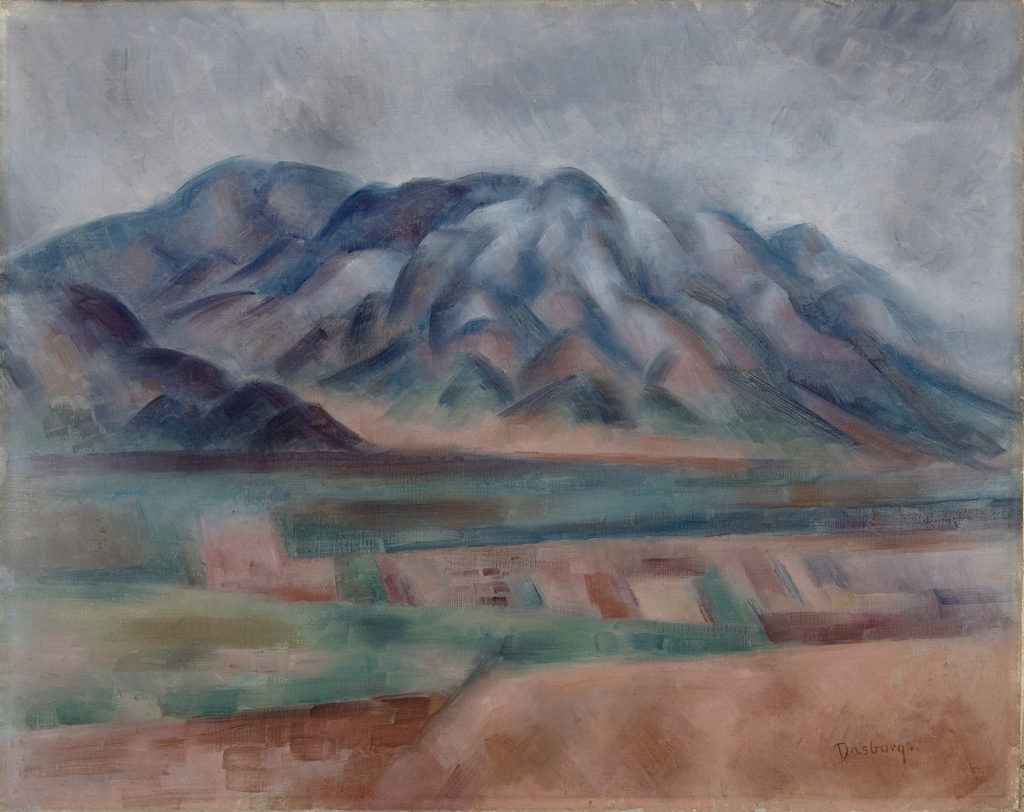
Up a steep set of stairs in Juniper House, we found the Dasburg room, named after  one of Mabel's artist guests, Andrew Dasburg, one of Ms. Ché's favorite New Mexico artists. We almost bought one of his drawings last year, but we decided to put it off for now, and it is probably for the best, as Ms. Ché was involved in that wreck in January of this year and I've been contending with the co-payment costs of very expensive RA treatment. While the price of the Dasburg drawing was certainly fair, it was a heavy expense for us at the time, and we would soon have some other expenses we didn't anticipate. cough.

I was disappointed there was no Dasburg work in the room, though there was a Georgia O'Keeffe (another of Mabel's friends). I sketched out an image of the Mountain while I was there, terming it "after Dasburg", intending to leave it in the room when we left, but I forgot. Sigh. Well. We'll just have to go back, won't we? (Smile.)

The Mountain smiled on us the whole time. It's hard to put into words the effect Taos Mountain has on us. In its own way, the Mountain has a kind of protective-watch-over energy. We can see and feel it. The Mountain is there as both the dominant element of Nature and as a stern and strong 'person' -- hard to explain.

Artists have been captivated by it for generations, and many thousands of paintings, drawings, photographs and prints have tried to capture its essence. I don't think any have quite succeeded. You have to see it for yourself. And then hope that your lines and colors will at least convey a partial sense of what the Mountain is in the flesh -- as it were.

The view is blocked by the Big House and Juniper House and the many trees bordering the property so that from most locations at Mabel's you can't see the Mountain at all, or at best you only have glimpses of it. Even in winter when the trees are bare, you only see bits of the Mountain through the branches from ground level.  From the second floor, you can see it better if you're in the right place, and from the third floor solarium, you have a 360° view of the whole property and well beyond.

We were in the Dasburg room on the second floor of Juniper House with an expansive view of the Mountain and its companions on either side. It was breath-taking though not quite as heart-pumping as the view of the Mountain from the Pueblo of Taos itself. There you are in the presence of... the ineffable.

Andrew Dasburg drew and painted the Mountain many, many times. This is an image of a more or less generic Dasburg mountain, but it's obviously based on Taos Mountain.

New Age types come to Taos and often settle there to infuse themselves with the Spirit of the Mountain. I don't know that they get what they come for, but oh well. It's not for me to judge...

I had the thought of doing some sketching with pastels while I was at Mabel's this Christmas, and so I did. It was both relaxing and inspiring to get out my pastels and have at it. Fun, actually. For years, I couldn't -- or alternatively didn't want to. Just the thought of drawing or painting made my joints ache, and it was better for me not to think about it.

But I've been getting used to the fact that I can do things now that I daren't even think of when time was. Even climbing the stairs at Mabel's is possible now though not necessarily easy. There was a time when climbing stairs was an almost impossible struggle for me. Holding a pencil was sometimes likewise challenging. So much of that struggle is over thanks to the treatments I've been given for RA. Even breathing in the rarefied though somewhat smoky winter air of Taos is... possible.

Simple things mean a lot.

I was most grateful to be able to enjoy Mabel's Place with Ms Ché without worry or fear of being unable to negotiate this or that problematic area that is obviously not handicapped accessible. The only areas that were difficult to manage were difficult for both of us.

Some areas of the Big House have low doorways on which tall people hit their heads, and there are tricky steps between one level and another which can trip you up if you aren't careful. Ah but slow and easy does it, and even if you hit your head on one of the doorways as I did, it's laugh-inducing rather than an Owie.

A pointed arch doorway at Mabel's Place -- watch your head, watch your step!


Ms Ché saw our Christmas at Mabel's  as an opportunity to renew and refresh after a very intense school year. She had put in so much time and energy that a break of this sort was essential. To take a break at Mabel's was invigorating. Even if it was only for a day -- this time.

A friend in California says we're in "Disneyland," meaning these sorts of experiences we're having aren't really "real" -- are they? Well, I guess it depends on your point of view, doesn't it?

After a wonderful breakfast in the dining room of the Big House, we packed up to leave, we really didn't want to. The daytimes and overnight we spent at Mabel's have stayed with us so strongly, though, we feel we haven't really left.

Breakfast isn't quite ready


It was a Christmas to remember!

Sunday, December 24, 2017

Christmas Comes But Once A Year

Shiny Brite wreath


Today is Ms. Ché's birthday. She was a Christmas baby and throughout her life she's had two celebrations at Christmas time. She said when she was young, she thought all the Christmas hoo-hah was for her and I suspect she still thinks that.  Heh.

This year, we'll be going out to dinner this evening at Los Poblanos in Los Ranchos de Albuquerque, then tomorrow we'll head up to "Mabel's Place" (Los Gallos, the Mabel Dodge Luhan House) in Taos. We'll try for Christmas dinner at Doc Martin's, but I dunno. The town gets packed at Christmas time, and we may have to settle for a couple of Lotaburgers at Blakes. One makes do... ;-)

We were concerned about the weather when we made reservations a month or so ago. It looked like and it felt like we might have some snow for Christmas (always nice but not good for traveling), but no. Not even a hint of it. Sunny and dry and usually very warm day after day. They say there's a La Nina underway, but this is the driest and warmest December I can remember in New Mexico. Earlier this week, the prediction was for very cold overnights and mornings -- below zero in both Taos and our place about 100 miles south -- but no.

Right now, about 6am, the temperature outside here is 42; even in Taos, it's 27. Not "cold" by New Mexico winter standards at all. It feels odd. But because of Climate Change, I'm expecting it to become the New Normal. Actually, we've been having more frequent and more intense droughts for years now.

Drought is what drove many people out of New Mexico time and time again. The three big pueblos on the back side of the central mountain chain were abandoned in the 1670s due to drought (among other reasons, the Spanish padres and their delight in suffering being one), but there are ruins and remains of many other pueblos scattered through the east mountain area, most of them abandoned during earlier droughts. Some were reinhabited, but most, once abandoned, were not rebuilt or returned to.

The last long and severe drought in our area was in the late 1940s and into the 1950s. Old timers say it was worse than the Dust Bowl years, and that was bad. Most of the few people who lived in this area left for greener pastures. If they could find them. So it has gone throughout the centuries in New Mexico, so even as worrying as the situation is now, most folks are at least somewhat prepared for the worst.

So this Christmas with no snow and balmy temps will stand out in our memories, even if it wasn't Ms Ché's significant b-day (she's... drum roll... 70).


Taken at Christmas 2010? I forget. The scene is down the road from our place.

Best Wishes to all, and to all a... better New Year!

Saturday, December 24, 2016

'Twas the Night Before Christmas

[Sorry for the incoherence in my last post. I may try to clean it up -- or not. This is turning into a more difficult week for me than I anticipated. Suspect it may have something to do with medications... or maybe incipient dementia. ;-0]

Oh Christmas Tree...


Christmas Eve has always been an anticipatory annual event for me. Somewhere (I don't know where) there are pictures of me taken when I was an infant and toddler beside what now seem like spectacular Christmas trees in Iowa and California. I have strong memories of Christmas trees from my childhood, putting them up, decorating them, and piling their bases with Christmas presents every year no matter where we lived, no matter what. There were some years we were very poor and Christmas might have been lean and spare, but I wouldn't have known it. In fact, it didn't occur to me until I was an adult that part of my childhood was spent in relatively dire poverty.

In those days, late 40s and early 50s, it was much more difficult for a single mother to simply get by -- let alone make a living - than it is today. Nevertheless, child poverty rates today probably match or exceed what they were back then. And nevertheless, parents (single or no) still do whatever they can to make the Holiday season as nice as they can for the children.

And so, here we come upon another Christmas Eve. I'm old and I'm ill, though surprisingly chipper about it all. Why be a Gloomy Gus, eh? I'm not particularly chipper about the looming catastrophe under a new King-Emperor, but there's not a lot I can do about it, is there? Que sera, sera and all that.

I think I've mentioned that we keep a Christmas tree up all year long in honor of Ms Ché's mother who loved Christmas more than any other holiday, in part because she gave birth to her daughter (Ms Ché) on Christmas Eve, and she named her Mary (among several other names she was given, along with several more she chose for herself.)

We got a new Christmas tree this year. The one one we'd been using had become rather ratty over the years (it's at least thirty, maybe forty years old) and it seemed appropriate this year to set up a new one. It's sweet and small, decorated with both new and old baubles, some of them dating back to our childhoods and it is filled with memories on every branch. Unfortunately, one of the Gift Cats (so we call them) delivered by a neighbor back in May (or was it April?) decided he liked the lower branch ornaments (the older ones included) and took to knocking them off the tree and chasing them around the house. He only broke one, but still.

The Gift Cats, huh. They're adorable but they get the crazy sometimes, the way cats do, and they go wild around the house, getting into everything, making a mess, and yes sometimes breaking things.

They're both black. One, the smaller and leaner one, called Ashe, has become a "watcher." He's joined members of the feral colony outside to protect the colony and the property from the intrusion of alien cats. He's very aggressive if he spots a stranger, whether feline or any other species, including the delivery men who have been stopping by practically every day with gifts. He runs right up to them when they cross onto the property and he challenges them: "Who are you? What are you doing here?" We laugh, but he's actually the only one who does it. The other watchers will patrol the property line, or they sit in the sun waiting and watching for feline intruders. When they spot one, they will issue threats and challenges, usually running the intruders off. But every now and then, one gets through the cordon. Over the years, a few of the interlopers have integrated into the colony. But most aren't accepted.

Cat politics in feral colonies is not unlike that of lion prides. Cats are very social creatures, not the solitary animals that they are reputed to be. Their societies are built on kinships. Female cats run the societies. Males "service" them. I don't mean just sexually. All of our feral cats (a couple of exceptions who have escaped going to the vet) are neutered. All of the alpha and sub-alpha males are neutered, so their sexual service to the queen catta and her daughters is nil, but the alphas and sub-alphas still perform their duties to protect the colony.

One of them, the oldest, we call Bruiser. He's a big gray tabby with only one good eye. He apparently lost the other one in a fight with an interloper. He's the prime Alpha, and everyone defers to him. He doesn't actually do a great deal any more, as he's getting old and can't see all that well. He stations himself where he can take in as much of the property as he can under the circumstances, though, and he keeps watch throughout the day.

His chief sub-alpha we call Baby. He was quite sickly when he was born (to a female who we were unable to trap). Ms Ché nursed him back to health, and as soon as he was able, he took up a role supporting Bruiser's efforts to keep the colony safe from the neighbors' unaltered males.

Whereas Bruiser used to get into serious fights with stranger-cats, Baby never did. He would stalk them strategically, ultimately driving them off the property. We would watch him work, amazed at his skill at cornering the interlopers and forcing them beyond the property line without raising his voice and without any physically attacking them at all. It is a wonder to behold.

A secondary sub-alpha -- who wants to be the alpha male -- is called Larry. (As in the Clash of the Clans skeleton, the bad disobedient one). He came here as a disheveled and nearly starved interloper. A skeleton of a juvenile cat. We suspect he was abandoned by whoever he lived with. It's not unusual in this area for people to have cats and leave them behind when they move (that's how the colony began), or to bring them to this area and abandon them to fend for themselves. Some make it, most don't. If the coyotes don't get them, they're likely to starve to death or get run over.

Larry arrived one day, looking sick and skinny and he could barely walk, he was so bad off. Ms Ché nursed him back to health the way she does, and took him in to the vet for vaccinations and neutering. Well, when he came back, we discovered that they had initially done surgery as if he were a female, poor thing, and... oops! He was not amused, and it took quite a while for him to recover. He still walks as if his abdomen hurts. Nevertheless, when he recovered, he decided he was part of the colony and began asserting himself as an alpha against Bruiser. They got into many fights with one another, both of them wounded in their rivalry. Ms Ché treated their wounds as a neutral party, and she told them to stop it. Eventually they did, though they haven't made total peace with one another. Bruiser tends to watch for intruders from the front; Larry patrols the back, and he challenges and sometimes fights with any intruders he comes across. I think the fact that he patrols his own section of the property is what keeps him out of conflict with Bruiser.

When the Gift Cats came along, we didn't know what would happen. As it happens, the smaller but more aggressive one (Ashe) decided he would take on patrol duty, and at first he attached himself to Larry as a kind of assistant. Larry was not amused, but he tolerated this black juvenile following him around -- until he didn't. One day he swatted Ashe hard and gave him the stink eye. Ashe backed away.

I don't know how it happened, but somehow Bruiser decided to take on Ashe as his assistant. They will sit together watching sometimes for hours, but Ashe also patrols -- which Bruiser no longer does -- and Ashe boldly confronts anyone who comes on the property unauthorized, whether it is neighbors, delivery people, or other animals. I've seen him run off dogs. He will not allow any strange cat on the front of the property. And any person he sees headed toward the house he challenges. He's so proud of himself, too. He demands praise, not just from us but from the rest of the colony as well. He's made several buddies among the ferals, and when the elders die off as they will, he and his buddies expect to take over.

I go on about cats because they've been an important part of our lives. Both Ms Ché and I have had cats since we were children, and since we don't have kids of our own, cats have been kind of substitute offspring. Ms Ché said that when she would come here (to our place in New Mexico) when we were still living in California, she felt "cat-lonely" and so it was only natural that she would adopt and take care of the feral colony that had actually started at a neighbor's place. Sometimes she thinks that was a mistake. There are typically between 16 and 20 cats in the colony -- population has been very stable for years -- and they require a lot of attention, not to mention food enough for an army.

Ferals are reputed to be grand bird killers, but the ones here are not. First, they don't roam far from the property (after all, it's where the Food Lady lives) and second we rarely count more than five or six bird kills on the property per year. They're proud of their hunting skills, of course. But the birds (we have many) are wise, too. The ones the cats get are occasional doves (maybe twice a year) and more frequent sparrows, some of which are nestlings that fall or are pushed out of the nest. The other birds are almost never  found among the carcasses of birds the cats have caught. I've seen them stalk grackles and road runners, both of which seem to just laugh at the cats -- and I'm sure they would attack them if they felt threatened at all.

Also, too, the cats keep the property completely free of rodents. (Sorry Not-Even, A Mouse). The only wildlife they seem unable -- or unwilling -- to control are the skunks which remain an occasional but persistent problem in this area.

So Christmas is partly for us together, partly for Ms Ché's birthday, partly for Ms. Ché's mother, partly for the cats. This year, we have more gifts to share with one another, the cats, and our friends and neighbors, just because why not? We'll have a Christmas Eve dinner here at home, then go out tomorrow for Christmas with friends. It's an annual ritual and tradition now.

Despite my foreboding about the intentions and madness of Our Rulers, there are some things we have no intention of giving up, come what may.

Merry Christmas to all... And to all a Good Night.

Gift cats, Ashe (top), Tubby (bottom) asleep on Christmas Eve

Friday, December 25, 2015

On Finding A Cousin After All These Years

I'm old.

I didn't grow up with cousins, aunts, uncles or grandparents. My near relations consisted of my mother, father, sister (half sister, she had a different father) and later included my sister's husband(s) and children. That was it; there were no others.

Except for a couple of years in the 1970s, I never looked for other relations -- though I knew they existed in some quantity, especially on my father's side, he being one of eleven children, nine of whom lived to adulthood.

About a month ago a cousin I didn't know existed contacted me and we've been in furious email communication ever since. She had no idea of my existence nor did I have any knowledge of her existence.

Oh yes, I figured there must be aunts, uncles and cousins in abundance, but I didn't know who they were or where. I'd been told vague stories of "spinster aunties living in San Francisco," so those were the ones I tried to track down when I lived in the City in the 1970s, but I had no success. Turns out the reason why is because they were both dead by the time I tried to look them up. One was not, it turns out, a spinster at all. No, she was married and had three sons. She died the same week as my father did in 1969. But I didn't know that. The other aunt was unmarried, true enough, but she kept company, it would seem, with a gentleman caller for much of her life. They didn't marry, I'm told, because they couldn't. He was married but estranged from his wife. They did not divorce because of the strictures of the Catholic Church. Wouldn't you know. This sort-of spinster aunt died the same year I lived in San Francisco, but I'm pretty sure it was before I got there.

There was another aunt in San Mateo I didn't know about.

There was an uncle in Santa Barbara when I lived in Santa Maria (about 50 miles north of SB), there was another uncle in Los Angeles (somewhere) when I lived in the San Gabriel Valley between 1953 and 1959. Yet another uncle lived in Northern California (not sure exactly where but Susanville has been mentioned.)

There were cousins in fair abundance in the San Francisco Bay (South Bay) area throughout my childhood. Later there were cousins in Rancho Murieta and Roseville, suburbs of Sacramento where I lived and worked for decades.

Descendants of these cousins are mostly still in California, in the Central Valley, South Bay, Los Angeles, and the Sierra foothills.

Wow.

I was born in Iowa where the family seat once was. Prior to that it had been in Ohio. And prior to that, it was in Ireland on one branch and Germany on the other.

So far as I know, there is no one of the Latin persuasion among my ancestors... but what do I know? Not much, it would seem as I get caught up with this new-found cousin.

My father and two of his sisters stayed in Iowa after 1946 whereas all of his other siblings high-tailed it to California just as soon as they could. I didn't know that, and I didn't know so many of them were so close at various times of my life. I knew one of my father's sisters in Iowa, but his other sister who stayed had died in 1960, and I never knew her.

My father and two of his sisters --and his other son-- stayed in Iowa after 1946.

I keep forgetting his other son, my half-brother, in these accounts. Yes, he was in Iowa, too, living with a couple in town, a couple who took care of him after some unpleasantness in the family which led to the death of his one of his previous caregivers. He was disabled with what is now called autism, but at that time that term was not used. He was called an "idiot savant."

I'm told that he came to see me when I was an infant, but I have no recollection of ever meeting him, though I have vague memories of meeting his caregivers in the early 1960s when I spent two summers with my father in Iowa.

After his caregivers could not longer look after him, he was placed in a Catholic residential care facility in town. I've recently learned the name of it. It's still in operation, so after the new year, I just might see if I can learn anything about what became of my half- brother. I don't know that they would still have records from 50 years ago, but they might...

The newly-found cousin I've been in contact with has an extensive family archive that she received from her mother (my father's sister). Some of what's in it is familiar to me from similar items and stories I received from my father, but much of it is totally new.

Wow. I never knew so many things about this family, so many things.

On the other hand, I know a lot of things she never knew, never had any inkling of. She only knew of the first of my father's three marriages, for example. Well, guess what? I didn't know squat about that marriage -- as no one ever mentioned it to me -- until very recently when I found documentation online. It came as a complete surprise to me. My father was married twice after that first one. News to her. He fathered two sons. She never knew. Etc.

 Apart from her mother's name, I didn't know anything about her. Turns out she was actually the other "spinster auntie in San Francisco" that was vaguely referred to now and again. Seems that she and her actual spinster sister were a team, working for the government in Washington DC and later as public stenographers in their own business in Berkeley, Oakland and San Francisco during and after WWII. She married in 1947, though, and another aunt came out to California soon thereafter.

My newly-found cousin was born the same year I was. She was born in San Mateo where she grew up. She now lives in the Sierra foothills east of Lodi.

Oh. I didn't know and wouldn't have guessed.

The stories and scans we've been sending back and forth to one another have been illuminating history neither of us knew. We didn't know in part because there were so many things our parents never spoke of. There were so many aspects of their lives, it seems, that were not to be mentioned in front of the children. Or in some cases were not to be mentioned at all.

And yet, the records exist and many of them are now discoverable online, and because of that, stories that never were told before are now being explored and some of them are being told.

My new-found cousin has suggested that since I seem to know quite a bit more about The Family than she ever did, I ought to write a book that tells the story as completely as I can. Well, that would be a challenge to say the least.

There are still so many dark corners and unknown -- possibly unknowable -- aspects of the tale. I've already filled in some of the blanks with fiction and speculative interpretations. But there's still so much I have no knowledge of at all.

The story we've been exploring with one another is a family saga in the classic sense. It's a drama, too, some aspects of which are tragic, others not so much. My father's story is probably one of the most tragic aspects, but it's by no means the only one.

On the other hand, I've done a good deal of exploration of my mother's background and ancestry, something she knew very little about, especially on her father's side. What I've found -- some of which I've posted about here in the past -- is really stunning to me. I had no idea, or only the vaguest idea, before I got into the research in a big way.

I've tagged this series, "Who Are These People?" because I so often really wonder about the people I come from. Who are these people, indeed. It's still so much of a mystery. The more I learn, the more of a mystery it seems to become...

Merry Christmas to all...


Thursday, December 25, 2014

So This Is Christmas.....


[Unfortunately, Vines tend to freeze or crash my browser. I generally won't use them or link to them for that reason. If this one causes your browser to have problems, my apologies. I'm looking for livestreams of the event, so far without success...]

Outside the Cathedral Basilica of St. Louis last night, some people mostly dressed in black, bearing a poignant sign reading :

BLACK 
LIVES 
MATTER

gathered during Christmas Eve Mass. During Mass they gathered and chanted "Black Lives Matter". Outside the Cathedral Basilica...

The police were summoned and assembled in all their riot get-up, fully armed for "Righteous Battle" against the predators and wolves, the criminals and thugs who would dare to stand in the cold outside the Cathedral Basilica of St. Louis, during Christmas Eve Mass and disturb the gentle reveries about the Christ Child in the Manger,  and Peace on Earth, and... Goodwill Toward Men.

And then the police marched in protective phalanxes. They took up positions beside the Cathedral doors. They menaced the small crowd outside -- the crowd outside with their hand-lettered sign reading BLACK LIVES MATTER. 

The police threatened and intimidated. They made mock by their presence of the Joy to the World proclaimed in Bethlehem so many centuries ago. They cast fear and dread before them. They denied the very godhead they claimed to be protecting.

From what were they protecting?  From whom? And why?

In their minds, in their sad and addled minds, they were protecting the flock -- the sheep inside -- from the dreaded wolves baying at the doors outside. "Black Lives Matter!" means "let me kill you and eat you!" in this warped vision so many police carry in their heads, and so many Good White Folks sheepishly go along with. 

Black lives don't matter you see in that context. Black lives are dangerous by definition, and the only thing that can be done with them is to corral them in their multitudes and to kill them. And kill them. And kill them.

It's the American Way, the only way Americans have known throughout their history. 


I saw this image on Bassem Masri's Twitter feed this morning, Christmas morning, and I literally broke down in tears; it is too fucking true. Too fucking true for too fucking long.  In this, the greatest nation that ever was. Or so we have been led to believe.

There are those believers who insist that our nation's greatness is due to... that. The slaughter, the murder, the plunder, the rape. All of it protection from the Demons and soul-less un-humans, the thugs and the wolves and the savages and the animals, who would  run wild and devour the Good Honest People, the sheep, the dedicated achievers, the (shhh) white folk (shh) for whom God Himself granted this land, this New Jerusalem, this Shining City on the Hill.

They cannot imagine not killing the wolves at the door. It would be so... wrong.

This is the attitude of so many police and their masters. Kill and kill some more before the wolves get in and kill and eat you. 

For in their minds, that is what will happen if they ever stop killing the wolves at the door of the Cathedral.

They sincerely believe that the Thin Blue Line (now they often wear black, but you know...) is the only thing that stands between Civilization (white folks) and Utter Doom.

They sincerely believe it, and it is false.

So many are so sure that the killing must continue uninterrupted or Civilization itself will perish from the face of the Earth. And they are wrong. 

So this is Christmas... 

And I pray for the Awakening, for true Joy and Glad Tidings.


[Another Vine, I know... sorry... Vines are the only visuals I've found this morning of last night's action at the Cathedral... ]

Saturday, December 28, 2013

The Delivery That Doesn't Come


As we know, millions of Americans are still waiting for the delivery of Christmas gifts. I'm one of them.

A gift was ordered a couple of weeks ago for pre-Christmas delivery via FedEx. To date, it still isn't here, though supposedly it left Albuquerque at 4:00am today for delivery... sometime.

We know not when though "Saturday" was listed as the "probable delivery date." Maybe. Who knows?

I loved the excuses UPS and FedEx had ready: "there was so much bad weather and so many more people ordered stuff online we just couldn't get your stuff to you before Christmas. Too bad, so sad."

Contrast that with the unofficial Post Office motto:


"Neither snow, nor rain, nor heat, nor gloom of night, stays these couriers from the swift completion of their appointed rounds." - Herodotus, 503 B.C.


Perhaps UPS and FedEx will assure us they'll do better-- promise --once the Post Office goes out of business.

FedEx has been the worst, airily proclaiming that the company "experienced no major service disruptions in the week before Christmas despite heavy volume. Every single package is important to us, and we will continue to work directly with customers to address any isolated incidents."

.. so what? Big deal. Get over it.

At least UPS has had the balls to apologize, but still, it seems perfectly obvious what happened.

The private sector delivery services decided that maximizing profits were more important that customer service, and so they didn't hire enough people and they didn't contract for enough extra vehicles to handle the expected holiday volume of packages quickly and efficiently enough to get them to their destinations as promised, and they didn't bother to accurately update their customers on the whereabouts of their items. But they charged full price -- and even a premium -- for inadequate service, and even if they wind up refunding some shipping charges, they will still make out like the bandits they have decided to be.

It's that simple.

What we will find after this experiment in making people miserable and getting away with it is that in the future, "guaranteed delivery" will mean, "maybe" -- sorta/kinda -- in that ballpark, give or take ten days. But if you pay enough and have a private account, anything might be delivered within the hour.

Two tiers.

Don't you see?

Ho ho ho, the yoke's on us.

----------------------------------------------
UPDATE:  Ho ho ho, little did I know.

The Package, this package which was ordered for Christmas delivery, didn't arrive until December 30, and I had to go pick it up. At the Post Office. It was ordered from Vermont Country Store on December 17, and was shipped by them, they said via FedEx Ground, on December 18. Expected arrival, December 23. It took a week longer and I had to pick it up because it was actually shipped via FedEx under contract to the Post Office, and that the shipper of record was the Post Office, not FedEx, although the tracking information was via FedEx. In fact, there was no sign on our end that this was not a regular FedEx shipment. Apparently the package was delivered to a sorting facility in Denver on Dec 20 where it then sat until Dec 26, when it left for Albuquerque, where it arrived on December 27. It went out from Albuquerque on the way to our local Post Office on December 28 (as we were informed it would "probably" be delivered Saturday Dec 28 -- after sitting in Denver for almost a week), but the local Post Office is closed on Saturday. There is no home postal delivery in this area; we have to go to the Post Office to pick up our mail. FedEx, of course, ordinarily doesn't home deliver on Saturdays unless with specific instructions. So even if it had been shipped via FedEx alone and not under contract with the Post Office, there would have been little or no chance of receiving it on Saturday, Dec. 28 in any case. The tracking information was updated on Monday, Dec. 30, to read "Delivery exception -- see your Post Office to pick up or call to reschedule delivery." First we knew that the Post Office had anything to do with it. I go to the Post Office, and sure enough, there's the package, with no sign whatsoever that FedEx had ever handled it at all. All the labels, everything, say USPS. Very intriguing. I knew that the Post Office used FedEx when volume is high, but I thought the point of doing so is not to delay but to expedite shipments. (The Federal Government uses FedEx rather than the Post Office for sending many -- we might even say most -- paper communications between offices. It's a very cozy deal for FedEx.)   In this case, it seemed the delay in Denver was quite deliberate, one might say strategic, on the part of FedEx, for the Post Office would receive the blame, no?  Of course....

Wednesday, December 25, 2013

Christmas Comes Again

Polaroid Christmas Tree

We spent a couple of hours up in Santa Fe yesterday participating in the Annual Canyon Road Farolito Walk, a tradition we have adopted it would seem, just for the joy of it all. Tens of thousands of area residents and tourists fill narrow and often dark Canyon Road from adobe wall to adobe wall, making for some tricky maneuvering to get from place to place. Some of the galleries are open for the evening, serving biscochitos and hot cider, but many are only open for "private parties" -- parties that look to consist of no more than a handful of clients, each one hoping to be persuaded that this or that painting or sculpture is perfect for their abode or garden or to give as a gift to someone deeply loved.

Santa Fe has produced galleries on an industrial scale. I've overheard tourists complain that "there's nothing but galleries!" in the City Different's historic district, and if you expect to find anything but galleries along Canyon Road, you're probably going to be disappointed. Well, there are a few expensive restaurants where the movie stars and ricos eat out of an evening from time to time between galleries, so there is that.

Galleries mean artists and art-making on an industrial scale as well, and I've had more than a few misgivings about that. It means that much of what is in the galleries is essentially the same. Not just the same sorts of art, but done in the same styles, the same sizes, the same prices, the same display techniques, etc. Often enough, the galleries will even show the same artists. Meaning whoever is huge at the moment.

We do have our favorites, however, and even though most of the galleries in Santa Fe are practically indistinguishable from one another (as is the case in practically every art market) there are some that stand out.

Among those we visited last night are the Chalk Farm Gallery, Lone Dog Noise Cat, and Ed Larson's Art, as cheery a studio/gallery as I've ever seen.

Chalk Farm was showing "Polar Express," which was kind of fun. It is a supremely gorgeous place, unique in Santa Fe and probably among galleries anywhere, very welcoming, embracing you might say.

Lone Dog Noise Cat is a relatively new gallery on Delgado Street off Canyon Road, and it had to have been the hopping-est place of the night, people coming and going constantly and everyone enjoying the "neo-ab-Original" art and the glee and welcome of the gallery proprietors. The gallery dog Angus was having more fun than practically anyone, while I  had to pose for pictures with some of the gallery visitors due to my Santa-esque appearance. It was fun, and by golly if Ms Ché didn't find a piece she wanted as a Birthday present. Sure enough, she is now the happy owner of a genuine and beautiful hand-made work of Native American art. Heh. The artist himself, Todd (Lone Dog) Bordeaux, sold her the piece and made her day with a whole string of Indian jokes.

There was lots of food at Ed Larson's, tamales and biscochitos, lots of cider, and plenty of charming folk art, all of it done by himself, jamming the place from floor to rafters, and much of it less "folky" than one might expect.

There wasn't as much caroling along the walk this year but there was plenty of conviviality and good cheer,  while the farolitos burned joyfully. At one stop along the route, a stroller asked of the gallery proprietor about the "flying farolitos" which were banned by the fire department two weeks ago. The proprietor seemed to take it in stride, just one of those things, you know, that happens sometimes, he said as he lit his earthbound luminaria, one of several placed around the gallery grounds.

We left before the crowds got too dense, but not before the sky dazzled us once again with the brilliance of the late December heavens, and the smell of pinon wood fires penetrated our clothes and my Santa beard.

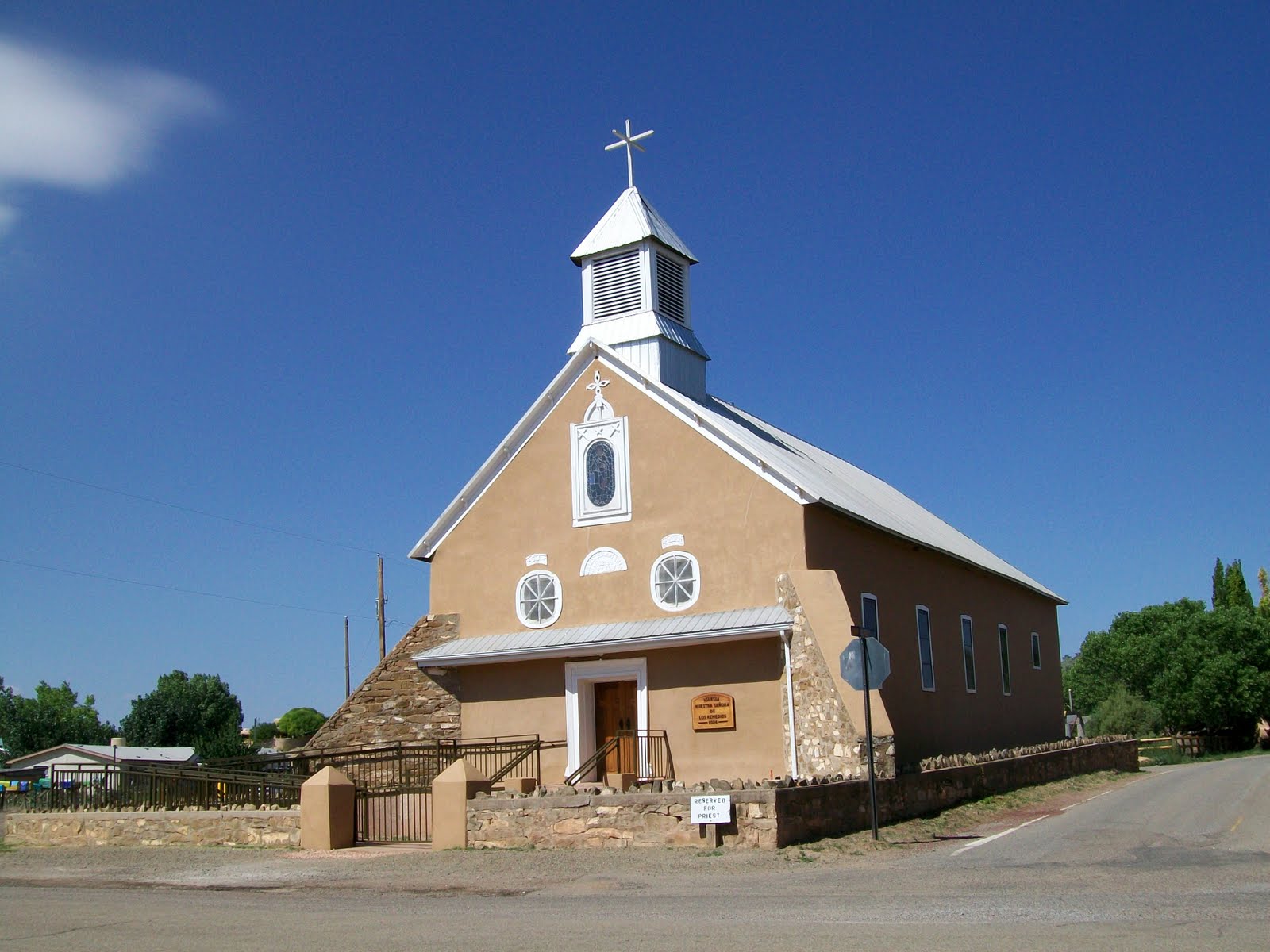
There was less caroling this year and no snow or flying farolitos, but as we headed back home, we passed through the little town of Galisteo. In front of the church, Nuestra Senora de los Remedios, burned a half dozen luminaria, as the Christmas Eve bonfires are called in this part of New Mexico, and the road leading to the church was lined for what seemed like hundreds of yards with glowing paper farolitos. The scene was charming and breathtaking at the same time...

Only in New Mexico.

Feliz Navidad!

Monday, December 16, 2013

Carry Me Back: Memories of Dan Hicks and His Hot Licks and a Christmas Show Last Night


Dan Hicks says he has always had a thing for Christmas as far back as he can remember, and when you get up in years like we are, that's no easy task. Remembering, that is.

We haven't seen Dan for quite a long time, maybe ten or fifteen years or so. The last time I remember seeing him was at an outdoor gig in a park somewhere in or near Sacramento, but I can't remember exactly where or when, though I can recall taking pictures and even possibly a few short videos at the event. But I don't remember where they are. Memory gets complicated.

I remember him performing Kollege of Musical Knowledge at Harlow's in Sacramento, but I'm almost certain I didn't attend. Did see Asleep at the Wheel there, and remember Dan was either going to be there or had recently been, but I can't remember actually being there for his performance.

Then there was the all too brief bookstore appearance (was it a bookstore?) somewhere out in the Sacramento suburbs, before or after the park performance, where we got a bunch of CDs signed. But where or when it was exactly, I can't recall.

Back in the 70's, when we were living in San Francisco, we'd routinely go over the Golden Gate Bridge to Mill Valley and see Dan and the band at Sweetwater and/or the Old Mill Tavern. I'm pretty sure we saw them at both venues. They'd also play in San Francisco at a small venue off of Pine or Polk Street, but I don't remember the name of it. It was within walking distance of our place, though, so that was cool. We also saw them on occasion at a tiny venue on Haight St, the name of which escapes me. We saw them at Winterland and the Fillmore in San Francisco, and at the Palms in Davis as well.

Tuesday, December 25, 2012

Christmas Eve On Canyon Road

Canyon Rd Christmas Eve 2012


One of the holiday traditions in Santa Fe is an evening stroll along Canyon Road on Christmas Eve. Practically the whole town turns out, and we'd been told it's quite festive if a bit crowded...

We had never been to this particular event due to factors beyond our control. It's kind of like the Burning of Zozobra or Balloon Fiesta. We might have been in New Mexico when these excitements and get togethers are in progress, but for whatever reason, we've been unable to hie ourselves hitherwards to participate.

Yesterday we made our way up to Santa Fe on a blustery and cloudy afternoon, nonetheless, found a dandy parking slot, and set out on foot, bundled up like ticks about to pop, to see what was up with the farolitos  and luminarias and hot cocoa mongers and gallery proprietors and all the people decorated like Christmas trees -- and not yet too drunk -- out for a stroll on Canyon Road on Christmas Eve.

Oh what fun...! Really. People were arriving from all over and every direction even before the fires were lit. They were wrapped in their Christmas lights or jangling their Christmas bells, some bundled up appropriately for the weather that was predicted to come, some looking far too underdressed for even the early evening chill in the air. Some were overdressed, in the Santa Fe Style sense, even though it didn't seem like they were wearing nearly enough to keep warm. Oh well!

One of the complaints we've heard about Santa Fe is that "it's nothing but galleries", or it seems to be so when you're in the heart of the town around the Plaza or -- especially -- on Canyon Road not too far away from the Plaza to the east. Yes, well. When you're in Santa Fe, you're going to be surrounded by, indeed immersed in, art, both public art scattered around, and art for sale at a plethora of galleries that are literally bursting from every little cranny, nook, plazuela and plazuelita you can find. And there are hundreds of them.

Gallery going can be a great deal of fun, or it can be a tiresome chore, depending. If Santa Fe had a gallery problem it was that in the past, they tended to show pretty much the very same things, often seemingly by the very same half-dozen or so "prominent" artists, along with a bunch of "ehn" dreck for the tourists. That's changed, thank goodness, and the scope of art available in the galleries or on view at the museums seems much broader than it once was. Overall quality has always been high, but these days it's even higher, much of the work is by people I've never heard of, doing really remarkable and appealing  things in a wide variety of media. This is good.

Canyon Road, which once served as a route into the Sangre de Christo mountains heavily utilized by wood cutters and travelers up to Taos, is now "nothing but galleries" and restaurants catering to the stylish and expensive crowd.

I think I've pointed out in the past that I have bought a lot of paintings and other art over the years, and our house in New Mexico, though larger by half or more than our house in California, is much too small to display it all. So we have to rotate, but I'm kind of lazy at doing that. We change paintings less often than we should, to say the least. While I was moving things around after we arrived to settle here in October, for example, I ran across a whole series of paintings I'd pretty much forgotten about, and I'm still puzzled about what to do with them, as we've never displayed them, many were obviously impulse purchases, and tastes have changed. We also have a lot of paintings and other art that we brought from California (though we gave away quite a lot in the final flurry of moving) that sits stacked in the outbuildings. I've actually thought of adding another wing to the house and finishing off the attic in order to have room to display more of the collection, as well as to have the space to take care of it a little better. Good doG!

Naturally, we like looking at art, owning it, and at least at one time, we didn't mind creating it, either. The creation part is still on hold, but it's impossible to keep us away from galleries and museums and artists' studios where we naturally gravitate. And from time to time we still buy pieces to add to the overflow.

But we were good on Canyon Road, only visiting one gallery and picking out about five pieces for further consideration and possible purchase one day. The outdoor displays were quite sufficient, truth to tell. Somewhat surprisingly, most of the galleries appeared to be closed anyway. Our impression had been that the galleries would all be open for the evening's processional, but no. Not so. In a sense, it was just as well. The crowds were so thick at the galleries that were open it was not a particularly conducive situation for art appreciation.

In any case, the evening was not so much about art as it was about Christmas, and that became very clear as the little bonfires were lit along the street, and the farolitos/luminarias glowed softly on sidewalks and the adobe walls and rooflines. The farolitos/luminaria are something special in New Mexico and some other parts of the Southwest at Christmas time. They are nothing but brown paper lunch bags with a bit of sand or gravel in the bottom with one tea light for illumination. They are very subtle lights compared to standard Christmas lights, so subtle they can almost disappear when combined with brighter electric displays. But on their own, farolitos/luminarias are enchanting. And Canyon Road had plenty of them -- one display at Morning Star Gallery was breathtaking.

(Note: definitions are one of the subtler aspects of the season; depending on where you are -- and perhaps your mood at the moment -- the paper bag lanterns are called either farolitos or luminarias,  just as the bonfires are called luminarias  or farolitos. In fact, the terms are used interchangeably, and it's always best to keep a sense of humor about what to call the season's fire lights.)

The little bonfires, luminaria/farolitos, became stations for carolers, which we joined from time to time as we proceeded up Canyon Road. And then it began to snow. We knew that snow was predicted, but there was no certainty about just when it would come or how much there would be. It snowed as we were rendering "Jingle Bells," so we shifted seamlessly into "Let It Snow" as we stood around the fire marveling at the sight and the timing. People were happy enough beforehand, but the snow turned the whole event into something truly special. The children were amazed, and the dogs loved it. Smart people were wheeling their chihuahuas and children around in Radio Flyer wagons, the less smart stuck to their strollers -- which unfortunately would get stuck here and there along the route. Some thoughtfully provided booties for their big dogs to wear in the snow, but the bundled up chihuahuas were the evening's star animal attractions.

There was hot food and hot drink along the route, so no one need get too chilled. I heard someone looking for freebies say "No one's drunk enough to start giving stuff away, but they will..." and I thought, yes, of course. They will. The accordion player at one stop along the way saw some bicycle cops cruising through the crowds and started singing, "Police Took My Car" to the tune of "Feliz Navidad," which of course got the crowd into an even merrier mood.

As the snow started coming down more heavily, we decided it was time to head back, not knowing how much there would be and with a fifty mile drive ahead of us. I don't mind driving in snow any more, but I wouldn't say Santa Fe  has the best public snow-services. Streets are not plowed with any sort of dependability, nor are they necessarily salted before they ice; ice is allowed to build up at intersections and wrecks are fairly commonplace as a result (that or sliding off the road....)  At night, it can get a little chaotic as drivers try to avoid hazards and thread their way around the ice patches...

We walked through the snow back toward Paseo de Peralta, not really fretting about anything, though. The temperature didn't seem to be that cold and the snow wasn't that heavy. It was pretty and very appropriate for the mood, the evening, and the season. As we got closer to our parking place, the crowds headed toward Canyon Road got thicker and thicker, and I wondered how they could pack any more people in; the street crowd was already nearly wall to wall, and it was still early.

The snow stopped by the time we got to the van, and the roads back to our place were all ice free. Yay.

I'm usually not that good in crowds, but the evening's festivities were yet another real treat in New Mexico, one that, like so many others, we'll not soon forget.

Canyon Rd Christmas Eve Wagon Wheel 2012

Friday, December 21, 2012

And So To The Ballet


Yes, well, it's Christmas Season, and we have tickets to "The Nutcracker in the Land of Enchantment." A new production by the Festival Ballet Albuquerque.

We are not ballet aficionados to put it mildly. The last ballet we took in -- must have been 20-25 years ago now -- was a rather turgid Swan Lake that was notable for the thunder-footed corps, and we have never been involved in ballet production though we have had many associations with ballet company personnel; it's inescapable in the non-profit performing arts realm.

It was a ballet executive in California who informed me that New Mexico was "the most racist society" she had ever encountered, and this after a significant career at the NEA in DC. After the NEA she went to Santa Fe to run a dance company, and she said she had never - ever experienced the kind of racism she found there anyplace else, not even in Texas. She was horrified.

And of course this particular Nutcracker, at the National Hispanic Cultural Center, would probably be characterized by her as deeply, fundamentally "racist" because of its reconception as a New Mexican story -- that has Indians and Spanish in it, along with some Anglos, even a cowboy or two -- rather than a Russian reconception of a German story. Or something.

We'll see.

Oh, the weather outside is frightful...


(No more snow is predicted here till Christmas Eve, when we're planning an expedition to Santa Fe...)
 -----------------------------------------------------------------------------------------------------------------

[NOTES ON HAVING BEEN TO THE BALLET:

What a delight!

Having seen some Nutcrackers on the TeeVee over the years, and having heard the music since I was little (my parents both being Tchaikovsky-addicts) we had something of a familiarity with the story and the score and the various dances. We avoided attending "the Annual Nutcracker Ballet" wherever we were, however, because too often it was seen as a kind of Dreary Christmas Ritual to be endured rather than enjoyed. Sad to say, but when these things are done over and over and over again (like the endless stage productions of Dickens' "A Christmas Carol") it becomes less a tradition and more a Holiday Fright.

So when we arrived at the National Hispanic Cultural Center -- where we'd never been -- last night it was with both anticipation and some dread. I was quite taken with the facility. It is gorgeous in a very spare and simple contemporary way, not at all what I expected. The balconied Albuquerque Journal Theater is comfortable and accommodating for a maximum audience of 691. Despite its spare though rather grand appearance, it's actually fairly intimate, which we soon realized as many members of the audience made their way down to the pit to chat amiably with the musicians below.

As we waited for the curtain, our sense of anticipation overcame any sense of dread at all. As the house filled up with the family and friends of the dancers and musicians as well as many eager ballet-goers, we sensed that this would be a special night, not just for those who had ties with the show but for Albuquerque's arts scene in general.

Patricia Dickinson Wells, the choreographer, introduced the evening, and the conductor, Guillermo Figueroa gave a brief talk on the genius of Tchaikovsky's music for this ballet, a project he really didn't want to do but could not very easily turn down as the commission came from the Imperial Ballet of St. Petersburg, so you don't send your regrets. He explained that the score is easily one of the most intricately designed and brilliantly conceived of any ballet scores, and that Tchaikovsky had used the story as a vehicle for some extraordinary technical musical exploration. It isn't something that one has to have technical knowledge to appreciate, because you feel it as you hear it. And so it was.

The orchestra under Figueroa's baton was marvelous. From what I could see of them -- which wasn't much -- they were, like the dancers on stage, mostly very young, and they played eagerly, with both skill and authority. It was a real pleasure to hear them.

On to the dancing, which was remarkable in so many ways. The production was a hybrid between the "traditional" version based on whatever artistic model was being used at the time and a specifically New Mexican artistic idea. It was not, to my mind, fully realized; there was a lot farther the designers and choreographer could have gone with the New Mexican theme, and I suspect that as the production develops, they will. This was a first try, in other words, and I suspect that, given the enthusiasm with which it was greeted, it will become the Standard Nutcracker for the region, and that as it does, it will become "more New Mexican."

The principal dancers were mostly very young, some still in high school and younger, and they were for the most part remarkably good. The Clara -- renamed "Maria" -- was not showy at all, but she was a sensitive and appealing dancer who was perfectly cast and beautifully rendered. Her Nutcracker/Soldier was equally remarkable for his assurance and skill, though he is, apparently, still a senior in high school.

The opening party scene was a treat, most of the cast assembling for festivities set in a 19th Century New Mexican hacienda. The choreography was intricate and lovely to watch. The costumes were an adaptation of Victorian holiday wear as it might be interpreted on the New Mexican frontier. Charming.


The Nutcracker himself is not my favorite character in the entertainment firmament as his personality is rather wooden as those things go, and he's not all that engaging. On the other hand, I've always found Clara/Maria kind of selfish, treacly and given over to emotional outbursts and so not a particularly pleasant character. So this pair, danced by Justine Flores and Garrett Dellios were really quite refreshing. Both are young and neither was as self-absorbed as I've often seen the characters (and dancers, for that matter) be. They danced well, with no lack of self-assurance, but that's not the same at all as self-absorption. But of course, they are not the ballet's "stars."

"The Nutcracker" presents a series of set-pieces as Clara/Maria's dream unfolds, starting with the Battle of the Toy Soldiers, in which the Nutcracker character is transformed into a soldier (toy, of course) who vanquishes the Rat King who is carried off by his rat-comrades. The scene is meant to be funny, and the cast played it both for laughs and menace Friday night. The rat's eyes glowed fiery red in the rat-heads worn -- surprisingly comfortably -- by the rat-corps, made up mostly by the younger dancers, with the very youngest dressed as mice, really very cute. The Rat King himself, in this version, was portrayed as a kind of Pancho Villa/Mexican Outlaw sort, with serape and bandoliers, which I'm sure would be considered "racist" -- well, at least if this production were at Popejoy Hall rather than the National Hispanic Cultural Center. This was, after all, a comic scene. I thought the Rat King had a rather feral cat effect going with his headpiece though, and it struck me as a bit odd. Someone in the audience said he thought the Rat King's head was supposed to resemble Coyote, and I thought that was interesting, but I didn't buy it.

The scene was next set in "A Pinon Forest in Winter" for the Dance of the Snowflakes. Though there was no sign of a pinon tree -- or any tree at all -- in this forest, there was plenty of fog and snow, so much fog in fact that many in the hall burst out in a coughing fit. Wrangling the fog machines is always something of a cursed task, and when the stage-fog insensibly fills the hall, it can have a very strong psychological effect on the audience. The stage-fog itself is generally not the cause of the reaction (though it sometimes is, especially if it is not mixed right.) People start coughing because they sense that they are being enveloped in smoke -- but it's not smoke. In New Mexico, I think I've said, many people heat their homes with wood during the winter, and pinon wood is prized and favored for heating -- as well as for the distinctive aroma of its smoke. Pinon is burned in street bonfires known as farolitos (or luminarias, depending on where you are) and the smell of pinon smoke in winter is as characteristic of New Mexico as the aroma of roasting chile during harvest season. Sometimes when stoves and fireplaces start smoking inside houses and buildings (La Fonda in Santa Fe occasionally has this problem, it's old, after all) and rooms fill with smoke, you either have to go outside in the cold or stay and cough and wipe your eyes until the problem is resolved. That's what I think was happening when members of the audience reacted to the stage-fog first encountered in the pinion forest scene for the Dance of the Snowflakes.

I went on at such length about this incident because it was perhaps the most "off" note of the production. Then I thought, "Well, I've been caught in ice-fogs here that were worse!"

The Snow King (Louie Roccato) and Snow Queen (Natalee Maxwell) were very nicely, albeit "traditionally," rendered as was the case with the Waltz of the Snowflakes. This is one scene that could have been a good deal more "New Mexican," but it might take some trees and more adventuresome staging that makes it more of an adventure than a set piece. Of course, here I am trying to direct something I had nothing to do with... ;-)

In the second act, the angels were rendered in a much more "New Mexican" manner, the costumes being ballet adaptations of folklorico wear, and it worked really nicely.

The Sugar Plum Fairy and her Cavalier, danced by Julie Cobble and Dominic Guerra, were without doubt the stars of the ballet, and they made the most of it through the rest of the second act. These were two very talented dancers who quite naturally took command of the stage, in solos and duets of both charm and power.

The interludes included a remarkable performance by Jennifer Boren as a "Spanish Snake." She was for that little scene the ballerina assoluta. It was a treat to watch her. The "Chinese" interlude would no doubt have to be classed in the "racist" category, for it was simply some stereotype hopping around by dancers dressed like Chinese dolls. Again, it was supposed to be funny.

The "Fandango," though, was nicely realized. The choreography evoked something of Agnes De Mille's "Oklahoma!" which made me smile.

The "Borreguero" and "Las Pastoras" interludes were sweetly done perfectly appropriate for a New Mexican idea of the Nutcracker ballet. Of course, it helps that Tchaikovsky included Spanish dances in the original! The children who got to play mice in the early battle scene got to play sheep in the later interlude, and it was adorable.

The next interlude, that of the "Storyteller and Children," gave me a bit of heartburn. It was a good idea -- even an excellent one -- but I question the execution. The Storyteller was portrayed by a bearded middle aged Anglo man... uhhh... and the children were dressed and choreographed as if they were part of  "Indian Day" on the Mickey Mouse Club in the 1950's. (I'm so old, I remember...). No, I thought, no. This could be so much better. So much better! Adapt actual Indian dances, use Pueblo -- or even Pow Wow -- costuming ideas; and how about a Native woman rather than an obviously Anglo man  as the Storyteller? Hm? Maybe integrate some Native symbolism into it all. The music works for the Native idea, and I'd really like to see it carried further.

The "Waltz of the Flowers" made up for any reservations (heh) I might have had about the Indian interlude, however. It was gorgeous, and beautifully danced, an exquisite climax to the ballet, more than fulfilling every expectation of what this production could be.

The finale was a little rough, but once the kinks are worked through, I'm sure it will be fine.

The audience, for its part, was enchanted, despite the occasional off note or bobble -- though not from the orchestra which played superbly throughout.  There might have been some uneven or imperfectly realized moments in this "Nutcracker," yet it was on the whole an extraordinary production, much more than we anticipated at the outset.

Such a young cast, dancing so well in a difficult but creative, beautiful production, and an orchestra of such youth and caliber playing the familiar classical/romantic music of the season so brightly in such a welcoming and comfortable facility made for a remarkable and memorable holiday outing.

This "Nutcracker" was no tired or dreary production to be endured. It was instead an enchanting evening to be enjoyed. And we did.