It's become a trope within the policing industry and community: that public questioning and challenging of violent policing has led to an increase in violent crime -- because the police are less aggressive against criminals -- for fear of being held up to scrutiny and ridicule.
In other words, video-ing the police has made them cower in fear. It's the "Ferguson Effect".
They are afraid of their violence being seen and criticized.
They are cowards.
Of course we've known that for I don't know how long, and videos help to confirm that assessment.
But is it true that there is an overall increase in violent crime? And if so, is there a correlation between said increase and "less aggressive" behavior by police?
The trope is a truism being marketed by police and their media confederates nation-wide, including by the FBI director -- I'm sure with the approval of the Attorney General and the White House. On the other hand, police chiefs and law enforcement honchos, as well as the Attorney General and the White House have gone to some lengths to examine and self-criticize the current deplorable state of criminal justice -- and by extension violent policing that feeds the system.
In some cities, there seems to be an increase (media would call it an "uptick") in violent crime, but there is no lack of violent and "aggressive" policing, as statistics on police kills and other police violence and aggression shows.
On the other hand, in some cities, like Albuquerque, where police violence has been reduced, it appears in the absence of complete statistics that crime rates are about the same -- despite growing media hysteria in the local market over an apparent "explosion" in violent crime, a "wave" as it were, as police back off their use of force, particularly lethal force. Reforms required by the DoJ consent decree actually don't affect the overall use of force or use of lethal force, they simply require that any such use of force be recorded and reported -- and that it fall within particular constitutional guidelines. Consent decrees are never about reducing or eliminating the use of force/use of lethal force; they are about rationalizing and standardizing it according to "best practice" guidelines.
That police violence has been reduced in Albuquerque is a result of decisions made at the top of the command chain, not because of the DoJ, but because the killing spree the police had been on for years was costing the city a huge amount of money in payouts to victims and their loved ones, and in lost business because the city's reputation for violence by the police (as well as by the alleged criminal classes) was in the toilet. Something had to be done and fast.
The order went out to stop the killings.
So let it be written, so let it be done.
Now police and media are trying to whip up public hysteria over particularly egregious or bloody incidents -- including the recent shooting of a police officer (who survived...)
Well, no. My advice to them is: "Stop it."
Basically what they want is to return to their Wild West days when they were killing at will with no consequences, something that some other police departments in New Mexico (and elsewhere) still do and feel is their right. They designate themselves to be judge, jury and executioner -- some are specifically executioners (ie: snipers) -- without hindrance of any kind.
They see the challenges they face from the public and politicians as interference and they want it to stop.
It's become a widespread ploy used by police departments and their media champions more and more frequently, and I see less and less potential for a genuine end to violent policing because of it.
The police do not want it to end, and they are terribly fearful that they might be in some kind of danger if it does end and pretty much the worst thing they can imagine is danger to themselves.
Statistics show that it has hardly ever been safer to be a police officer, however. What danger there is is less than that of many other professions, and they know it. But they want you and me to think that there is an ongoing "war" against police which they are valiantly fighting in order to make "us" safe. No such thing is the case. It's false.
And that basic falsehood must be pointed out as often as necessary by as many as can do so.
Otherwise the return to and reinforcement of the status quo of violent policing will be solidified, and there may be no way to undo it for generations to come.
DeRay's mantra of "We Will Win" will become a hope never realized. Or -- just as likely -- the definition of "win" will be massaged and refined to such a point that it's meaningless.
The nationwide effort to overcome police violence has been going on for well over a year (of course it's been ongoing for decades on a local level) and there is really very, very little concrete to show for it. The demonstrations highlight the problem, but solutions are absent. There's a considerable amount of talk but a paucity of action. Nothing changes. The number of those killed by police continues to rise. The rates of incarceration are stable. The System continues grinding on with no let up.
In some few cities like Albuquerque -- and until recently Oakland -- there has been a significant reduction in police violence. But that is being greeted with dismay by the PTB on the presumption that only violent policing against the lower orders keeps them in line enough to maintain the safety and security of the Overclass. They sincerely believe that only violence will do it.
It's a false belief.
But convincing the Overclass of that seems as far out of reach as ever.
--------------------------------
So there.
Showing posts with label Institutional Reform. Show all posts
Showing posts with label Institutional Reform. Show all posts
Sunday, October 25, 2015

Thursday, March 12, 2015
Burst of Action, Rage and Outrage in Ferguson
Well.
How much will these developments matter in the long run?
Ferguson's city authorities have been overhauling their little fiefdom by shuffling around some of the city's personnel and getting rid of some of the more egregious masters of the Negro Farm. The city manager was duly separated from his overseer seat; the police chief resigned; the municipal court judge who had been so good at harvesting the Negro crop for the city left town -- but he's still right next door; two police commanders who had chuckled over their racist email "jokes" took off for parts unknown; the racist court clerk who thought the Negroes were so funny also departed.
Things were looking somewhat positive in Ferguson for a change, though who would be stepping into the vacancies was anybody's guess. Given the economic structure of many of the municipalities in St. Louis County, it's hardly practical to bring in a more, shall we say, public-service oriented team.
The problem is that these tiny fiefdoms grandly called "cities" in St. Louis County are simply not economically viable unless the population or a significant portion of it is "farmed" as a cash crop might be. They do it in St Louis through the constant petty extractions of the municipal courts, backed up by predatory policing. It's a system worked out over many generations.
These things don't change overnight.
But overnight, shots rang out at the Ferguson Police HQ and Muni Court Building, an iconic symbol of the oppression the residents -- well, the black residents -- of Ferguson feel, and the sight of numerous protests and demonstrations since the outrageous killing of Mike Brown by FPD officer Darren Wilson last August.
Two police officers were wounded, though apparently neither of them were FPD officers.
There have been endless claims of "shots fired" during the protests against police violence in Ferguson, literally from the first moments of outrage after Darren Wilson shot and killed Mike Brown on Canfield Drive that hot August noon last years. Literally from the first moments of protest and outrage in Ferguson, the claim has been made by police that shots were fired. This statement was made over and over again during protests, but there was no proof of it, certainly no proof that members of the protest crowds were firing at police.
What we witnessed instead, through Livestreams and other mean, was police firing tear gas, flash grenades, smoke bombs, and rubber bullets at protesters. Time and time again. The police would only confront "peaceful protests" -- and they did it with such over the top armaments and technology that the scenes often turned chaotic and absurd, thanks to the police response to protesters. The police never interfered with arsonists, vandals, and looters, however. Never. They only responded to non-violent protests with overwhelming force.
And often their excuse was that somebody had fired at them, or they heard gunfire somewhere, or somebody not involved with the protests was arrested somewhere and they had a gun. They would show off the guns they had taken from people they arrested -- people who had nothing to do with the protests -- and they would often imply that these guns were being used by protesters against the police. But no such thing was happening, and there was never any evidence or proof whatever that protesters were firing at police.
There was abundant evidence that the police were firing at protesters, however.
All the police had to do was make the claim that they were being fired on by the protesters to justify in their own minds and the minds of their supporters their violence against nonviolent crowds.
It was an obvious tactic to garner support for their often outrageous actions. In the end, the claims of shots fired made their way into the DoJ's report on the Darren Wilson matter, as a justification for many actions -- such as leaving Mike Brown's body in the street for hour after hour. "There were reports..." of gunfire nearby, and as we know, force protection is the prime directive of all police forces and public entities everywhere, all the time. Thus, if there is any suggestion or suspicion of danger, protecting the force (and their fort) comes first and foremost.
So last night, as a protest demonstration in front of the Police Fort in Ferguson was winding down, shots really did ring out, and two officers -- neither from FPD -- were wounded. An "active shooter" situation was declared, police guns were drawn on the remnants of the crowd, and the fort was protected. Flying squads of police were dispatched to the site where the gunfire was thought to have have originated, well away from the few remaining protesters.
There were reports -- not confirmed that I know of -- that there were four shots, all of which reached their targets. In other words, two shots hit each police officer. The distance was calculated at about 200 yards, perhaps farther, as the exact location of the shooter was not determined. Obviously, however, whoever shot the officers was a skilled marksman, no doubt using a high powered rifle, perhaps with a nightscope.
A pro.
Immediately, there was speculation that this was a provocation, a false-flag operation by someone interested in stirring things up a bit. Could be. This is America, and false flag operations are as American as apple pie and motherhood.
But who knows. Sometimes what seems to be clear... isn't.
At any rate, the hand wringers are out in force; this incident will "kill the movement," yadda yadda, which, not surprisingly, is exactly what a false flag operation would be designed to do. "We must practice non-violence! Gandhi! King! etc." Yes, well, those who are so loudly invoking King and Gandhi at a time like this simply falsify history, but that's been going on so long, hardly anybody knows the real history of King's and Gandhi's movements, and those who do know are often loathe to dispute the received narrative.
The shooting of the officers in the Bronx was supposed to "kill the movement," too. Of course the police and the defenders of their violence and murder utilize any incident like the one overnight -- incidents which are very, very rare -- to claim that the police are under constant assault and attack from the murderous public. We hear it all the time. It's false, but now and then there are incidents in which police are attacked and even wounded. Now and then.
What happened in Ferguson overnight is anybody's guess, and given the way "gunfire" has been investigated throughout the protests against police violence, I expect we will never know what happened or who was responsible.
Finding that out is not a particular priority.
The priority is to declare the people at war with the police, and thus to justify any level of suppression deemed necessary.
We'll see how it shakes out in the daylight...
How much will these developments matter in the long run?
Ferguson's city authorities have been overhauling their little fiefdom by shuffling around some of the city's personnel and getting rid of some of the more egregious masters of the Negro Farm. The city manager was duly separated from his overseer seat; the police chief resigned; the municipal court judge who had been so good at harvesting the Negro crop for the city left town -- but he's still right next door; two police commanders who had chuckled over their racist email "jokes" took off for parts unknown; the racist court clerk who thought the Negroes were so funny also departed.
Things were looking somewhat positive in Ferguson for a change, though who would be stepping into the vacancies was anybody's guess. Given the economic structure of many of the municipalities in St. Louis County, it's hardly practical to bring in a more, shall we say, public-service oriented team.
The problem is that these tiny fiefdoms grandly called "cities" in St. Louis County are simply not economically viable unless the population or a significant portion of it is "farmed" as a cash crop might be. They do it in St Louis through the constant petty extractions of the municipal courts, backed up by predatory policing. It's a system worked out over many generations.
These things don't change overnight.
But overnight, shots rang out at the Ferguson Police HQ and Muni Court Building, an iconic symbol of the oppression the residents -- well, the black residents -- of Ferguson feel, and the sight of numerous protests and demonstrations since the outrageous killing of Mike Brown by FPD officer Darren Wilson last August.
Two police officers were wounded, though apparently neither of them were FPD officers.
There have been endless claims of "shots fired" during the protests against police violence in Ferguson, literally from the first moments of outrage after Darren Wilson shot and killed Mike Brown on Canfield Drive that hot August noon last years. Literally from the first moments of protest and outrage in Ferguson, the claim has been made by police that shots were fired. This statement was made over and over again during protests, but there was no proof of it, certainly no proof that members of the protest crowds were firing at police.
What we witnessed instead, through Livestreams and other mean, was police firing tear gas, flash grenades, smoke bombs, and rubber bullets at protesters. Time and time again. The police would only confront "peaceful protests" -- and they did it with such over the top armaments and technology that the scenes often turned chaotic and absurd, thanks to the police response to protesters. The police never interfered with arsonists, vandals, and looters, however. Never. They only responded to non-violent protests with overwhelming force.
And often their excuse was that somebody had fired at them, or they heard gunfire somewhere, or somebody not involved with the protests was arrested somewhere and they had a gun. They would show off the guns they had taken from people they arrested -- people who had nothing to do with the protests -- and they would often imply that these guns were being used by protesters against the police. But no such thing was happening, and there was never any evidence or proof whatever that protesters were firing at police.
There was abundant evidence that the police were firing at protesters, however.
All the police had to do was make the claim that they were being fired on by the protesters to justify in their own minds and the minds of their supporters their violence against nonviolent crowds.
It was an obvious tactic to garner support for their often outrageous actions. In the end, the claims of shots fired made their way into the DoJ's report on the Darren Wilson matter, as a justification for many actions -- such as leaving Mike Brown's body in the street for hour after hour. "There were reports..." of gunfire nearby, and as we know, force protection is the prime directive of all police forces and public entities everywhere, all the time. Thus, if there is any suggestion or suspicion of danger, protecting the force (and their fort) comes first and foremost.
So last night, as a protest demonstration in front of the Police Fort in Ferguson was winding down, shots really did ring out, and two officers -- neither from FPD -- were wounded. An "active shooter" situation was declared, police guns were drawn on the remnants of the crowd, and the fort was protected. Flying squads of police were dispatched to the site where the gunfire was thought to have have originated, well away from the few remaining protesters.
There were reports -- not confirmed that I know of -- that there were four shots, all of which reached their targets. In other words, two shots hit each police officer. The distance was calculated at about 200 yards, perhaps farther, as the exact location of the shooter was not determined. Obviously, however, whoever shot the officers was a skilled marksman, no doubt using a high powered rifle, perhaps with a nightscope.
A pro.
Immediately, there was speculation that this was a provocation, a false-flag operation by someone interested in stirring things up a bit. Could be. This is America, and false flag operations are as American as apple pie and motherhood.
But who knows. Sometimes what seems to be clear... isn't.
At any rate, the hand wringers are out in force; this incident will "kill the movement," yadda yadda, which, not surprisingly, is exactly what a false flag operation would be designed to do. "We must practice non-violence! Gandhi! King! etc." Yes, well, those who are so loudly invoking King and Gandhi at a time like this simply falsify history, but that's been going on so long, hardly anybody knows the real history of King's and Gandhi's movements, and those who do know are often loathe to dispute the received narrative.
The shooting of the officers in the Bronx was supposed to "kill the movement," too. Of course the police and the defenders of their violence and murder utilize any incident like the one overnight -- incidents which are very, very rare -- to claim that the police are under constant assault and attack from the murderous public. We hear it all the time. It's false, but now and then there are incidents in which police are attacked and even wounded. Now and then.
What happened in Ferguson overnight is anybody's guess, and given the way "gunfire" has been investigated throughout the protests against police violence, I expect we will never know what happened or who was responsible.
Finding that out is not a particular priority.
The priority is to declare the people at war with the police, and thus to justify any level of suppression deemed necessary.
We'll see how it shakes out in the daylight...
Sunday, September 21, 2014
What Happens When The Market Moves On?
 |
| Museum of Contemporary Native Arts (MoCNA) in Santa Fe. |
I'm still processing some of the material from the exhausting day-long seminar at the Museum of Contemporary Native Art in Santa Fe that Ms Ché and I attended yesterday. Oh, and I rallied and went marching at lunchtime with the People's Climate rallyers and marchers. It was a full day.
The main issue alluded to but never entirely clarified was that The Market (for Art) has moved on and those who don't move with it and don't move quickly enough are shit out of luck.
There was only one working artist on the panel who I could be sure was making a living from his art, Tony Abeyta, all the rest were reliant on academic or institutional positions for their day to day wherewithal and succor.
Now that's sad. Or perhaps not.
There were a number of artists on exhibit at the Museum, none of which were acknowledged during the seminar, this despite the fact that the work of one, Ric Gendron, surrounded the symposites who were so deeply discussing the matter of Art and specifically "Indian Art" inside an institution dedicated to the notion that Contemporary Native Art is... a thing. That is to say, artists of the Native persuasion have a vital contemporary perception and voice and they use them in ways that don't necessarily fit the standards and expectations of The Market or the dominant-culture institutions such as the New Mexico Museum of Art on the other side of the Plaza.
The fact that none of the artists on exhibit at MoCNA was mentioned, nor were any of the exhibits acknowledged in any way by the panelists -- or even by the Museum's own curator-hostess -- was the first clue to me that the seminar lacked grounding. It was instead at best an abstract and academic exercise.That's what made it exhausting and ultimately empty in my view.
Without grounding in The Art and the Artists Themselves, everything else is suspect.
And so it went.
This was not unlike the series of lectures we attended at the New Mexico Museum of Art last year and into the spring, in which the history of Art in New Mexico was highlighted -- well, the Legend was -- but without really connecting with the huge quantity of Art possessed by the Museum, some of which surrounded the attendees but went unmentioned unless someone attending (me?) asked about it.
The problem, as I saw it, is that The Market has moved on, and although Santa Fe is still one of the chief art markets in the United States, it ain't what it used to be, the level of competition among artists for attention, let alone making a living is insane, and the Market for Southwest Art isn't sufficient to support so many artists on the one hand, and Santa Fe's galleries and other art market outlets are concentrating their efforts and interests on art and artists from elsewhere, whether Europe or Africa or wherever.
The New Mexico Museum of Art has -- or had -- a vast collection of Southwest Art dating from the era of the First New Mexico Artists Blumenschein and Phillips (ahem) to very recently. They've sold off a good deal of what they had in order to acquire more contemporary works, expand their collections into more diverse styles and to acquire works by artists from other eras, genres and locations.
The Museum of Contemporary Native Arts also has a vast collection, most of which stays unseen like that of the New Mexico Museum of Art and practically every other museum I know of. The museum Market demands it be so, unfortunately -- or perhaps fortunately depending on your point of view. If the entire collections were available to view by the public, after all, it would be overwhelming on the one hand, and it would prevent the Museums from fostering/highlighting/promoting certain artists and elements in their collections while diminishing or ignoring others. But that's how the Market works, and every museum that wishes to be taken seriously must play the game by the rules of the Museum Marketplace or be ignored and defunded by the People Who Matter.
It's a terrible game they must play, but play it they do, or eventually they perish.
As I mentioned, Tony Abeyta was the only artist on the panels I was sure was not dependent on the Institution or the Academy in order to make a living. He makes a handsome living from his art. Not many artists in any field of any ethnicity can do that anymore -- if they ever could. He is a business, an enterprise, a factory. In other words, he knows how to work The Market to his advantage.
Most artists, at least in my experience, don't have the temperament or skill to do what Tony does, and he mentioned during his talk that when he came up to Santa Fe in the '80s to do his time at IAIA, the place was jam-packed with some of the most highly regarded and financially successful Native artists ever, and he mentioned some of them: Allan Houser, Harry Fonseca, RC Gorman, and so on, and he said that all of these artists were mentors to him and to other Native artists, and they provided the kind of richness of experience that he feels obligated to share with the artists he mentors, but it's not the same anymore.
It's not the same any more because the ferment driven by financial success isn't there any more. Only a few are able to make ends meet and have a little extra from the sale of their art, everyone else has to do something else to get by. Art for them, essentially by definition, is a 'hobby' not a career. Because they can't possibly make a living at it.
It doesn't matter whether they are skilled and creative as all get out; the fact is, The Market rules, and The Market has no interest in them, no room for their work, and most of all, The Market doesn't care a whit whether they succeed or fail. At various times, in the '80s when Tony Abeyta was coming up for example, The Market in Santa Fe and elsewhere was in love with Indian Artists and some were financially successful in ways not seen since.
As I process what came through the seminar yesterday, I recall with some clarity what The Market was like back then, and how that era has passed. It isn't like that any more. Not only are the (Indian) artists who were so prominent back then mostly passed to the other side, the interests and demands of The Market are quite different now.
So. What are Indian artists to do? And it's an important question. One for which there was no answer yesterday, one for which there may be no answer in the end.
Part of the thrust of the discussion -- to the extent there was a thrust -- had to do with whether one was an artist or an Indian first. If there was a resolution, and I'm not sure there was, one is both -- if one is an Indian artist. It's self-evident, but the question must be asked, over and over again, in part because "Indian Art" isn't the same thing as standard and expected Western (ie: Market) Art, and Indians are thought to be always torn between their ancient traditions and their contemporary reality. An "Indian Artist" may work in "traditional" or "contemporary" styles, may combine them or utilize both of them in different contexts, the possibilities are endless. But ultimately, according to those who know and those who matter, the individual must decide whether to be an Artist (outside ethnicity and tradition?) or to be an Indian (outside of Art in the Western and Market sense?)
As Tony Abeyta put it (probably a bad paraphrase): "I'm an artist and I can't not be an Indian."
There isn't an either/or, there's a constant Both.
There was talk of the Boarding School Era and the suppression of Indian culture that went with it, and there's a constant background fear that something like that or worse could happen again. Indians are free-er now than they have ever been under the United States, but there is still the lingering fear that the dominant culture will perpetrate something awful simply because they can, and that Indians will suffer for it. Most white people never experience and can't imagine living under that kind of deeply seated fear, but I will say this: more and more are learning to.
Consequently, some Indian artists (how many, I don't know) would rather not be identified as "Indian" but would rather go to Market as Artists, devoid of ethnic baggage. Some can do that, I suppose, but why should they?
Some writers, too.
The issue isn't that they are Indians, though they are that. It is that they are Artists most of all.
If there is a Market niche for such people, good enough. But so far as I can tell, there really isn't. A freemartin Art Market is not a reality.
There was talk of Globalizing Indigenous Art and Artists, becoming a global movement somehow. And I thought, "Really?" There was fierce talk of collaborating with and coming to know and understand the breadth and depth of Indigenous Art world wide, and I thought, "For whom?" Talk of Bienniales filled the room, particularly the Venice Bienniale, where Indians and other Indigenous apparently have quite a presence among People Who Matter, and there was resistance.
Oh good, I thought. "Why should we go to these so-called 'Bienniales?' Why don't we have our own? Why don't they come here?"
Yes, well... can't do that. You see, that's not how The Market works. We don't tell it where to go or what to do, we follow it wherever it leads. If that means Venice or Rio or Sydney, that's where we go. It doesn't come here. Pshaw.
Except that's not entirely... true.
The Bienniale system is a way for People Who Matter to have some control and say over the Art Market, and to force artists to submit as supplicants to the demands and dictates of that segment of People Who Matter. It is perhaps the very definition of "colonization." One becomes the creature of the other, the servant, the handmaiden, the worshipful outsider seeking and perhaps by chance finding the smile and nod from one's Betters. If one is accepted at one of these Bienniales, one achieves a certain cachet and stature, but one is always subservient to Those Who Matter.
For one of the supplicants to declare independence and to suggest that the Bienniale system should hie itself hitherwards is near-heresy. That's not how it works. The supplicants do not declare a Bienniale, only the People Who Matter can do that, and they will declare a Bienniale where and when they want, without regard to the interests or wishes of Those Who Don't Matter. Got it? Good.
The issue of an Indian Artists Manifesto was briefly touched on. Not well or comprehensively, I must say. It was more of a gloss. "Is it time and should there be a manifesto?" Some of the panelists said yes, some said no. But what an artists' manifesto is and why they come about seemed too deep a consideration for the experts on the panel.
But in Santa Fe, you can't really sidestep or escape the question. Manifestos and art movements have been fundamental from the Beginning, whether you date that Beginning to Blumenschein and Phillips and their Broken Wagon Wheel above Taos in 1898 or to Carlos Vierra's purchase of a photo studio on the Santa Fe Plaza in 1904 or 05 or to the Cinco Pintores or what have you.
The point of these many manifestos and movements is the development and marketing of distinctive styles of art. In other words, the manifesto and movement in the art world is almost always a factor of being excluded from and forcing penetration of The Market.
Sometimes they work. Often they don't.
But without the unity provided by the manifesto and the movement, exclusion from The Market is almost guaranteed to be permanent.
Of course, Indian artists are not excluded from The Market, in fact, in Santa Fe, there are a number of specifically Indian Art Markets that are immense and highly regarded nationally and globally. The ones we have attended are literally overwhelming. Exclusion is not the issue. The problem is that The Market -- which determines "success" through sales -- is over-saturated, too many artists, too much stuff. The Market cannot support the numbers of artists involved.
A manifesto and movement (or their plurals) could separate out a certain segment of the now over-saturated Indian Art Market to make it distinctive. The SWAIA Indian Market in Santa Fe, for example, recently underwent a split, partly because it had grown too large and many of the artists involved felt they were being neglected and there was too little chance for new artists to emerge. The other factor, of course, is that the SWAIA Market could not support the number of artists involved.
The discussion yesterday almost completely avoided any of that consideration however, and the queston of a Manifesto was pretty much sidestepped.
At the end of the morning session, however, the issue of Native/Indigenous Art as it relates to social, economic and environmental conscience and justice was brought up, and for the first time, I felt that the symposium was actually connecting with reality and with the future.
Yesterday, there was a rally and march in Santa Fe in concert with the People's Climate Movement that is holding a series of demonstrations in New York in concert with the UN's climate conference to be held next week. There is also a Indigenous People's World Conference at the UN beginning this weekend.
It's a confluence of interests and activism, and some of those at the seminar recognized that the "movement" that some were advocating for Indian artists was already underway: it is the climate/environmental/indigenous peoples movement which for the moment is represented by events like the Peoples Climate events all over the country and the world.
 |
| At the Climate Rally in Santa Fe. |
Hardly anyone on the street or at the seminar had any clue to what was going on.
Their focus has been so narrowed, they could barely imagine something of this sort taking place, nor could they imagine the linkages.
A man from out of town was trying to parallel park in front of the Cathedral; he smashed his car into another vehicle with New Jersey plates while the other driver watched from the sidewalk. Many witnesses including me saw what happened. The man who caused the wreck got out to check the damage. The other driver stood there in a kind of shock while she inspected the parking ticket she'd pulled off her windshield. The man checked the damage, mostly to his car, while the woman read her parking ticket. She looked at the man: "Would you mind moving your car so I can see what happened to my car?" The man looked at her: "Is this your car?" "Yes, I saw it all." "Oh." The man, who was from Missouri, moved his car a few inches forward, and the woman took a look at the damage to her car. It wasn't more than a couple of short scrapes. The man was standing beside her ready to give her his insurance and personal information, and she said: "Oh forget it. The car's a 2006 and those scrapes hardly show. There's more damage to your car. Just let it go." His car had a good-sized dimple in the rear bumper. "Just let it go," she said, "it isn't worth the bother." The man said thanks, got in his car and drove away.
Oddly enough, no one jockeyed to get into the parking place he left open. Parking places on the street are like gold during the height of tourist season, even if you get a ticket. The woman whose car had been hit went off toward the Palace of the Governors. I think she'd been at the seminar earlier.
Later, I spoke to the woman who'd presented the climate/environmental/social justice segment, and I told her how much I appreciated the fact that she brought it up, because I didn't think anyone that day was going to mention it. She nodded agreement. I told her that I thought it was important for people to make and understand the connections, but I doubted very many in attendance did. Nevertheless, it was important to make the point.
She sighed. "It's another step..."
There's much more I could say about what happened yesterday, but at the moment, today Amy Goodman is covering the march in New York, and lots of celebrities are turning up among the indigenous marchers.
As we know, nothing is more important than celebrity gets...
Saturday, June 28, 2014
Autopsies, Lawsuits, and More, Oh My
James Boyd's estate, represented by his brother Andrew Jones and the Kennedy law firm, has brought suit (76 pg pdf) against the City of Albuquerque alleging battery and wrongful death -- among other things -- in Boyd's execution in the Sandia foohills and calling for a range of specific relief, including the establishment of "the James Matthew Boyd Emergency Outreach Team to enable a team of three trained health care professionals to respond to crisis involving individuals experiencing homelessness and mental health emergencies in the City of Albuquerque."
The allegations of what was done to Boyd by the police that clear, cold day in March are horrifying. They are no less horrifying than the autopsy report that was released a couple of weeks ago, detailing the wounds Boyd suffered when he was shot by officers, and when a dog was unleashed on him and he was hit by several bean bag rounds at close range after he'd been mortally wounded by police gunfire and he was on the ground, paralyzed from those wounds.
The autopsy clinically describes entrance and exit wounds, abrasions, amputations and other surgeries and finally his death. The lawsuit, on the other hand, deals far more with the people involved, and the failed institutions of the City of Albuquerque and the Albuquerque Police Department that let this incident spiral out of control, with -- apparently -- no clear leadership or plan of action, despite 43 officers dispatched to the scene.
It was a classic clusterfuck -- this time, like many other times with regard to the APD -- leading to the unfortunate and completely unnecessary death of a man who, according to the reports I've heard and read, and despite his mental illness, wanted nothing more or other than to be left alone in a place he loved.
These 43 officers couldn't do that. Oh, no. That would be allowing non-compliance, and in modern police culture, non-compliance can be a death sentence.
As it was for Mr. Boyd that day.
Interestingly, the Archbishop of the Santa Fe Diocese, Michael Sheehan, has recently announced that he came to the realization that the Albuquerque Police Department needed "drastic reforms" after the shooting death of Christopher Torres in 2011, but he hasn't spoken out until now. Discretion being the better part of valor? Who can say? The Archbishop has submitted his resignation to the Pope, effective when he reaches 75 years old next month, and that may be a reason why he is speaking out now, before the Pope replaces him...
Christopher Torres was also a diagnosed schizophrenic, as was James Boyd.
Archbishop Sheehan's voice is a powerful one in heavily Catholic New Mexico, and his words in this instance are unsparing.
APD needs "drastic reform."
Appended to the Boyd lawsuit is the scathing DoJ report (46 pg pdf) released in April which found and detailed numerous instances of APD's culture of violence and compliance, and a pattern and practice of unconstitutional policing.
The DoJ report notes numerous instances of APD's use of inappropriate force on the mentally ill, including lethal force. The report was prepared before the Boyd execution and released within weeks afterwards, in part, it seems, due to public pressure.
Recently, the Chief Administrative Officer of the City of Albuquerque -- a former city attorney and former State Corrections Director -- remarked that he believed the majority of Albuquerque's residents "trust" the police. A poll was released that day or the day before that starkly indicated otherwise. Indeed, "trust" in the police in Albuquerque has taken a precipitous nosedive since 2011, falling to 33%. Hardly the majority Mr. Perry claims.
But then, in his mind, that 33% probably is a majority, and overwhelming majority, of the people who matter.
Indeed, this is all about the people who matter -- and people who don't.
The people who don't -- like James Boyd, or even Christopher Torres -- are fair game. Much like the dogs that are routinely shot and killed by police all over the country when they are found to be inconvenient or threatening.
They are disposed of without another thought.
Mentally ill? Children in the way? Oh well!
They don't matter to police forces and the institutions of power in this country. That's the problem it seems to me.
Only certain people matter, and only they are privileged to be counted as the "majority."
The relief called for in the James Boyd lawsuit would provide a range of interventions in future cases of police confrontations with mentally ill and homeless individuals. The relief called for would even provide alternatives to police confrontations. It would provide extensive training in de-escalation techniques as well. Use of force would be strictly controlled. Police accountability would be required and enforced.
The point, of course, is that nothing like what happened to Mr. Boyd would happen again, but we know all too well that what happened to Mr. Boyd has already happened again and it will continue to happen until and unless the APD and the city administration is reformed top to bottom.
The Boyd lawsuit may be the necessary catalyst to change, but that remains to be seen. The rate of killing by APD increased after the release of the DoJ report, almost as if the institution of the APD was responding to the report with defiance and with further bloodshed. But there hasn't been a killing by APD in over a month, and it may be that word finally went out to the field that a cease fire was advisable. If not a complete halt to the killing, at least ratchet it back a bit. 'Mkay?
It's bad PR under the circumstances to keep killing at the same or an even higher rate.
Bad PR is bad for business. Can't have that. Nosirree.
I'd like to think that progress of some sort is being made in the face of implacable institutional inertia, but the evidence is not yet clear.
If the cease-fire holds, maybe...
The allegations of what was done to Boyd by the police that clear, cold day in March are horrifying. They are no less horrifying than the autopsy report that was released a couple of weeks ago, detailing the wounds Boyd suffered when he was shot by officers, and when a dog was unleashed on him and he was hit by several bean bag rounds at close range after he'd been mortally wounded by police gunfire and he was on the ground, paralyzed from those wounds.
The autopsy clinically describes entrance and exit wounds, abrasions, amputations and other surgeries and finally his death. The lawsuit, on the other hand, deals far more with the people involved, and the failed institutions of the City of Albuquerque and the Albuquerque Police Department that let this incident spiral out of control, with -- apparently -- no clear leadership or plan of action, despite 43 officers dispatched to the scene.
It was a classic clusterfuck -- this time, like many other times with regard to the APD -- leading to the unfortunate and completely unnecessary death of a man who, according to the reports I've heard and read, and despite his mental illness, wanted nothing more or other than to be left alone in a place he loved.
These 43 officers couldn't do that. Oh, no. That would be allowing non-compliance, and in modern police culture, non-compliance can be a death sentence.
As it was for Mr. Boyd that day.
Interestingly, the Archbishop of the Santa Fe Diocese, Michael Sheehan, has recently announced that he came to the realization that the Albuquerque Police Department needed "drastic reforms" after the shooting death of Christopher Torres in 2011, but he hasn't spoken out until now. Discretion being the better part of valor? Who can say? The Archbishop has submitted his resignation to the Pope, effective when he reaches 75 years old next month, and that may be a reason why he is speaking out now, before the Pope replaces him...
Christopher Torres was also a diagnosed schizophrenic, as was James Boyd.
Archbishop Sheehan's voice is a powerful one in heavily Catholic New Mexico, and his words in this instance are unsparing.
APD needs "drastic reform."
Appended to the Boyd lawsuit is the scathing DoJ report (46 pg pdf) released in April which found and detailed numerous instances of APD's culture of violence and compliance, and a pattern and practice of unconstitutional policing.
The DoJ report notes numerous instances of APD's use of inappropriate force on the mentally ill, including lethal force. The report was prepared before the Boyd execution and released within weeks afterwards, in part, it seems, due to public pressure.
Recently, the Chief Administrative Officer of the City of Albuquerque -- a former city attorney and former State Corrections Director -- remarked that he believed the majority of Albuquerque's residents "trust" the police. A poll was released that day or the day before that starkly indicated otherwise. Indeed, "trust" in the police in Albuquerque has taken a precipitous nosedive since 2011, falling to 33%. Hardly the majority Mr. Perry claims.
But then, in his mind, that 33% probably is a majority, and overwhelming majority, of the people who matter.
Indeed, this is all about the people who matter -- and people who don't.
The people who don't -- like James Boyd, or even Christopher Torres -- are fair game. Much like the dogs that are routinely shot and killed by police all over the country when they are found to be inconvenient or threatening.
They are disposed of without another thought.
Mentally ill? Children in the way? Oh well!
They don't matter to police forces and the institutions of power in this country. That's the problem it seems to me.
Only certain people matter, and only they are privileged to be counted as the "majority."
The relief called for in the James Boyd lawsuit would provide a range of interventions in future cases of police confrontations with mentally ill and homeless individuals. The relief called for would even provide alternatives to police confrontations. It would provide extensive training in de-escalation techniques as well. Use of force would be strictly controlled. Police accountability would be required and enforced.
The point, of course, is that nothing like what happened to Mr. Boyd would happen again, but we know all too well that what happened to Mr. Boyd has already happened again and it will continue to happen until and unless the APD and the city administration is reformed top to bottom.
The Boyd lawsuit may be the necessary catalyst to change, but that remains to be seen. The rate of killing by APD increased after the release of the DoJ report, almost as if the institution of the APD was responding to the report with defiance and with further bloodshed. But there hasn't been a killing by APD in over a month, and it may be that word finally went out to the field that a cease fire was advisable. If not a complete halt to the killing, at least ratchet it back a bit. 'Mkay?
It's bad PR under the circumstances to keep killing at the same or an even higher rate.
Bad PR is bad for business. Can't have that. Nosirree.
I'd like to think that progress of some sort is being made in the face of implacable institutional inertia, but the evidence is not yet clear.
If the cease-fire holds, maybe...
Tuesday, January 21, 2014
Strange...
Greenwald has said (December, 2013, via his very active Twitter account) that the purpose for the knowledge of the panopticon which he and Young Snowden and the others have been at some pains to reveal to the shocked and disbelieving world is to ensure and enforce conformity.... as was pointed out by George Orwell in "1984" and which was what Naomi Wolf said back in June of last year was her instinct about why the these revelations were being made in the way they were. She was pilloried for daring to raise questions about the motives and methods of those who were so prominent in this story and for pointing out the obviousness of some of it. To quote Wolf in June, 2013:
Further, there have been recent headlines regarding the urge some outspoken members of the "intelligence" community (sometimes an oxymoron) have to "put a bullet" in Snowden's head. This recent headline grabbing exactly parallels the ArsTechnica examination of Snowden's online persona prior to his revelatory reconception.
Now that the President Has Spoken regarding "reform" of the NSA, and it is obvious to all sentient beings that there will and can be no substantive reforms of such an agency, it appears that the "debate" Snowden, Greenwald, et al, wished to instigate has concluded.
Those who questioned were correct. But it doesn't matter. Nothing (much) has changed, but now we know with perfect certainty that we can be watched at any time by those Machines of Loving Grace... and so, if we know what's good for us, we will conform and behave. Which is the whole point of letting us know about the watching and the watchers.
Those who denounced the questioners are left to ponder what's next on the agenda...
d) It is actually in the Police State’s interest to let everyone know that everything you write or say everywhere is being surveilled, and that awful things happen to people who challenge this. Which is why I am not surprised that now he is on UK no-fly lists – I assume the end of this story is that we will all have a lesson in terrible things that happen to whistleblowers. That could be because he is a real guy who gets in trouble; but it would be as useful to the police state if he is a fake guy who gets in ‘trouble.’
Further, there have been recent headlines regarding the urge some outspoken members of the "intelligence" community (sometimes an oxymoron) have to "put a bullet" in Snowden's head. This recent headline grabbing exactly parallels the ArsTechnica examination of Snowden's online persona prior to his revelatory reconception.
Now that the President Has Spoken regarding "reform" of the NSA, and it is obvious to all sentient beings that there will and can be no substantive reforms of such an agency, it appears that the "debate" Snowden, Greenwald, et al, wished to instigate has concluded.
Those who questioned were correct. But it doesn't matter. Nothing (much) has changed, but now we know with perfect certainty that we can be watched at any time by those Machines of Loving Grace... and so, if we know what's good for us, we will conform and behave. Which is the whole point of letting us know about the watching and the watchers.
Those who denounced the questioners are left to ponder what's next on the agenda...
Monday, February 11, 2013
Disappeared -- The Pre-Legend of Chris Dorner
 |
| Here to Help |
Have you noticed that despite the intense media coverage of the Dorner Manhunt, and even despite the $1 million reward offered up by the City of Los Angeles yesterday (thanks to a cohort of anonymous wealthy donors) the object of all this attention hasn't been seen or heard from in something like a week now.
He's disappeared.
Have you noticed, too, that despite the efforts of the LA and other police forces to provide Dorner with the formal three-name sobriquet always utilized for major league -- and some minor league -- criminals (in this case "Christopher Jordan Dorner") most people seem to be sticking to the informal "Chris Dorner," as if he were somebody they knew or had a beer with on occasion, who they liked and trusted, who was their friend.
Have you noticed that even though Dorner is now designated a Domestic Terrorist by the LAPD (by what authority, I wonder?) the public outpouring of understanding and even support for his cause -- which is widely recognized as a cause of "justice" -- has not diminished; if anything, it's increased. His methods may be wrong, but his cause is just, so goes the reasoning.
I've mostly followed the story online and watched with something close to amazement as the comments about it have gone from clearly in favor of the police doing "whatever is necessary to take him out" to "he's doing what he has to, may not be the right way to do it, but he's already done or tried to do all the right things and has been screwed over." The sympathy/empathy for him and contempt for the LAPD is almost all that appears in comments about the story now. It's nearly universal.
This is, I think, unprecedented at least in modern times. I've heard of outlaws in pioneer days and during the Depression receiving a lot of public support despite their status as outlaws, but the Outlaw Character has practically disappeared from American mythology these days, and people who do things which are counter to the prevailing social mores are routinely denounced, demonized and whenever possible destroyed.
This is something else again.
While the police initially panicked to protect themselves, causing a great deal of collateral damage -- thankfully no one died in the hail of bullets let loose against phantom targets of opportunity -- now they're scrambling merely to hold on to any public good will at all. It's a sight to behold. Step by step, as they have lost the public's good will through many unforced errors over the years and the clearly out of control bolloxing of this case going back to its origins in the official mistreatment of Dorner for daring to complain about abuse he witnessed, the police have tried practically all the PR stunts they can think of -- mass armed assemblies and fruitless searches in the snow at Big Bear, conceding the need for further review of Dorner's complaints while designating him a Domestic Terrorist, fundraising and offering a million dollar reward, moderating press conference statements about him, apologizing to the citizens shot up by mistake, so on and so forth -- they are not winning back the public trust. The more they try to smooth over the PR disaster they have on their hands, a disaster of their own making let it be said, the more the public sees their desperation, and the higher their level of contempt.
The more I see of this Charlie Beck person who is allegedly chief and in charge of the operations of the LAPD, the more repellant and snake-like he becomes. He's been floundering so badly, and yet is still put forth as the face of the agency. Something tells me he's not in charge at all; he's the fall-guy and will be sacrificed at the appropriate moment by those who are really in charge.
Who could that be I wonder.
Is this all an elaborate ruse to get rid of him while preserving the malformed institution he ostensibly heads? The "Chinatown" elements of whatever happens in LA are never buried very deep in any case; things are typically not what they are said to be or what they seem to be, there is always an underlying -- and often very different and very corrupt -- "necessity" being protected and promoted.
The LAPD exists to protect certain interests and certain people and to ensure that the control and exploitation of the rest continues without interruption or hindrance. When things go wrong, as they do every now and then, the LAPD pays for it with another round of "reform." But the "reform" never actually reforms the institution, because its whole point is to protect certain people and interests while ensuring control and exploitation of the rest. That's what the LAPD is for. When you understand that, you understand what their motto ("To Serve and Protect") really means. It doesn't mean they "serve and protect" you you see. Never.
There seems to be a widespread understanding that Dorner tried to do the right thing by bringing abuse that he witnessed to the attention of his superiors and he was punished for it. We can be certain that he is not the only one by any means. He did what he thought was right and what he was supposed to do, and he was slapped down, hard, by a system that cannot accommodate that kind of idealism and honesty.
For the supposed chief now to reopen his case and pledge honesty and transparency (of course, we can assume it's a fraudulent pledge, but that's another issue, not germane to the matter at immediate hand) in reviewing the facts and Dorner's complaints, tells me that Dorner's "manifesto" has struck a strong chord within the department, that many, many LAPD officers have either hesitated to bring their own complaints about racism and abuse to the attention of superiors for fear of retaliation, or that they themselves have faced similar punishment to that of Dorner for trying to do the right thing, and now they're saying, "Look, this shit has got to stop."
Of course, the purpose of the institution requires that the shit continue. Even redouble. So they'll do what they have to to make it look like they're reforming or changing, but they won't actually reform. They'll fuss with process, they'll declare the matter settled. If you have any doubt about how these things go, look at what the Catholic Church has done in the face of withering criticism (oh yes, and lawsuits, many many lawsuits) of its institutionalized child abuse. Almost every "reform" has been eyewash.
So it is and will ever be with the LAPD.
It is the Iron Law of Institutions, and the only way to really change it is to abolish the institution and start over -- which isn't going to happen. Well, not before the Revolution comes.
Dorner's pre-legend is being put together right now, despite the fact that he is nowhere to be found. Is he even still alive? Who knows? He will become a legend whether or not he is ever found, dead or alive (my own suspicion is that he took his own life, perhaps in Big Bear). He might become a legend as powerfully iconic as the Hugo Weaving character in "V is for Vendetta." Let there be comics and movies and songs and stories.
And let there be masks. He's already got the smile...
Thursday, January 10, 2013
That Bee Eater Rhee Business
Watch The Education of Michelle Rhee on PBS. See more from FRONTLINE.
[Was meaning to get this posted yesterday but ran into time issues...]
Michelle Rhee is widely regarded as a grifter and con artist among segments of the educational community.
Her tenure as the DC public schools chancellor was tumultuous and divisive. This Frontline episode gets in to the tumult and divisiveness, but it barely explores the upshot of her brief sojourn in DC: becoming a national political player through her lobbying outfit, "StudentsFirst," which is closely aligned with the public school privatization efforts underwritten by the likes of the Arnolds and the Kochs and others of their ilk. It may or may not be of interest that she is married to one of the headliners of public school privatization, former NBA player and current Sacramento, California, mayor Kevin Johnson. His St. HOPE and other charter school efforts remain deeply divisive in his own home town.
Though I have never encountered La Rhee myownself, I have had some dealings with KJ, and I would say "grifter" and/or "con man" is something of an understatement. What makes it kind of weird, though, is that it's not because he doesn't provide any value from his end, it's more because the way he sees it, everything is a Deal, and the Deal is his ostensible reason for being.
He seems to have conned a lot of people into doing things that they otherwise might not and somehow he winds up with lots of money in his pocket in the end -- or in the cash box of one of his innumerable for- and non-profit enterprises -- and that makes him happy. Well, judging by his overly toothy grin anyway.
I notice La Rhee has the same sort of massive-toothed grin -- when she gets her way. When she doesn't, oh dear... pout...
From the indications in the Frontline piece, Rhee is in it for the Power, and if it looks like her wings are going to be clipped, she's out. Buh. Bye. For her it's not so much the money, it's the control of the money, what she can do with the money. Her tenure in DC was tumultuous because she was high-handed, obsessive, intentionally cruel.... and often wrong. This last barely comes through in the Frontline piece, but while she claims huge gains in student achievement as measured by test scores when she was cracking the whip, in fact, it appears that while there were gains, they were modest at best, and the "massive" gains were bogus, either through direct manipulations of the test scores (which hasn't been officially proved) or some other means. Once security protocols were in place which limited or eliminated the possibility of cheating, test scores fell to more likely and modest levels.
In other words, the gains she touted under her strict -- and some would say demonic -- rule were actually quite small and might have been achieved through other, more humane, ways.
Her educational theories might be relatively reasonable or they might have been naive or crackpot, but it is her personal hostility and utter lack of human compassion, as demonstrated by her treatment of DC school employees, as well as students, officials, and the People of DC, that primarily put her at odds with practically everyone in DC and got her out on her ass in the end.
She defends her cruelty in much the same way that the usual neo-liberal suspects do -- as something necessary for the Revolution they espouse. It is a revolution of privatization more than anything.
Rhee uses the rhetoric of Revolution proudly -- as do many neo-liberal ideologues -- but it seems to have missed the notice of many observers and commentators. Or if they notice, they tend to like it. Perhaps in the end, they might profit or be able to wield immense arbitrary power over others, even the power of life and death if they play their cards right. This sort of power or the money that makes it possible is intoxicating. A Revolution that is going to give you that -- or that you believe will -- is hard to resist. It's a very different animal than a People's Revolution as conceived in the many resistance movements around the world that seek to better the human condition for everyone.
As for public education... it is a battle ground, isn't it? And so it has been for nearly all of its existence in this country. Public education has been deeply resented, feared, denounced, and often interfered with by a vocal and sometimes very powerful minority throughout its history. I'm a product of California public education primarily in the 1950's and 1960's, during a period of extreme expansion and the accompanying growing pains, and any honest assessment would acknowledge both good an bad in kind of education we received. The major benefit of the kind of education I received is that I learned how to learn. It's not something that seems to be taught any more.
But public education in my day was fraught with fads and propaganda and all sorts of nonsense, including infamous episodes of witch hunting and Red baiting, and of course toward the very end of my high school days, it was fraught with student rebellion which ultimately led to street battles with Authority and all the social and cultural upheaval the '60's are notorious for.
Much of the information we were fed was straight-out propaganda about America The Wonderful, including many lies and distortions about American history and the Evils of Communist Russia. The truth, or something like it, would come out eventually, because it was still possible to learn how to learn, and primary research could still be undertaken with few restrictions.
Schools were not prisons in those days and they were not run like prisons. One didn't feel oppressed in school -- at least I didn't. One wasn't surrounded by suspicion, searches, surveillance, armed guards, high fencing, razor wire, locked gates, intricate permissions and so on. "Security" was barely thought of.
Despite a media obsession with Juvenile Delinquents (it was intense), there was actually very little of what we were supposed to be so very afraid of -- Youth Running Wild In the Streets, gangs of Young Toughs, and all the rest of it. There were Toughs, yes, and there were nascent Gangs, but they were rarely if ever what they were made out to be in the hyperventilations of the media of the era. "Style" is not the same thing as "action." A hair do is not a gang fight.
On the other hand, one wasn't treated like a Precious Treasure by parents or school authority. Far from it. There were certain general expectations of both behavior and educational accomplishment. Failure to meet them could be and sometimes was harshly punished -- though not necessarily physically.
The social melieu was that of the aftermath of the Depression and World War II; it was still highly, some would say rigidly, militarized, organized, and characterized by enforced conformity. Physical punishment wasn't typically necessary under the circumstances. Psychological persuasion was quite effective in enforcing a certain level of adherence to social and cultural norms.
One thing to keep in mind is that the differently abled were not necessarily accommodated in public schools at all. Sometimes they were, but it was rare. There was a separate and not necessarily equal system for the blind and the deaf and the crippled and the defective (as they were known in those days).
Schools were not necessarily racially integrated, either. Sometimes they were (such as some of the elementary schools I went to), but often they weren't. In the South, of course, racial integration was a huge and divisive issue, but it also affected public schools in the North and West, and it's not wise to pretend otherwise. There were riots over it, and not just in the South.
There were private schools, primarily Catholic. I don't recall anything about them until I was in high school, and they didn't seem to be all that different -- except that nuns taught the classes, and students had to do certain religious rites and rituals during the school day. No big. I heard about corporal punishment in Catholic schools, but no one I knew ever reported being subjected to it.
I'm one of those who claims that public education promptly went to shit after my high school class graduated. It's not so far from the truth, either, because Ronald Reagan was elected governor of California the year I graduated, and he set his people to work transforming and undermining public education (which he was politically opposed to in any case) as soon as he was inaugurated. His vow was to crush the student rebellions then under way and to make them impossible ever again in the future.
Well.
Here we are, eh?
Of course Rhee and KJ and all the rest of the Edumacation Reformationists (ie: those neo-libs intent on privatization) are too young to know anything about this. They are the product of the period after the transformations of public education put in motion by Reagan. What they believe is what they were taught after the Reagan Revolution. One of the intentions of the Reagan Revolution was to destroy public education.
Oh yes.
So. They have nearly accomplished their goal, and if Rhee's "StudentsFirst" lobbying outfit is successful, it will mean the final end of what we used to think of as "public education" in this country.
If they had something decent to replace it with, I might have a better opinion of the effort, but they don't, so I don't.
Grifters and con-artists rarely offer anything better, do they?
[When I get some time, I may add some additional links...]
Friday, March 2, 2012
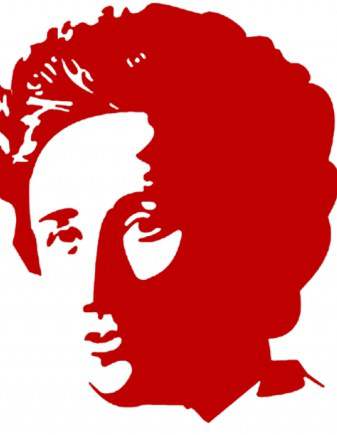
Reform or Revolution?
I declared that "Teh Revolution" had come soon after the appearance of Occupy Wall Street last September. It was a heady time to be sure, and from all appearances, there was no way to tame or stop this Revolutionary endeavor from prospering, growing and eventually succeeding.
Time passes, the crackdowns and evictions grow in brutality and viciousness, there appears to be no progress toward achieving goals, and "Teh Revolution" falters. Tactical errors are commonplace, though the strategies involved seem sound enough. Deliberations turn into recriminations, anger, frustration and sometimes sabotage toward the Movement. A strong Reformist element attempts to take control and cancel "Teh Revolution" before it actually finds a coherent way to express its coherent nature.
The Revolutionary elements that have been with the Movement since the beginning, indeed before the beginning, are called "infiltrators" and "hijackers." It's classic projection and propaganda by those who are actually infiltrating and hijacking the Movement: the Reformists. But then, many of those Reformists have been with the Movement from the beginning as well, only a few of them are actually coming from outside the Movement to assert some sort of authority over it now.
The tension between the Revolutionaries and the Reformists has been one of the strengths and the energy centers of the Movement all along. As an observer and periodic participant in Occupy affairs, I've never quite understood why a Revolutionary endeavor cannot also travel along a Reformist path, simultaneously or sequentially. The two are not all that incompatible. They require different skill sets perhaps, but there's nothing wrong with a diversity of skills in any Movement. Those who are interested in pursuing a Revolutionary path can do so along side those who seek to Reform the System rather than to overthrow it. In my view, both can work together to set up parallel alternative Systems, "the Demonstrations" I've written about so often, to show how Another World Is Possible, what it will look like and how it will function. The Demonstrations of where we are going (in a handbasket or not) and how we can get there are crucial to the realization of the most widely expressed Occupy Goal:
to make them more just, equitable, fair, and peaceful. That is a Revolutionary goal; one cannot achieve it in a purely Reformist context. In fact, in my view, Reformism alone gets you where we are, which is basically an upside down version of where we were supposed to be by now had Teh Revolution of my generation actually taken hold rather than being transformed into a Reformist program of gradual and incremental "change."
Nobody at the time, so it seemed, knew how to carry out a Revolutionary program without engaging in armed insurrection, sabotage, and the use of deadly force to achieve objectives. I've used the example of Mark Rudd several times because I've now met him and have considered his change of heart on the merits of armed insurrection vs nonviolent something or other. (It's not actually clear how he sees pacifist adherence succeeding.) What Rudd, et al, were doing back in the day included a variety of tactics, more and more violent and potentially deadly (actually deadly in a few cases) as time went on. From my vantage point at the time, I thought what they were doing wasn't very smart -- primarily because it didn't resonate with The People. It alienated The People, much as the violence and murder at Altamont essentially ended the huge music festivals that had been a part of the counter-culture up till then.
While the violence itself had a negative effect among Ordinary People (not so much among those already Radicalized), it wasn't the main reason for the decline of the anti-War Movement back in the day. That was due, primarily, to the ending of the draft. Once it was clear that young men would no longer be required to serve in the military against their will -- a requirement that had been at the center of anti-War protests -- the necessity of protest (to save your own life, for example) diminished greatly. Ending the draft was a key demand -- and it was the key achievement -- of the anti-War Movement of the '60's and '70's. Now that we can look back it may not have been such a good idea over the long run. Having achieved it, most of the young men who had been such activists against the War got on with other things. The Indochina War continued just the same, but now primarily as an air bombardment campaign, filled with misery and bloodshed for its victims, and most Americans really didn't care all that much, just as they didn't care all that much when Vietnam was initially being subjected to air power and destruction during the Kennedy Administration.
The Revolutionaries at the time kept up their campaigns of bombings and sabotage nonetheless, in the belief that they could thereby bring about a more general uprising and eventually install some kind of Socialist Paradise (I guess, I really don't know that that was their objective no matter their pious pronouncements.)
The Socialist/Communist Revolution was not something most Americans ever gave much attention to. There were plenty of Revolutionary tendencies in the late 19th and early 20th centuries, but they were mostly co-opted by the Progressive Movement -- which I've written about rather critically elsewhere -- and that took much of the fire out of the bellies of the Revolutionaries, because many of the demands of the Revolutionaries were being at least partially met through Progressive alternatives to Revolution. Reformism proved to be "good enough" -- and durable.
Now we're in a situation where much of the Reform of past eras is being undone primarily for the amusement and the profit of the very few. It's obvious as sin that Our Betters relish their engagement with The People to undermine, subvert, take away and destroy rights and benefits that were won over long years of sometimes bloody struggle. Really, everything that the People have gained over the last century or more is under continuous threat and assault by a very small cohort of determined (and apparently gleeful) individuals and their agents who are determined to plunder and destroy without let up until they "have it all."
And they're winning.
The Reforms of the past are being rolled back left and right, with the full connivance of the political class, a class that has chosen to govern contrary to the public interest and the will of the People. They simply do not care what the People have to say about it. They don't, I've argued many times, because the People have shown they will do nothing their Rulers believe they need pay attention to.
None of the institutional remedies for this state of affairs function any more. Voting doesn't change anything. Politicians are immune to persuasion from Below. The courts are manifestly corrupt and decadent servants of the Very Few. There are no Constitutional protections for the masses any more (as if there really ever were, but that's another issue.) And the National Security State is a metastasizing cancer on the body of the State. (Yes, this is the appropriate use of the "cancer" analogy as opposed to Chris Hedges' dangerous and spiteful use of the term to describe the "Black Bloc anarchists.") Debt-slavery is becoming commonplace. Poverty is skyrocketing. Hunger stalks the land.
Under the circumstances, we (the People) are in a much more difficult situation than was the case forty or fifty years ago.
Reformism on the People's behalf is all but impossible over the short term -- at least under the current circumstances. "Reforms" are all taking place on behalf of the Few against the People. Attempts at "Reform" counter to the will of the Few are primarily matters of preserving what little can be maintained of the status quo, or returning to the status quo ante. As far as I'm concerned, that's not Reform at all; it's reaction and it is bound to fail.
Pretenses that we can start anew and be activists for Reform and wait several decades or generations to see a return to the way things once were are bewildering to me. But then, I've been an activist for decades, and I've done so many of these things that some insist we should start over and do again, taking as long as it takes, generations if need be. It's as if there is no history any more. There seems to be no conception that we are where we are in part because we did what we did back in the day. Our current situation is the result of actions taken (or mis-taken) when time was. In order to change our current situation substantively (within the lifetimes of our descendants at least), we have to do something else.
Repeating what we did won't work this time.
Yet realistically, Revolution in the sense of armed insurrection (as attempted, futilely, by Mark Rudd and others forty years ago) is not the right path forward. Some other kind of Revolution is called for.
The struggle within the Occupy Movement over the last month or so has been largely between those who don't want a Revolution at all and who primarily assert the primacy of "nonviolence" (which honestly many of them don't seem to understand at all) and those who see the necessity of Revolution but have yet to find effective means to engage in it and accomplish Revolutionary objectives.
Not that there is a consensus on those objectives, mind you...
Yet here we are; Spring is nigh; and there are many, many Occupy actions and events in preparation or under way to fill the year with... tumult. The Movement has by no means gone away, but from my perspective, neither has it consolidated (or in some cases even recognized), its victories. It has instead condensed itself, streamlined somewhat, and is now in the process of developing a more coherent set of strategies that can be utilized more broadly toward still somewhat vague interim objectives and "demands". The way I see it, the vagueness of Occupy "demands" is a key strength of the Movement, for it ensures that the Power Structure cannot co-opt or ultimately dismiss the Movement as irrelevant. The vagueness of demands or lack of demands requires Established Powers to attempt to recognize what the People want by discovery rather than by hearing pleas. They have to come to realize what they have been doing wrong, why the People are so upset, and they have to work out their own ways of dealing with their discoveries.
If they do not -- and few of Our Rulers seem particularly interested in the process of discovery -- they will face the consequences.
Reform or Revolution? In my view, both. But the mechanics are still being worked out.
Time passes, the crackdowns and evictions grow in brutality and viciousness, there appears to be no progress toward achieving goals, and "Teh Revolution" falters. Tactical errors are commonplace, though the strategies involved seem sound enough. Deliberations turn into recriminations, anger, frustration and sometimes sabotage toward the Movement. A strong Reformist element attempts to take control and cancel "Teh Revolution" before it actually finds a coherent way to express its coherent nature.
The Revolutionary elements that have been with the Movement since the beginning, indeed before the beginning, are called "infiltrators" and "hijackers." It's classic projection and propaganda by those who are actually infiltrating and hijacking the Movement: the Reformists. But then, many of those Reformists have been with the Movement from the beginning as well, only a few of them are actually coming from outside the Movement to assert some sort of authority over it now.
The tension between the Revolutionaries and the Reformists has been one of the strengths and the energy centers of the Movement all along. As an observer and periodic participant in Occupy affairs, I've never quite understood why a Revolutionary endeavor cannot also travel along a Reformist path, simultaneously or sequentially. The two are not all that incompatible. They require different skill sets perhaps, but there's nothing wrong with a diversity of skills in any Movement. Those who are interested in pursuing a Revolutionary path can do so along side those who seek to Reform the System rather than to overthrow it. In my view, both can work together to set up parallel alternative Systems, "the Demonstrations" I've written about so often, to show how Another World Is Possible, what it will look like and how it will function. The Demonstrations of where we are going (in a handbasket or not) and how we can get there are crucial to the realization of the most widely expressed Occupy Goal:
CHANGE THE ECONOMIC, POLITICAL AND SOCIAL SYSTEMS
to make them more just, equitable, fair, and peaceful. That is a Revolutionary goal; one cannot achieve it in a purely Reformist context. In fact, in my view, Reformism alone gets you where we are, which is basically an upside down version of where we were supposed to be by now had Teh Revolution of my generation actually taken hold rather than being transformed into a Reformist program of gradual and incremental "change."
Nobody at the time, so it seemed, knew how to carry out a Revolutionary program without engaging in armed insurrection, sabotage, and the use of deadly force to achieve objectives. I've used the example of Mark Rudd several times because I've now met him and have considered his change of heart on the merits of armed insurrection vs nonviolent something or other. (It's not actually clear how he sees pacifist adherence succeeding.) What Rudd, et al, were doing back in the day included a variety of tactics, more and more violent and potentially deadly (actually deadly in a few cases) as time went on. From my vantage point at the time, I thought what they were doing wasn't very smart -- primarily because it didn't resonate with The People. It alienated The People, much as the violence and murder at Altamont essentially ended the huge music festivals that had been a part of the counter-culture up till then.
While the violence itself had a negative effect among Ordinary People (not so much among those already Radicalized), it wasn't the main reason for the decline of the anti-War Movement back in the day. That was due, primarily, to the ending of the draft. Once it was clear that young men would no longer be required to serve in the military against their will -- a requirement that had been at the center of anti-War protests -- the necessity of protest (to save your own life, for example) diminished greatly. Ending the draft was a key demand -- and it was the key achievement -- of the anti-War Movement of the '60's and '70's. Now that we can look back it may not have been such a good idea over the long run. Having achieved it, most of the young men who had been such activists against the War got on with other things. The Indochina War continued just the same, but now primarily as an air bombardment campaign, filled with misery and bloodshed for its victims, and most Americans really didn't care all that much, just as they didn't care all that much when Vietnam was initially being subjected to air power and destruction during the Kennedy Administration.
The Revolutionaries at the time kept up their campaigns of bombings and sabotage nonetheless, in the belief that they could thereby bring about a more general uprising and eventually install some kind of Socialist Paradise (I guess, I really don't know that that was their objective no matter their pious pronouncements.)
The Socialist/Communist Revolution was not something most Americans ever gave much attention to. There were plenty of Revolutionary tendencies in the late 19th and early 20th centuries, but they were mostly co-opted by the Progressive Movement -- which I've written about rather critically elsewhere -- and that took much of the fire out of the bellies of the Revolutionaries, because many of the demands of the Revolutionaries were being at least partially met through Progressive alternatives to Revolution. Reformism proved to be "good enough" -- and durable.
Now we're in a situation where much of the Reform of past eras is being undone primarily for the amusement and the profit of the very few. It's obvious as sin that Our Betters relish their engagement with The People to undermine, subvert, take away and destroy rights and benefits that were won over long years of sometimes bloody struggle. Really, everything that the People have gained over the last century or more is under continuous threat and assault by a very small cohort of determined (and apparently gleeful) individuals and their agents who are determined to plunder and destroy without let up until they "have it all."
And they're winning.
The Reforms of the past are being rolled back left and right, with the full connivance of the political class, a class that has chosen to govern contrary to the public interest and the will of the People. They simply do not care what the People have to say about it. They don't, I've argued many times, because the People have shown they will do nothing their Rulers believe they need pay attention to.
None of the institutional remedies for this state of affairs function any more. Voting doesn't change anything. Politicians are immune to persuasion from Below. The courts are manifestly corrupt and decadent servants of the Very Few. There are no Constitutional protections for the masses any more (as if there really ever were, but that's another issue.) And the National Security State is a metastasizing cancer on the body of the State. (Yes, this is the appropriate use of the "cancer" analogy as opposed to Chris Hedges' dangerous and spiteful use of the term to describe the "Black Bloc anarchists.") Debt-slavery is becoming commonplace. Poverty is skyrocketing. Hunger stalks the land.
Under the circumstances, we (the People) are in a much more difficult situation than was the case forty or fifty years ago.
Reformism on the People's behalf is all but impossible over the short term -- at least under the current circumstances. "Reforms" are all taking place on behalf of the Few against the People. Attempts at "Reform" counter to the will of the Few are primarily matters of preserving what little can be maintained of the status quo, or returning to the status quo ante. As far as I'm concerned, that's not Reform at all; it's reaction and it is bound to fail.
Pretenses that we can start anew and be activists for Reform and wait several decades or generations to see a return to the way things once were are bewildering to me. But then, I've been an activist for decades, and I've done so many of these things that some insist we should start over and do again, taking as long as it takes, generations if need be. It's as if there is no history any more. There seems to be no conception that we are where we are in part because we did what we did back in the day. Our current situation is the result of actions taken (or mis-taken) when time was. In order to change our current situation substantively (within the lifetimes of our descendants at least), we have to do something else.
Repeating what we did won't work this time.
Yet realistically, Revolution in the sense of armed insurrection (as attempted, futilely, by Mark Rudd and others forty years ago) is not the right path forward. Some other kind of Revolution is called for.
The struggle within the Occupy Movement over the last month or so has been largely between those who don't want a Revolution at all and who primarily assert the primacy of "nonviolence" (which honestly many of them don't seem to understand at all) and those who see the necessity of Revolution but have yet to find effective means to engage in it and accomplish Revolutionary objectives.
Not that there is a consensus on those objectives, mind you...
Yet here we are; Spring is nigh; and there are many, many Occupy actions and events in preparation or under way to fill the year with... tumult. The Movement has by no means gone away, but from my perspective, neither has it consolidated (or in some cases even recognized), its victories. It has instead condensed itself, streamlined somewhat, and is now in the process of developing a more coherent set of strategies that can be utilized more broadly toward still somewhat vague interim objectives and "demands". The way I see it, the vagueness of Occupy "demands" is a key strength of the Movement, for it ensures that the Power Structure cannot co-opt or ultimately dismiss the Movement as irrelevant. The vagueness of demands or lack of demands requires Established Powers to attempt to recognize what the People want by discovery rather than by hearing pleas. They have to come to realize what they have been doing wrong, why the People are so upset, and they have to work out their own ways of dealing with their discoveries.
If they do not -- and few of Our Rulers seem particularly interested in the process of discovery -- they will face the consequences.
Reform or Revolution? In my view, both. But the mechanics are still being worked out.
Saturday, November 5, 2011
Spokes Councils? No Wonder the Energy Center Shifted to Oakland

In a previous post, I mentioned cryptically that Big Changes were on tap for OWS in New York, and suggested that whatever OWS was becoming, it wouldn't be much like what it had been. At the time, the picture was so confused and confusing, it was not at all clear whether the Structural Reformation being touted had actually passed the NYCGA or not. There were both claims and denials posted, and as the GAs are not necessarily Livestreamed any more, and I had some other pressing concerns to take care of, I wasn't able to follow up right away.
So.
It appears that the Change was actually passed on October 28, and this is the first weekend of its operation. Oh. Boy.
What's happened, as best I can describe it, is akin to a coup by a Leadership Group -- which of course claims not to be Leaders -- which reduces -- and may eventually eliminate -- the authority of the New York City General Assembly. In its place, a representative body called the Spokes Council is being set up; it will consist of Spokes People, one elected or otherwise designated from each of the "official" working groups of OWS, who in Council (with work group members in attendance -- at least in theory) will adopt proposals which will then be sent to the GA for what may amount to pro-forma validation.
The main factor underlying this extraordinary change in the operations of OWS in New York -- and make no mistake, this is a radical transformation -- is money. OWS, through its ad hoc fundraising efforts, has accumulated at least $500,000 (probably quite a bit more, given the 5 gallon "Donation" cans set out on the corners of Liberty Plaza/Park/Square.) All expenditures over a certain very small amount ($100 or $200) must be approved, after arduous argument, by the General Assembly, and some decisions made by the GA about expenditures have been questioned. By interposing a Spokes Council, with the authority to determine expenditures more or less independently of the GA, at least so far as I can tell, it has been argued that the money OWS has accumulated will be put to more immediate and productive use. The GA process being being so difficult and all.
The last time I checked, there were some 80+ Working Groups listed by the NYCGA, but how many of them are "official" -- that is adopted by the GA by at least a 90% consensus -- I don't know, and unless you're a total records nerd, you're probably not going to find out.
But if we assume that all of them are "official," then the Spokes Body is composed of 80+ Spokes People, each of whom has one vote, and an 11% minority of the Spokes Body (ie: 8+) can thwart any decision or action by the Spokes Body.
Exactly how all of this works nobody knows yet, as none of it is seasoned by practice sufficiently to be clear.
Which is probably the point.
It's not really fair to characterize what's happened as a full-on coup; that would actually be quite a different thing which may come in due time. What happened, as far as I can tell, was more like the ramrodding of a proposal by a highly charged and organized group of OWS "leaders" (that is to say, people who have a heavy investment in OWS and who have taken on various responsible roles -- which I may get to in another post) through the operational minefields of a direct democratic model. It wasn't easy. They failed many times (I know of at least four times the Spokes Council was rejected by the GA).
But when it was finally adopted, I think it is fair to say there was a good deal of animosity toward what had occurred, and I would imagine that plenty of people left the group in response.
Of course, we wouldn't know that right away. For one thing, OWS doesn't publicize these sorts of fragmentations (which have been occurring with some regularity anyway), and for another, the internal workings of OWS are not of much interest to many observers, including the media.
Nevertheless, the transformation of OWS in New York from a direct democracy model to a representative democracy model, which was accomplished by this move to the Spokes Council, is essentially a capitulation to the power of the standard model of organization.
Right now, I think what happens in Oakland in response to the partially successful General Strike (and the Black Bloc Diversity of Tactics) is of more long term importance to the Movement as a whole than what has happened in New York to "regularize" their local operations.
I could be wrong about this of course. Once the "regularized" OWS model in New York is well-enough known, there may be little or no possibility for other Occupations to adopt alternative models and the dream that something truly radical and revolutionary might come out of the Occupy Movement will... disappear.
Time will tell.
Sunday, July 31, 2011
OMG! OMG! OMG! Mass-teria!!!!™
All you have to do, as Harold Hill well knew in the Iowa country-side back in times of yore, is manufacture a crisis and sell your phantom product as Salvation. Seems like that lesson has not quite stuck with the masses, tho, eh?
Meanwhile, Krugman is visibly Shrill in these segments from ABC's "This Week."


'Bout gonna bust a blood vessel, he is, while everyone else is calm as cool as cucumbers.
No one else on the panel is even aware that there ARE proles who are being hurt as it is, and who will be hurt even more by the continuance of the Shock Doctrine Economics of the White House, Congress, and their Owners and Sponsors. It's not even so much that they don't care anymore, it is that they are utterly oblivious to the human wreckage they are deliberately causing and sponsoring. When Krugman repeatedly goes ballistic at the appalling lack of conscience (as well as lack of wisdom) by the High and the Mighty, the rest of them have nothing, not even a blank stare, in response.
We are near the end game at Versailles. Louis XV (not XVI) was the one who faced -- and was unable to overcome -- the Tax Strike by the Nobles. It all fell apart, inevitably, in the next reign. The dissolution took the form it did in part because of the American Revolution, which set the pattern for "Liberty". There is no such pattern-setter today, or if there is, the cry is not for "Liberty", it is for ever stricter Authority.
Welcome to Thunderdome....
Tuesday, June 21, 2011
The New Normal Ain't What We Thought It Would Be

The local PBS station has been running a BBC series on NASA and the early days of the Space Program called "The Space Age: NASA's Story." (Yes, we're very deluxe here now. We have some broadcast TeeVee, meaning lots of PBS and Religion stations. Amazing.) It's a remarkable series in part because it is so fascinatingly able to evoke the spirit of an Era of Endless Possibility that is now long gone. An era so distant in the past now, it's like it never existed. It's all a myth, isn't it?
As if there never was a Space Program and Mankind never went into space. Or if it happened, it was just a Big Mistake. Never mind.
Isn't that something?
What with millions of Americans being forced into poverty every year of this Endless Recession, and millions of Europeans being forced into poverty every year, and millions of Arabs and other Muslims not only being forced into poverty but being subject to random Death From Above thanks to an extensive American drone program, and millions of Russians long since forced into poverty and on and on, all to pay off the gambling debts of a number of high flying private sector financial interests, the Future Americans and Europeans and Russians once thought would be theirs is now barely even a memory.
Space? Who cares? How about a little more interest in what goes on down here on Earth?
Paying off the gambling debts of financiers at 100% is more important to our governments than anything else in the whole wide world, and they choose to pay those debts on behalf of the financiers at the expense of the People, and without the consent of the People.
Naturally enough, this is a somewhat volatile situation, which apparently Our Rulers are aware of, but for which they seem to have no effective answer apart from outright repression.
What's going on in Greece is very dramatic to be sure, but it is merely a heightened version of what has been going on in much of Europe for months, even years. The public is up in arms -- well, unarmed, but that's another issue -- over the draconian impositions and cutbacks required by the EuroBanksters. The People are up in arms because they know full well that the Banksters are demanding full payment (with interest) from them for losses the Banksters incurred through their own gambling obsessions and addictions. The People are up in arms because their Future is being stolen from them right before their eyes with the full complicity of their nominally "Socialist" governments.
It seems to be dawning on the truly frightfully stupid and greedy Powers That Be that squeezing the People endlessly in order to fill the coffers of the Banksters in perpetuity may have a Downside that ought to be considered. Austerity for the People may not be the answer to the Banksters' dilemma, though they still call for it in unison, not only in Europe but everywhere in the West.
In the East, particularly in India and China, not so much. Not yet, anyway.
The People are seeing all of their governments in total thrall to a handful of financial interests, without the slightest concern for the interests of the People. Governments all over the West simply ignore the People and their OUTRAGE!!!!™ at being constantly pillaged and plundered and impoverished to serve the Banksters and their pecuniary demands.
This is quite a different situation than any of us -- that is, the Common Folk -- could have anticipated even as recently as two years ago. It's certainly not the Future any of us believed would come about through our hard work and dedication.
One of the things I think many of the Common Folk realize is that our hard work and dedication has already paid for the Better Future we... thought... would be ours, and that Future has been... stolen... by a handful of incredibly stupid and incredibly greedy individuals (think Enron on a global scale) who are convinced they are Smart and Generous to a Fault, and that all wealth and the fruits of other people's labors are theirs by right.
The problem, as always, is that the People do not know what to do about it, and they are very reluctant to take on the additional risk of doing anything about it when they are being pillaged.
The people (and dogs!) in the streets of Greece -- and elsewhere in Europe and the Middle East -- are taking those risks in part because they have little or nothing left to lose. Not only is their Future gone, their present is being squandered and shuttered, and their history is being sold off for pennies. All to pay off the gambling debts of a handful of Banksters.
Meanwhile, Mother Nature seems to be knocking on the door. Fires, earthquakes, tsunamis, tornadoes, hurricanes, floods and droughts should be reminders of just how puny our little lives really are in the face of the Omnipotence of Nature.
Then there are the nuclear meltdowns and what have you.
The question is, who will understand what's happening better and sooner?
Tuesday, June 7, 2011
What's Wrong With This Picture?
Anything?
Everything?
Fascinating.
----------------------------
Some notes: It really is a fascinating exploration of how we got where we are and who and what had such an influential impact on the course of events. It's similar to what James Burke did with "Connections" all those years ago, but with a harder edge -- because everything Curtis gets into is recent or relatively so.
This series is an incomplete exploration, of course, and it is approached from a decidedly British point of view, but it does help us to see how thinkers and actors on the world stage actually do have an effect on what happens and how.
Some of Curtis's startling observations include the resemblance between what Asian economies went through in the 90's and what we in the west are going through now. His observations about the World Computing Machines (as Edward Teller called them) would enable -- and what sort of strange and pitiless philosophy and ideology would go with them -- need quite a bit of expansion, but I think he's mostly on the mark. Underlying much of Adam Curtis's work -- which I really appreciate -- is the idea that a great deal of what we believe is wrong, and it is wrong because those who brought those beliefs forth, whatever their realm, were deep in error.
But "Truth" is never a finality. It is an ongoing and changing discovery. I like that a lot.
Everything?
Fascinating.
----------------------------
Some notes: It really is a fascinating exploration of how we got where we are and who and what had such an influential impact on the course of events. It's similar to what James Burke did with "Connections" all those years ago, but with a harder edge -- because everything Curtis gets into is recent or relatively so.
This series is an incomplete exploration, of course, and it is approached from a decidedly British point of view, but it does help us to see how thinkers and actors on the world stage actually do have an effect on what happens and how.
Some of Curtis's startling observations include the resemblance between what Asian economies went through in the 90's and what we in the west are going through now. His observations about the World Computing Machines (as Edward Teller called them) would enable -- and what sort of strange and pitiless philosophy and ideology would go with them -- need quite a bit of expansion, but I think he's mostly on the mark. Underlying much of Adam Curtis's work -- which I really appreciate -- is the idea that a great deal of what we believe is wrong, and it is wrong because those who brought those beliefs forth, whatever their realm, were deep in error.
But "Truth" is never a finality. It is an ongoing and changing discovery. I like that a lot.
Friday, June 3, 2011
Whatever Shall We Do?
What'll I do with just a photograph
To tell my troubles to?
When I'm alone
With only dreams of you
That won't come true
What'll I do?
Yes. Well. It is a Problem, isn't it?
Dreams that won't come true, indeed. That is the situation for endless millions of Americans, more and more of them every day, and Our Government, when it isn't actively colluding with its Sponsors to make it so, is doing nothing to prevent it or to address the deteriorating moral, physical, and spiritual condition of the People.
What'll we do?
Whatever shall we do?

Look, we've watched our nation's physical plant, its infrastructure and public services deteriorate for the last 30 years and more, as the Doctrines of Reaganism and Privatization have been sold and resold like phony gold coins to the Rubes. Americans have been subjected to a grand con all these years, the origins of which date to the origins of the country, a confidence game that has produced some wonderful things and some terrible things on the world stage, but which is now producing nothing but visions of worsening and perpetual misery for more and more Americans, and unfortunately much of mankind.
It doesn't have to be this way.
It never had to be this way. That we let it be this way is part of our cross to bear as a People, but though we are burdened, we do not have to put up with the additional crap our rulers have decided it is in their interests to further burden us with. They simply do not believe in the public interest. They do not believe in "we" if you will. Only "I", and only "I" as it pertains to themselves.
As I've watched the Ryan Budget Matter unfold, it is quite striking to notice how completely the interests of the People, the public interest, is ignored, by all the many yabberers on the the question of "What'll we do with Medicare?" (Which could be any number of other "Whatever Shall We Do?" questions I've brought up here).
There IS no Public Interest in their minds (if they have minds). Thus the idea that Medicare -- or what it represents -- is vital to the Nation and its People's well-being is completely ignored. The only things that reach that level of conscience and consciousness among the Palace political class and its many media courtiers is "National Security" and "The Deficit."
That's it. There is nothing else as far as they are concerned. We are seeing the same phenomenon operating throughout the Western/Imperialist World, as rights, privileges, the economic futures and benefits are taken away one by one and in batches by an absolutely driven political class -- often nominally Socialist -- that seems to be in complete and utter thrall to the global financiers.
The Banksters as it were.
The test model of this destructive program was run in California and the West back in the Pre-9/11 Era with the Enron/Energy scam that looted the entire then $9 billion surplus from the State treasury and then some more -- extortion which is still being paid by Californians and Westerners.
Those who were doing it were laughing at the Rubes, and those who tried to do something about it, like Gray Davis, were unceremoniously dismissed from office, or they were prevented from gaining office (see Gore, Al) through some of the most appalling dirty tricks and outright corruption ever witnessed in this country. And that's saying something!
It worked so darned well in California, why not try it on the National scale, and so it would be, with the lawless intervention of the Supreme Court to install George W Bush on the Throne and the bloodthirsty Busheviks, Cheneyites and their Sponsoring looters, plunderers and murderers to run absolutely rampant and wild.
That's how we got to today.
And in today's world, those who would grab, take, steal whatever is left to the miserable masses don't even bother to hide their intent any more, they hardly bother with their standard lies and subterfuge. It's right out in the open: they're gonna steal whatever they want from you because you aren't gonna do a damned thing about it. They have proved to themselves over and over again that you -- ie: We the People -- are powerless in the face of their Magnificence and Glory.
Yield or perish.
The way our Governing Class behave, they are absolutely convinced that is the way things are, the way they will always be, world without end (please.)
What'll we do?
Most people, it seems, have either hunkered down or given up without a fight, and that's kind of how it goes when these situations arise. It is human nature to yield to one's "betters." Or at least to ones that are apparently more powerful in the material world.
We know now how Germans so easily fell under the Nazi thrall. We're feeling some of that same thrall fall upon us. And we know how that little experiment in unpleasantness ended. No, it wasn't pretty.
But there was another 20th Century example of the People coming under sway of the Powerful -- perhaps against their will; there was a Civil War before the installation of the New Regime was consolidated -- in the Soviet Union. Its offspring is now operating -- spectacularly -- in China.
The Soviet Union collapsed in due time. How it happened is still mostly a mystery to Americans -- who were never allowed to understand the operating principles of a Communist (even if only ostensibly Communist) state. But there is no such state any more, gone as if it never was, and the rump state of the Russian Federation that has filled the vacuum of Power is hardly a match for What Used To Be.
No, China is the Model of the Future. Or maybe it's India. Experts disagree. But is that the Future we want? Is it even the Future the Chinese want?
If that is the Future, then many, many Americans will at least try to opt out. The United States will become a backwater of sorts, possibly still a refuge, but from the New Modern World, rather than leading it. But that's far down the road. We are nowhere near there yet.
I've tried to point up the fact that things have been worse than they are now, far worse, for many Americans. American passivity in the face of the Barbarians at the Gates may in part be due to that instinctive knowledge. Things are nowhere near as bad -- for most Americans -- as they once were, at least not in a material sense, and certainly not in the sense of "liberty."
Our Rulers know this too, and as they ratchet both the liberties and the material well-being of the masses, for the most part, they try to maintain a constant pressure toward reversal rather than attempting to push the masses into penury and servitude all at once. They sometimes push harder than at other times, witness Walker and other Republican Governors literally trying to delete the last 50 years of labor history and worse. Or that little punk Ryan in the House pushing passage of the renunciation of 50 years of the social contract.
These are overreaches, to be sure, but despite all the OUTRAGE!!!!™ they've inspired, it passes in due time -- which is what they are counting on -- all or most of what they want is enacted, and the People become accustomed to The New Normal.
That's the way it goes, no matter which way the political pendulum swings.
That's how the criminally high unemployment rate has been maintained for years now without more than a modest outcry from the People. How the numerous Wars keep going. How the Rich continue to hoover up every last dime still circulating in the more or less permanently collapsed consumer economy. People get used to it.
So whatever shall we do?
To an extent, the answer is plain: Nothing. Neither fight nor acquiesce.
And yet still we must:
This gets into realms I will try to explore more deeply in other posts, because this concept of "Nothing" in the material world is a spiritual one; it doesn't really make sense from a material perspective, and yet it is very real. Clearly the notion of giving up on what doesn't work has a resonance in the contemporary era, and by setting aside those actions and reactions that have no useful function any more, or by keeping ones that actually poison oneself or others at bay, we find a peace and a sense of liberation we may never have recognized before.
Demanding Better! is not just a material assertion, either. One demands better of oneself to start with, even as one may give up striving and desire.
So. Those Dreams may never come true, certainly much of what we once thought the Future would be will never happen for most of us. On the other hand, when you're open to what can be, much of what you were fighting against doesn't matter so much any more...
To be further explored later....
Subscribe to:
Posts (Atom)