Showing posts with label art. Show all posts

Sunday, February 5, 2023

The Wedding

Friends of ours are getting married -- after nine years together -- in Colorado in October. There is much excitement over it, and much family togetherness being developed during the interim. The bride and groom are both "half" -- one parent Hispanic, one Anglo -- but both were raised by the Hispanic parent. 

Both are artistic. She's a crack fiction writer, specializing in young adult-ish, fantasy, horror, and humor. She's a terrific storyteller. He's a visual artist focusing on graphics, illustration, and -- on his own -- contemporary fine art painting and portraiture.

They're working on a joint project, a fantasy screenplay they hope to sell to Disney. 

They're young... well, under thirty, barely. They figure they better get married now, cause they aren't getting any younger, and if they intend to have children, they better get to work on it. 

Both, interestingly, were only-children, so they didn't have brothers and sisters to contend and compete with. Both were spoiled rotten in my view, which wasn't necessarily a bad thing in their case. One of their parents in both cases worked for decades in public service and they are about to retire with fairly fat pensions. That's a blessing, one that is increasingly rare in the hardscrabble existence laid out for our collective future by Our Betters.

They live in Santa Fe, have lived their whole lives there, but are eager to move somewhere "better". They consider Santa Fe dull and insular and unable to provide them with the kind of creative lives they want to live. Where would they go? Denver. Los Angeles. San Francisco. Seattle. Somewhere "out of here."

Somewhere where people ("who matter") appreciate what young people have to offer and bring forth from their imaginations and creativity.

That's not, they say, Santa Fe.

I'm in no position to argue. While us old fogies see Santa Fe as a brilliant hotbed of arts and creativity, we don't live there, and likely wouldn't under nearly any circumstance. It is tight and insular and often backward looking. Instead, we live way out in the wilderness, where we don't have to conform to anyone's "idea" of happy retirement and we feel we have the freedom/liberty to do and be whatever moves us. In Santa Fe, we know there is a code of conformity to one's status, wealth (or lack thereof) and position in life that cannot move even a millimeter from where you've been, though you may have moved thousands of miles from wherever you lived before to settle in Santa Fe.

Out here in the wilderness, there is the liberty to do and be whatever you want and live in any fashion that appeals to you, limited only by the absence of an infrastructure to support certain objectives and ways of life. Well, if we didn't have an income to get by with as retired old fogies, our lives here would be rough, maybe impossible. If we didn't have decent health care insurance, one or the other of us, if not both, would have been dead long ago. If we weren't able to find and stay in a home of our own out here, it's hard to imagine we'd live as well in a rental -- if there were one. 

So in many ways, we're lucky and grateful.

Our young friends planning to get married in Colorado in the fall reject Santa Fe -- where they've lived all their lives -- as an appropriate long term home for them and their children (if they have any) because it's too hidebound and insular. It's very difficult for creative efforts to get out of Santa Fe.

From our perspective, that's true anywhere, but they have a far more intimate understanding of the difficulty than we ever could.

But then I think of Meow Wolf, which we've never quite figured out, that began in Santa Fe and has become a multi-million dollar arts/curiosity enterprise that has expanded to a number of other cities in the West and appears to be rock solid financially and artistically remarkable if not high-end brilliant. It doesn't represent High Art, but it is filled with New Art, experimental whatevers, and immersive arts experiences. I'm told, though I'm not quite sure, that it provides a handsome living to dozens of creatives throughout the West, something that is difficult to achieve anywhere. 

It's one way Santa Fe has tried to reinvent itself from a rather staid -- and let's face it, segregated -- traditional Art Market -- selling high end High Art by nationally and internationally "known" artists in expensive galleries along Canyon Road and scattered throughout the city, but creating not much at all and largely ignoring much of what is locally created -- to a potential hotbed of cutting/leading edge contemporary creativity.

Our friends could stay and be part of what's emerging, but they say they'd rather not. There's "something better" out there, and they'd rather join that. We don't necessarily agree, having had a good deal of experience in Los Angeles, San Francisco and Seattle (not Denver, though, only a superficial long-ago taste of what might be coming). 

The wedding is in Golden, Colorado, in October, and we've been told to "wear autumn colors." Forbidden is black on black which has been my "going to events" outfit for a while now -- not that I've been able to go to Events for quite some time. 

So now I have to think about and plan a whole new outfit. That'll be fun and a change of pace. I get some of my clothes direct from India. I think I'll start looking there. Heh.


Thursday, February 2, 2023

The Art Market

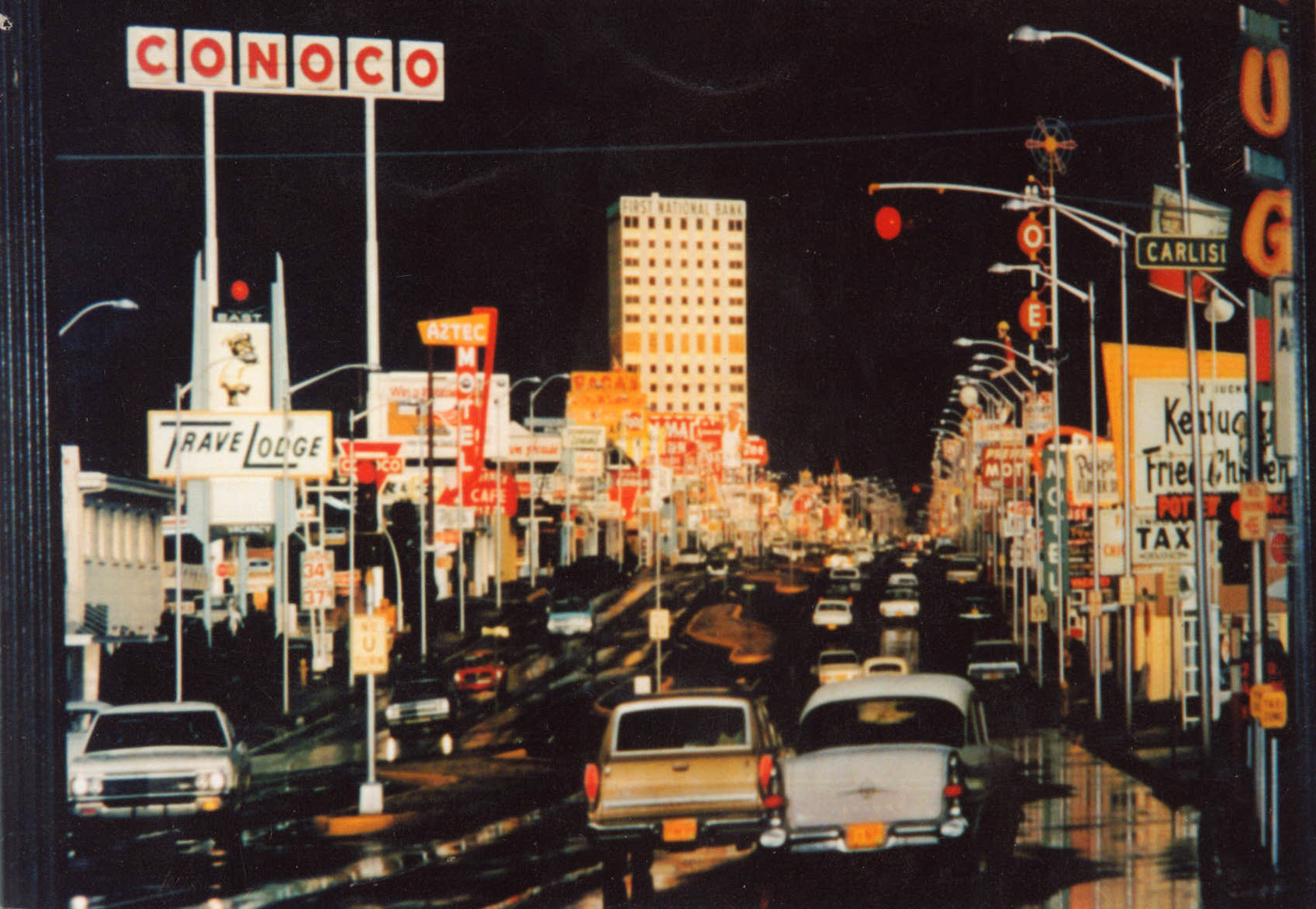
Over the years, we've bought a lot of art: paintings, prints, photos, posters, sculpture, etc. We're overloaded with it because we hardly ever get rid of anything. And of course being the kind of folks we are, both of us create art. I'm looking around our living room as I type, just to get an idea of what's here on view right now, and it's kind of overwhelming, starting with some art photographs under the Art Deco mirror over the sofa. There's one of Half Dome in Yosemite, one that I took in the early 2000s of the Aztec Motel on Central in Albuquerque (since demolished), and one of the confluence of the Potomac and Shenandoah Rivers at Harper's Ferry. Each has meaning to us, places we've been, places where the spirits of the place seemed very alive and stayed with us to the present day. The Aztec was especially notable in this regard, for when it stood, the buildings and grounds were literally covered with art. Anything and everything was put on view, and the result was what I thought was a folk art masterpiece. The city apparently ordered it to be demolished, and its loss is still keenly felt by many. But of course, many more don't even remember its existence. 

There's a small tray with an arrangement of tropical butterflies, and on the other side of the photos is a framed crocheted piece featuring my last name which was done by a friend in Wisconsin and gifted to us for an anniversary (not sure which). Above that part of the wall are three large prints by Native American artists, a raven, a wolf and a bison. 

That doesn't cover all the art on that wall, but it samples some of what's here.

The Native prints were bought directly from the artists. I'm looking around to see if there's anything we bought from a gallery or at auction, but I would say not in here. There are several pieces in the entry hall, photos, prints, paintings and sculpture that came either from galleries or auction purchases, and there are more in the bedrooms, and even in the bathroom. 

Since I've been home recovering from my illness, I've taken to watching art auctions by Christie's and Sotheby's on the UTubesTV, and while we've sat in on and bid on similar events from time to time, they have really not been anything like what I'm seeing the big auction houses do. We haven't been to auctions featuring high end "name" artists like Van Gough and Rodin and Picasso and such; we haven't been to auctions where we have to prove our wealth to get in; we haven't ever witnessed an auction bid over $1,000,000. I'm not sure we've seen one even that high.

Christie's and Sotheby's focus on the Names, and they sell and resell collections with values almost beyond belief. There was one auction I saw where a collection brought in over $300,000,000. Mmm. Part of a collection of a very wealthy man (now married to one of our former Congressional representatives) was auctioned and brought over $20,000,000 to benefit his "good works" foundation. Warhols have brought $60-70,000,000 at auction or more. I thought about that and how friends of a friend's collection in California included a number of Warhols (the Elizabeth Taylor I remember most of all) that they said they bought in New York directly from the artist when they lived there. I think they said they spent a couple of hundred dollars each and they had at least a half dozen hanging on their hallway walls. They had many other prints and paintings by "name" artists which they'd bought, mostly in New York, before the artists became famous. They died, at least 20 years go, and I recall reading their collection was to be sold and was expected to bring $2-3 million but I didn't follow what happened. I can only imagine what their collection would bring today. $2-3 million per piece is more likely.

But why?

The art market is a fickle and funny thing. What you see on the surface obscures what's really going on. Kind of like life, eh?

The works of a certain number of "name" artists are assured of increasing value almost in perpetuity, but recently, those artists' works have exponentially increased in value, from low millions to stratospheric levels, never seen or imagined before.

What's happened?

One thing I know has happened is that enormous amounts of money have flooded the higher classes, most not "earned" through hard work as it were but just given to them by governments and central banks, particularly the US government, in what seemed like endless QE* efforts to overcome the effects of the GFC** on the best off among us. This money, trillions and trillions of dollars, had to go somewhere, and a percentage of it went to buy art.

The inflation in the high end art, jewelry, precious objects and real estate markets should not be underestimated. This inflation has been going on for years and years and yet it was never noticed by our crack economists who only became aware of inflation when the lower orders started having to pay more for groceries, gasoline and rent, and they decided the best way to stop that inflation was to give the upper classes more while curbing or eliminating the ability of the rabble to acquire or pay for debt.

Interesting tactic. 

Whatever else happens, the upper classes must be protected from economic harm at all costs.

So they spend what appears to us to be astronomical sums on the works of mostly dead artists, assuring that the artists themselves, even if living, get nothing. Not a red cent.

One of our Taos friends has been having a Moment in art. He's technically proficient, very handsome and charming, and he has basically stormed the Western art market with his evocative "old fashioned" tributes to art of the past. He's seen the value of his works increase substantially. Now his large scale paintings may bring as much as $200,000, about double what they would bring a few years ago. But this is nothing compared to a Warhol, say. 

After he's dead, of course, he knows his originals will probably bring millions. And millions. And he and possibly his descendants will never see a penny of it.

That's one of the many cruelties of the art market. 

Jean-Michel Basquiat  did well while he was alive and the protege of Andy Warhol. His works are unique to say the least. Instantly identifiable. But once he was dead, the prices of his works skyrocketed in the market to the point where they now sell at auction for tens of millions. And their appearance in an auction is eagerly anticipated. 

Yet it wasn't that long ago that his rough-street style was rejected. If he hadn't been Warhol's protege, it's highly unlikely that the People Who Matter would pay any attention to his work at all. But while he could sell his works for tens or hundreds of thousands while he was alive thanks to his association with Andy Warhol (a few hundred dollars if that before then). But now, the sky's the limit, assuming there is one.

What's happening, I believe, is that a small number -- maybe 20 -- of absurdly wealthy people are competing with one another to possess something that nobody else has or can have. Back in the day, collections could be formed from available works by living and dead artists, and having art in that way could be seen as ostentatious display, or contrariwise as public service. A public service when the collection was put on view by the public at little or no cost as an educational effort. 

Then, when the collector died, the collection could be/would be donated to a museum which in turn would open it to more or less permanent public view.

In some cases, collections still go to museums, but often it can't be done. There's no room. Museums won't take them. Collectors can open their own museums, or they can trade the works among themselves. Back and forth between those 20 or so. With dealers, agents and auction houses taking an ever larger cut. 

What could go wrong?

In a way, it's funny. In another way it's very sad -- and a model of our economic failures -- because artists are the losers. 


*QE=Quantative Easing (ie: Giving more money to the rich)

**GFC=Great Financial Crash/Crisis (The meltdown of 2008 which led to a decade of economic blah)


Tuesday, October 20, 2015

OT: Domestic Affairs

Well, the charger came from Los Angeles -- still waiting on the one from China, and figure it's best to have two anyway since the one that died was destroyed by my heavy foot getting caught in the cord over and over again... so I have my computer back and can start to get caught up, but at the same time, I have so many more domestic chores to take care of since Ms Ché started back to school, and there are routine fall things to do -- bulb planting, garden clearing, etc -- and (or maybe that's AND) I'm still doing a lot of sketching, etc. Days are more than full. Nearly forgot, the skunk man is coming tomorrow. Have to get ready for him, too. Ah, the skunks. So beautiful they are, but so stinky!

Domestically, well.

It's 2-2 1/2 miles to the post office; we don't get mail delivery out here, have to pick it up at the PO. Some of our neighbors walk, which is fine if you're up for it or into it, but I can't -- still struggling with aftermath of sciatic lameness from a couple of years ago, and now the onset of arthritis (boo!) has given me additional joint issues to deal with. Actually, when I joined the march against the Killer Kop Kompetition in Albuquerque last month, it was the first time I'd attempted that kind of extended hike since before my left side gave out and laid me up a couple of Januaries ago. Didn't quite make it -- many thanks to the kind soul who picked me up and drove the last few hundred yards -- but almost did. That was about 2 1/2 - 3 miles round trip. Good gauge of what I can/can't do.

It's about the same distance to the nearest grocery store. Maybe a little farther. It's a nice little independent store, though selection is somewhat limited. It's not fancy or high-end-foodie, not at all, but they have a real butcher, decent prices -- though much higher than we were used to in California -- friendly staff, and are open early and late. Since I have to get the groceries these days, it's nice to know there's someplace that close.

There's a Smith's and a WalMart the next town over, and I sometimes go to one or the other if there's something the local market doesn't have. I boycotted the WalMart for years until the local Pick-n-Choose closed (it was called Alco). Then, certain gardening, household items, clothing, and such like were simply not available locally. Actually, quite a lot of things weren't available locally any more. Some we could do without, but others....

So, it was off to WalMart now and then. Gaa. Not only is the store far larger than is necessary in this area (fewer than 5,000 people live in the store's shopping area -- say within 15 miles or so) but it's got some really... interesting... ways of doing business. For example, items are frequently (routinely?) shelved in the wrong slots so that it appears from the shelf price that such-and-such will cost X-amount, but no. Get to the check out and it's -- whoops! Oh, but it's worse than mere mis-shelving. In too many cases to count now, the items are shelved correctly, but the item rings up at a different -- sometimes much higher -- price than the shelf price, and unless you're eagle-eyed you're probably not going to know. In fact, it's pretty much impossible to keep track of the prices being scanned and rung up because you're still unloading your cart as the checker does his/her job. So the only way to know whether you've been overcharged is to scrutinize your receipt after the fact. And have a sharp memory for the shelf-price.

Alco used to do it too, but they closed. Smith's has taken to doing the same thing. They take it a step further, not pricing certain items on the shelf at all. One doesn't know until one gets to the checkout what the price is. Sometimes the surprise is a shock.

WalMart also has these bagging carousels, and by golly, how often is one (or more) of the customer's bags conveniently left behind? Oh, if my own experience is any guide, fairly often. One is not likely to notice one is missing a bag or two until one is home and unpacking one's things and notices that something one thought one bought is not there. Hm. Wha? In my dottage, it's not unusual for me to forget this or that, so I'm likely to be puzzled about missing items rather than certain that I left them behind. Maybe I didn't pick them up to begin with? But one time, I was sure, and I went back (another 10 miles from home, 20 round trip) and found the items had been re-shelved already. They gave them to me without objection, but still...

I figure these fairly common merchant practices can easily add 15%-20% to a customer's charges every time they shop. Quite lucrative, so lucrative merchants can happily refund overcharges brought to their attention and replace missing items the customer complains about because so often overcharges aren't noticed and missing items are "just forgotten" especially by the elderly... clever.

I wonder just how common this practice really is? I hadn't noticed it before, but it seems to be widespread in these parts nowadays. Initially, I thought I was imagining things but not any more. Now I think it really is a commonplace merchant policy.

I would have had no idea were it not for the fact that I have to take care of a lot more domestic chores now that Ms Ché has gone back to school. Oh, by the way, she got her midterm grades the other day. All "A" -- except for the two "A+". My my!

There is still much fall planting and year-end outside clean up to do. I managed to clear out the gutters and get those on the front of the house to work for the first time (they were installed wrong to begin with but I hadn't been able to tackle the project to fix...) I'm trying to clear out one of the sheds so I can bring the stuff we still have in storage in California. BUT as I was doing that chore, I saw the news about the mudslides closing highways in Southern CA. Thought little of it until I saw that one of the highways was Highway 58 that I take from Bakersfield to  I15-I40 in Barstow. 6 feet of mud for a mile or more outside of Tehachapi(e). Oh. Brother. I would have taken the plane in November, then rented a truck to bring the stuff in California back to New Mexico, but Highway 58 is my route to get from there to there (the alternatives are much longer) so... maybe not. Better wait till spring.

They say this El Nino is shaping up to be the most intense since 1988. There have been certain signs of course. Our local drought is broken (thankfully. It went on way too long...) We've had plenty of rain and they say there will be pretty heavy snow this winter, but so far temps have been mild, balmy, even warm. No frost at all. May not be any till mid-November... wow.

Of course the situation in California becomes more and more Apocalyptic, seemingly by the day. Our friends who still live there insist things are not really as bad as the news is making it out to be, but I'm somewhat less Panglossian about it. The fires were terrible and raged through areas we're pretty familiar with around Clear Lake and in the Gold Country. No one we know was directly harmed, but still... Floods and mudslides of course will be more widespread than ever. The persistence of drought in the midst of these catastrophes compounds the misery. After a while, it becomes too much to bear...


Though I will probably always be a Californian deep-down, I realized I had become a "real" New Mexican the other day when it occurred to me that I routinely get offended by the most unlikely or innocent things that people say or do. This is a very New Mexican trait I've discovered, taking offense being something of a core value it would seem. It doesn't usually last more than a little while, but it's pretty frequent, and sometimes it makes me laugh at the pettiness and silliness of it.

Now to get back to getting stuff done...


Wednesday, February 4, 2015

For Art's Sake


Gerald Cassidy, Cui Bono? c. 1911, New Mexico Museum of Art

My hiatus has been longer than I anticipated. Part of it is due to some sort of strange reaction to Zocor, an anti-bad-cholesterol medication, and part of it is due to simple weariness at the continued relentlessness of police violence -- as well as other violence at home and around the world, with a particular emphasis on financial violence.

At any rate... had to go to Santa Fe today for R&R at the Museum of Art. Yeah, I know, how saddidy -- a word I learned from a sometimes saddidy negro if there ever was one. He was the eldest son of the prominent civil rights attorney in town (Sacramento). He wanted to be a playwright. We worked with him for a year or two, staged several of his works in progress, and then sent him off to LA to become a... well, I don't know exactly what. He's still making his living by attorney-ing as far as I know (of course the son follows the father into the practice of law, always... well, not me!), every now and then we hear tell he's scripting something. He taught me sadiddy and I will be forever grateful. Heh.

The topic at the museum was one of my favorite old-line Santa Fe artists, Gerald Cassidy, aka Ira Diamond. I didn't know that the talk would be presented by Lois Rudnik, Mabel Dodge Luhan's pre-eminent biographer. So it was a great time, and we all learned something. Oh yes. Including Lois.

The topic was this painting, Cui Bono?, supposedly the only one of Cassidy's the Museum owns. http://online.nmartmuseum.org/nmhistory/art-activities/cui-bono1.html

He gave it to the Museum when it opened in 1917, and it's usually on display somewhere inside, though you may have to scout around to find it. It's quite striking, but in a magazine illustration way -- which isn't a bad thing, not in my estimation, it's just a style that many fine artists adopted to make a living. Cassidy -- real name Ira Diamond -- painted this work in 1911, before NM Statehood -- indeed, apparently even before he moved to Santa Fe and set up his easel with the Santa Fe Artists Colony. Lois said he never painted anything like it before or after. I've seen a lot of his works, and this one is actually more finished than many of his others -- which come across as well-rendered sketches. He tended to work very large scale, and his rendering was always extraordinary and very striking. This painting is almost muted by comparison, except for the face of the Indian, which is sharply rendered and intensely colored compared to the brilliant white of his shroud and the almost misty mutedness of the rest of the painting. It is a corner of Taos Pueblo as it was.

'Cui bono?' indeed. What would statehood bring to the Pueblo peoples? What does the presence of artists colonies bring to New Mexico and do to New Mexico? It's still an open question after all these years, and many Indian artists are intensely aware of the colonization that "art" per se represents in New Mexico. That  gives rise to the whole issue of "traditional" vs "contemporary" art.

And what to make of Cassidy's illustrations? Or are they Art, with a capital A?

What I find so striking about them is that Cassidy really did try to capture the spirit and the authentic look of the place and the people. Many others did as well, but Cassidy's efforts seem more spirited and thus fuller and richer.


Maybe even more authentic.


I think I mentioned in other posts that I used to do art and renderings and illustrations for my own pleasure as well as for theater projects. I have a surprisingly bulging portfolio out in the studio. I really had no idea of the bulk of it.


Last year I did a handful of sketches in pastel and charcoal, the first I've attempted in more than a decade, probably more than 20 years come to think of it. I have some more recent "artistic" photographs that I'm fairly pleased with, but no easel art or drawings until last year's rather paltry efforts. I thought I used to have a fair amount of skill if not talent, but I found out last year I no longer had skill or talent.


Oh.


Cassidy died in 1934 from the consequences of inhaling toxic fumes and carbon monoxide as he worked on a mural for the Federal Building in Santa Fe.

He remains one of my favorite members of the Santa Fe Artists Colony.

Other Gerald Cassidy works:

http://www.lafondasantafe.com/photo-gallery/art-of-la-fonda-photo-gallery/

http://www.geraldcassidy.com/

El Palacio, November, 1917, opening of the Museum and an extensive article on Gerald Cassidy (pdf)

 http://archives.elpalacio.org/cdm/ref/collection/p15026coll5/id/3

There's a good deal more on the Google Machine.

Sunday, September 21, 2014

Mario Martinez -- Indian Art, Indian Artist


Mario Martinez has a current exhibit at the Museum of Contemporary Native Art in Santa Fe. Some of the works in the video above are included in the exhibit.
Painting in an abstract style appeals to Mario Martinez (Pascua Yaqui, b. 1953) in part because it allows him to express Yaqui cultural traditions, knowledge, and spirituality without explicitly revealing them. In "Yaqui Flashback II" (1991), he incorporates decorative fabrics used in Yaqui ceremonial regalia. While he frequently depicts what he considers "essential" forms found in nature, more recent works such as "Brooklyn" (2004) also refer to the urban landscape of his current home.

Martinez's work is featured in "Vantage Point: The Contemporary Native Art Collection," on view through August 7, 2011 at the National Museum of the American Indian in Washington, D.C.
Indian through and through, eh?

What Happens When The Market Moves On?

Museum of Contemporary Native Arts (MoCNA) in Santa Fe.


I'm still processing some of the material from the exhausting day-long seminar at the Museum of Contemporary Native Art in Santa Fe that Ms Ché and I attended yesterday. Oh, and I rallied and went marching at lunchtime with the People's Climate rallyers and marchers. It was a full day.

The main issue alluded to but never entirely clarified was that The Market (for Art) has moved on and those who don't move with it and don't move quickly enough are shit out of luck.

There was only one working artist on the panel who I could be sure was making a living from his art, Tony Abeyta, all the rest were reliant on academic or institutional positions for their day to day wherewithal and succor.

Now that's sad. Or perhaps not.

There were a number of artists on exhibit at the Museum, none of which were acknowledged during the seminar, this despite the fact that the work of one, Ric Gendron, surrounded the symposites who were so deeply discussing the matter of Art and specifically "Indian Art" inside an institution dedicated to the notion that Contemporary Native Art is... a thing. That is to say, artists of the Native persuasion have a vital contemporary perception and voice and they use them in ways that don't necessarily fit the standards and expectations of The Market or the dominant-culture institutions such as the New Mexico Museum of Art on the other side of the Plaza.

The fact that none of the artists on exhibit at MoCNA was mentioned, nor were any of the exhibits acknowledged in any way by the panelists -- or even by the Museum's own curator-hostess -- was the first clue to me that the seminar lacked grounding. It was instead at best an abstract and academic exercise.That's what made it exhausting and ultimately empty in my view.

Without grounding in The Art and the Artists Themselves, everything else is suspect.

And so it went.

This was not unlike the series of lectures we attended at the New Mexico Museum of Art last year and into the spring, in which the history of Art in New Mexico was highlighted -- well, the Legend was -- but without really connecting with the huge quantity of Art possessed by the Museum, some of which surrounded the attendees but went unmentioned unless someone attending (me?) asked about it.

The problem, as I saw it, is that The Market has moved on, and although Santa Fe is still one of the chief art markets in the United States, it ain't what it used to be, the level of competition among artists for attention, let alone making a living is insane, and the Market for Southwest Art isn't sufficient to support so many artists on the one hand, and Santa Fe's galleries and other art market outlets are concentrating their efforts and interests on art and artists from elsewhere, whether Europe or Africa or wherever.

The New Mexico Museum of Art has -- or had -- a vast collection of Southwest Art dating from the era of the First New Mexico Artists Blumenschein and Phillips (ahem) to very recently. They've sold off a good deal of what they had in order to acquire more contemporary works, expand their collections into more diverse styles and to acquire works by artists from other eras, genres and locations.

The Museum of Contemporary Native Arts also has a vast collection, most of which stays unseen like that of the New Mexico Museum of Art and practically every other museum I know of. The museum Market demands it be so, unfortunately -- or perhaps fortunately depending on your point of view. If the entire collections were available to view by the public, after all, it would be overwhelming on the one hand, and it would prevent the Museums from fostering/highlighting/promoting certain artists and elements in their collections while diminishing or ignoring others. But that's how the Market works, and every museum that wishes to be taken seriously must play the game by the rules of the Museum Marketplace or be ignored and defunded by the People Who Matter.

It's a terrible game they must play, but play it they do, or eventually they perish.

As I mentioned, Tony Abeyta was the only artist on the panels I was sure was not dependent on the Institution or the Academy in order to make a living. He makes a handsome living from his art. Not many artists in any field of any ethnicity can do that anymore -- if they ever could. He is a business, an enterprise, a factory. In other words, he knows how to work The Market to his advantage.

Most artists, at least in my experience, don't have the temperament or skill to do what Tony does, and he mentioned during his talk that when he came up to Santa Fe in the '80s to do his time at IAIA, the place was jam-packed with some of the most highly regarded and financially successful Native artists ever, and he mentioned some of them: Allan Houser, Harry Fonseca, RC Gorman, and so on, and he said that all of these artists were mentors to him and to other Native artists, and they provided the kind of richness of experience that he feels obligated to share with the artists he mentors, but it's not the same anymore.

It's not the same any more because the ferment driven by financial success isn't there any more. Only a few are able to make ends meet and have a little extra from the sale of their art, everyone else has to do something else to get by. Art for them, essentially by definition, is a 'hobby' not a career. Because they can't possibly make a living at it.

It doesn't matter whether they are skilled and creative as all get out; the fact is, The Market rules, and The Market has no interest in them, no room for their work, and most of all, The Market doesn't care a whit whether they succeed or fail. At various times, in the '80s when Tony Abeyta was coming up for example, The Market in Santa Fe and elsewhere was in love with Indian Artists and some were financially successful in ways not seen since.

As I process what came through the seminar yesterday, I recall with some clarity what The Market was like back then, and how that era has passed. It isn't like that any more. Not only are the (Indian) artists who were so prominent back then mostly passed to the other side, the interests and demands of The Market are quite different now.

So. What are Indian artists to do? And it's an important question. One for which there was no answer yesterday, one for which there may be no answer in the end.

Part of the thrust of the discussion -- to the extent there was a thrust -- had to do with whether one was an artist or an Indian first. If there was a resolution, and I'm not sure there was, one is both -- if one is an Indian artist. It's self-evident, but the question must be asked, over and over again, in part because "Indian Art" isn't the same thing as standard and expected Western (ie: Market) Art, and Indians are thought to be always torn between their ancient traditions and their contemporary reality. An "Indian Artist" may work in "traditional" or "contemporary" styles, may combine them or utilize both of them in different contexts, the possibilities are endless. But ultimately, according to those who know and those who matter, the individual must decide whether to be an Artist (outside ethnicity and tradition?) or to be an Indian (outside of Art in the Western and Market sense?)

As Tony Abeyta put it (probably a bad paraphrase): "I'm an artist and I can't not be an Indian."

There isn't an either/or, there's a constant Both.

There was talk of the Boarding School Era and the suppression of Indian culture that went with it, and there's a constant background fear that something like that or worse could happen again. Indians are free-er now than they have ever been under the United States, but there is still the lingering fear that the dominant culture will perpetrate something awful simply because they can, and that Indians will suffer for it. Most white people never experience and can't imagine living under that kind of deeply seated fear, but I will say this: more and more are learning to.

Consequently, some Indian artists (how many, I don't know) would rather not be identified as "Indian" but would rather go to Market as Artists, devoid of ethnic baggage. Some can do that, I suppose, but why should they?

Some writers, too.

The issue isn't that they are Indians, though they are that. It is that they are Artists most of all.

If there is a Market niche for such people, good enough. But so far as I can tell, there really isn't. A freemartin Art Market is not a reality.

There was talk of Globalizing Indigenous Art and Artists, becoming a global movement somehow. And I thought, "Really?" There was fierce talk of collaborating with and coming to know and understand the breadth and depth of Indigenous Art world wide, and I thought, "For whom?" Talk of Bienniales filled the room, particularly the Venice Bienniale, where Indians and other Indigenous apparently have quite a presence among People Who Matter, and there was resistance.

Oh good, I thought. "Why should we go to these so-called 'Bienniales?' Why don't we have our own? Why don't they come here?"

Yes, well... can't do that. You see, that's not how The Market works. We don't tell it where to go or what to do, we follow it wherever it leads. If that means Venice or Rio or Sydney, that's where we go. It doesn't come here. Pshaw.

Except that's not entirely... true.

The Bienniale system is a way for People Who Matter to have some control and say over the Art Market, and to force artists to submit as supplicants to the demands and dictates of that segment of People Who Matter. It is perhaps the very definition of "colonization." One becomes the creature of the other, the servant, the handmaiden, the worshipful outsider seeking and perhaps by chance finding the smile and nod from one's Betters. If one is accepted at one of these Bienniales, one achieves a certain cachet and stature, but one is always subservient to Those Who Matter.

For one of the supplicants to declare independence and to suggest that the Bienniale system should hie itself hitherwards is near-heresy. That's not how it works. The supplicants do not declare a Bienniale, only the People Who Matter can do that, and they will declare a Bienniale where and when they want, without regard to the interests or wishes of Those Who Don't Matter. Got it? Good.

The issue of an Indian Artists Manifesto was briefly touched on. Not well or comprehensively, I must say. It was more of a gloss. "Is it time and should there be a manifesto?" Some of the panelists said yes, some said no. But what an artists' manifesto is and why they come about seemed too deep a consideration for the experts on the panel.

But in Santa Fe, you can't really sidestep or escape the question. Manifestos and art movements have been fundamental from the Beginning, whether you date that Beginning to Blumenschein and Phillips and their Broken Wagon Wheel above Taos in 1898 or to Carlos Vierra's purchase of a photo studio on the Santa Fe Plaza in 1904 or 05 or to the Cinco Pintores or what have you.

The point of these many manifestos and movements is the development and marketing of distinctive styles of art. In other words, the manifesto and movement in the art world is almost always a factor of being excluded from and forcing penetration of The Market.

Sometimes they work. Often they don't.

But without the unity provided by the manifesto and the movement, exclusion from The Market is almost guaranteed to be permanent.

Of course, Indian artists are not excluded from The Market, in fact, in Santa Fe, there are a number of specifically Indian Art Markets that are immense and highly regarded nationally and globally. The ones we have attended are literally overwhelming. Exclusion is not the issue. The problem is that The Market -- which determines "success" through sales -- is over-saturated, too many artists, too much stuff. The Market cannot support the numbers of artists involved.

A manifesto and movement (or their plurals) could separate out a certain segment of the now over-saturated Indian Art Market to make it distinctive. The SWAIA Indian Market in Santa Fe, for example, recently underwent a split, partly because it had grown too large and many of the artists involved felt they were being neglected and there was too little chance for new artists to emerge. The other factor, of course, is that the SWAIA Market could not support the number of artists involved.

The discussion yesterday almost completely avoided any of that consideration however, and the queston of a Manifesto was pretty much sidestepped.

At the end of the morning session, however, the issue of Native/Indigenous Art as it relates to social, economic and environmental conscience and justice was brought up, and for the first time, I felt that the symposium was actually connecting with reality and with the future.

Yesterday, there was a rally and march in Santa Fe in concert with the People's Climate Movement that is holding a series of demonstrations in New York in concert with the UN's climate conference to be held next week. There is also a Indigenous People's World Conference at the UN beginning this weekend.

It's a confluence of interests and activism, and some of those at the seminar recognized that the "movement" that some were advocating for Indian artists was already underway: it is the climate/environmental/indigenous peoples movement which for the moment is represented by events like the Peoples Climate events all over the country and the world.

At the Climate Rally in Santa Fe.
As the seminar broke for lunch, I went out to the Plaza to join the rally and march. There were speeches and exhortations and a New Orleans marching band and maybe a thousand people -- mostly white and a lot of them middle aged it seemed to me -- gathered together to share one another's presence and march to the Cathedral where someone was having a wedding the way they do on weekends in Santa Fe. Then they marched down San Francisco Street, and it was tremendously festive.

Hardly anyone on the street or at the seminar had any clue to what was going on.

Their focus has been so narrowed, they could barely imagine something of this sort taking place, nor could they imagine the linkages.

A man from out of town was trying to parallel park in front of the Cathedral; he smashed his car into another vehicle with New Jersey plates while the other driver watched from the sidewalk. Many witnesses including me saw what happened. The man who caused the wreck got out to check the damage. The other driver stood there in a kind of shock while she inspected the parking ticket she'd pulled off her windshield. The man checked the damage, mostly to his car, while the woman read her parking ticket. She looked at the man: "Would you mind moving your car so I can see what happened to my car?" The man looked at her: "Is this your car?" "Yes, I saw it all." "Oh." The man, who was from Missouri, moved his car a few inches forward, and the woman took a look at the damage to her car. It wasn't more than a couple of short scrapes. The man was standing beside her ready to give her his insurance and personal information, and she said: "Oh forget it. The car's a 2006 and those scrapes hardly show. There's more damage to your car. Just let it go." His car had a good-sized dimple in the rear bumper. "Just let it go," she said, "it isn't worth the bother." The man said thanks, got in his car and drove away.

Oddly enough, no one jockeyed to get into the parking place he left open. Parking places on the street are like gold during the height of tourist season, even if you get a ticket. The woman whose car had been hit went off toward the Palace of the Governors. I think she'd been at the seminar earlier.

Later, I spoke to the woman who'd presented the climate/environmental/social justice segment, and I told her how much I appreciated the fact that she brought it up, because I didn't think anyone that day was going to mention it. She nodded agreement. I told her that I thought it was important for people to make and understand the connections, but I doubted very many in attendance did. Nevertheless, it was important to make the point.

She sighed. "It's another step..."

There's much more I could say about what happened yesterday, but at the moment, today Amy Goodman is covering the march in New York, and lots of celebrities are turning up among the indigenous marchers.

As we know, nothing is more important than celebrity gets...


Saturday, May 31, 2014

Poetry Intensive Weekend

We were at a poetry reading last night featuring Jon Davis, the current poet laureate of Santa Fe, along with  Joan Logghe, past poet laureate as well as Chee Brossy, Carol Moldaw, Henry Shukman, and Farren Stanley.

Not one of them mentioned Maya Angelou, who died last Tuesday, and I thought that was interesting. The widespread non-notice her death has received is very interesting indeed. I've been working on a piece in her memory -- we had some personal contact with her 30 or so years ago, and bluntly, she was unforgettable. And I smile at the memory.

Tonight, we're going to a Poet's Conclave in Albuquerque in honor of José Montoya of the Royal Chicano Air Force. Yes, we knew him and other members of the RCAF in Sacramento so it will be quite a treat to see and hear so many poets laureate of the Southwest honoring his memory. We'll see if they mention Sister Maya.

And tomorrow, Ms Ché will be doing a poetry workshop with Jon Davis back in Santa Fe, a workshop integrated with an exhibit of pinhole photography at the history museum.

While it's not poetry per se, this afternoon we're attending a talk at the Museum of Contemporary Native Art featuring Shan Goshorn, Jen Dunn of the Santa Fe Institute, and Valerie Plame -- of a certain CIA fame... Maybe they'll mention Maya Angelou??

Well, it's keeping us busy anyway...


Tuesday, May 27, 2014

Something Valuable Via The Intercept

In comments, of course.

Image Credit: Pawel Kuczynski

Artist Pawel Kuczynski, based in Poland, has an intriguing view of modern times and the Imperial Project we're all immersed in.  Worth a second, third, and fifth look, no?


Monday, January 20, 2014

Some Additional Paintings As The Days Grow Longer...

Not very good photos, but some of the paintings are rather nice...


[Note: These paintings -- and the previous set posted a few days ago -- are in our home, not ones that Ms Ché or I have done. The first one of this set is actually a large framed art print from the 1940's, signed "Robert Wood, 1944." I have never seen another copy of this particular one, though I'm sure they must be out there. The second is an oil on what appears to be a heavy cardboard box lid, unsigned, no doubt done by an amateur sometime in the 1920's or '30's. It's really quite beautiful, though it was damaged somehow before I bought it. The damage can be seen on the edge of the vase holding the magnolia blossoms. The next two landscapes are cheery little things. The first is what I assume is an imaginary rural scene with a custard-colored sky in a kind of folk-artist style. The second is more sophisticated and the location is noted on the back: "Jack Tone Road," which is a rural road in California's Central Valley passing through miles and miles of orchards -- peaches and almonds and apricots and plums. Well, it used to. Times change. Many of the orchards have been ripped out and disposed of, replaced with suburbs or vinyards or bare fields. The last is just a bit of color and gorgeousness to brighten up the bedroom...]
-------------------------------------------------------------------------------------------------
Oh. One more. I was intending to post it earlier, but got distracted or something:


It's titled "Fogbound" -- a scene very familiar to me, somewhere on the coast of California, I'd guess anywhere between Santa Cruz Carmel and Mendocino. This is really the image of the Pacific Ocean I carry with me most of the time, of rocky headlands, fog, distant breakers, the sounds of seagulls and pelicans, the smell of herbs at my feet, kelp, seawater (sometimes petroleum, too, depending on where you are.)

It's cold, windy, not particularly pleasant. Evocative, though. Always evocative. And this painting, by an artist who lived in Boulder Creek  which is in the hills above Santa Cruz, so the site of this painting is probably along the coast there, always reminds me...


Sunday, January 5, 2014

Some Paintings for the New Year...


NOTE: I think I've posted these images before, but a reminder is appropriate every now and then.

Friday, December 13, 2013

Postscript on Previous Posts Regarding the New Mexico Museum of Art and the Stories It Tells

An Early Photo of the New Mexico Museum of Art, c. 1917
The image above was featured on the cover of the January, 1918 issue of Art and Archeology Magazine, and it's one of the first widely distributed pictures of the New Mexico Museum of Art, a building which appears to be nearly identical today.

Recent picture of NMMOA (from WikiMedia)
Part of the ethos of Santa Fe Style seems to be to preserve things "as they are" forever, which is a curious ethos when you think about it, especially in this land of mud and wind and endless sunshine. The Museum is consciously built in Santa Fe's New/Old Style. It's not built of adobe but of burnt brick and concrete with a cement stucco coating.  It's a near duplication of the New Mexico Pavilion at the Panama Pacific Exhibition of 1915 in San Diego, California, which in turn was styled after the Acoma Pueblo Mission Church originally built in the 1600's -- with a few other elements thrown in for variety. (Specifically, the second floor balcony on the facade of the St. Francis Auditorium is taken from features found on a number of other Pueblo mission churches.)

Acoma Mission Church, c. 1914


New Mexico Building, Panama Pacific Exhibition, San Diego, 1915
The New Mexico Building in San Diego's Balboa Park still exists (as the Balboa Park Club), though it has been expanded and remodeled over the years.

Tuesday, December 10, 2013

Final Episode in This Five Part Series of Educational Talks at the New Mexico Museum of Art

Herding, Jaune Quick to See Smith, 1985 -- Albuquerque Museum of Art and History Collection

  • December 2: Artists for Art’s Sake
Retired Curator of Art at the Albuquerque Museum, Ellen Landis, will take us through the important artist movements of the 1980s and 1990s and their impact on institutions like the MOA and Spanish and Indian Markets.

Oh? Is that a fact?

I left this final talk in the series with a distinctly bad taste in my mouth.

It appears that Ms Landis, in the fullness of her former position, simply could not find more than one or two Indians or Spanish artists during her tenure at the Albuquerque Museum whose work was worth collecting or showing, and she still bridles at the criticisms she received for her, shall we say, blind spot(s). She was particularly stung by criticisms that she neither showed nor collected works by Albuquerque artists, of whom she apparently thought not at all -- unless they sucked up to her sufficiently to be noticed.

Her attitude struck me as exhibit one for why parts of the curatorial profession have such a poor rapport and reputation with artists and the public.

Her discussion of "movements" was a discussion of artists as individuals whose works she noticed. About half of whom have apparently disappeared or left the field. Whatever became of them she knows not, less does she care.

Taking Pictures, New Mexico Photography as Art; New York, New York, It's A Hell of A Town!


A corner of the Casa Ché Camera Collection

On to the next talk at the Museum, this one featuring Kathrine Ware, Curator of Photography, discussing the Growth of the Galleries, starting with Stieglitz in New York. 

Wha????

  • November 18: Growth of the Galleries
Curator of Photography, Katherine Ware, will chronicle the impact that Photography has had on New Mexico art history, from photographic surveys to commercial galleries.
While Kathrine gave quite a nice presentation, it focused practically not at all on New Mexico, and as always, it left out Carlos Vierra, who -- as The First [Anglo -- though he was actually a "Portagee", from California, no less] Artist in Santa Fe -- made his living as a photographer, and who had a studio directly across the street from the Museum wherein we were meeting... sheesh.

I don't know why there is such a blind spot about Vierra at the very Museum that he himself practically caused to come into being and that he graced with murals and that he photographed over and over, and that he was part of practically all his life in New Mexico, but there you are. If I didn't bring him up, I doubt he'd be mentioned at all.

There is a story there, but I don't know what it is.

Saturday, December 7, 2013

Tile Houses, The New Mexico-California Connection, and UNM-Albuquerque


We lived a few blocks from this house in Sacramento. The video truly doesn't do it justice. I took some pictures of it myself, but what has become of them, I don't know. It was long enough ago, I'm not even sure I used a digital camera. Maybe one day, I'll find them. Then again, maybe not. I never knew more than the sketchiest information about it, nor did I ever know who owned it or why it was covered in such elaborate tile work. It's not just the house itself. The whole property is covered with tile and sculpture, making the site in its entirety a work of art. I was told that the project was being done by an instructor at the nearby community college, but who, exactly, I never found out.

There's a tile house in Albuquerque as well, though I'm not exactly sure of its location. I have the address, but I've never been out to Beverly Magennis's Tile House, and the owners (Magennis's daughter and son- in-law) are said to be less than keen to have visitors pass by or drop in, even though the house is an Albuquerque Cultural Resource site.. It seems to be the way with those who make tile houses: make spectacles of the house, then hide. Magennis taught ceramics at UNM for many years, and she spent eleven years tiling her house in Albuquerque before she moved out. One day, no doubt, it will be open to the public to gawp at, but for now...

Beverly Magennis was featured in the next talk on "The Artists' Century" at the New Mexico Museum of Art. Beverly Magennis is highly regarded you see. She would be featured again in the last talk in the series, but first some commentary about this one:


  • November 4: UNM / Albuquerque
Retired MOA Curator of Art, Joe Traugott, will discuss the important moment in NM art history when “art moved south” from Santa Fe and Taos to Albuquerque. Learn how the GI Bill and the growth of Albququerque changed the face of NM art history.

Thursday, December 5, 2013

Art In New Mexico? Who Sez? Where? Why? Starving Artists Edition


Carlos Vierra, painter of New Mexico scenes, c. 1917
On to the next talk at the New Mexico Museum of Art's series, "New Mexico: The Artists' Century."

  • October 21: Depression and War Years
Independent Scholar, Lois Rudnick, has organized a session including presentations by Kathy Flynn of the National New Deal Preservation Association and Tey Marianna Nunn, Visual Arts Director at the National Hispanic Culture Center.
Now, this talk was really outstanding, I thought, in part because it got into aspects of Art (Big A) in New Mexico that I'm intrigued with and drawn to, including the Transcendental Painters and the extraordinary works of Hispanos during the Depression and War Years -- and before.

The premise basically was that were in not for New Deal programs (almost too many to list), Art (Big A) in New Mexico would literally have withered away. The support that had previously existed was scant to begin with, and when the Crash came, artists would have starved if not for the PWA, WPA and Kaune's (a well-known Santa Fe grocery store that extended credit to artists who stuck it out.)

Tuesday, December 3, 2013

Pondering Art in New Mexico: W[h]ither?

Under Construction, c. 1917, New Mexico Museum of Art


Having attended all of the talks this year on "The Artists' Century" at the New Mexico Museum of Art in Santa Fe, the last one yesterday, I've been pondering questions of art and artists in New Mexico in ways I never have before.

This is a good thing, for despite my doddering antiquity, I still enjoy learning new things, looking at things in ways I haven't before, and meeting some of the people who have influenced the course of -- for lack of a better word -- history.

I expect the list of talks and speakers to be taken down from the Museum website, but for now, here it is, and I'll try to go through them one by one.

As some of my readers know, I have something of a connection with the fine arts community in New Mexico through artists I've known mostly in California who came to New Mexico years ago. I've also met many artists in New Mexico over the years, some of whom are New Mexico natives, not California transplants. Though it seems in considering "art in New Mexico" there's no way to avoid a California connection.

Friday, November 8, 2013

"We shoulda toined left at Albuquerque..."


The running gags in Warner Brothers cartoons got burned into my brainstem when I was little, being as that I, along with hundreds of other young'n's was plonked down at the Kiddie Matinee at the Covina Theatre every Saturday morning so that the grownups could have some free time.

The cartoons on the teevee back in the '50's tended to be of the dancing flatware and teapot sort, or dancing bones and such. Warner Brothers burlesques were saved for the big screen.

Some of the locations Bugs was getting lost trying to find -- Coachella, Pismo Beach and the like -- are places I knew pretty well; in fact, as I wrote "Pismo Beach" I could virtually catch a whiff of the piquant aroma of the bracing wind at the pier and beach, and easily imagine picking up a rope of kelp from the sand. We never did clamming there that I can recall (the clams were probably all gone by the time I was making pilgrimage), but "going to the beach" was a regular routine when I was a kid. I thought it was great that Bugs wanted to go too!

This place called "Albuquerque," though, was something quite exotic to me. Where was it, anyway? My mother knew it, or knew of it, having been through it on the train and driving on Route 66, and probably having stopped at one of the many motor courts lining neon-draped Central Avenue back in the day. Route 66 originally went through Albuquerque along 4th Street and Broadway, after heading down from Santa Fe and the torturous La Bajada Hill, but in 1937 the route was shifted to bypass all of that and turn Central Avenue into an iconic traveler's paradise. Of sorts.

Well, Albuquerque has its reputation to consider after all.

Friday, October 25, 2013

Re: Catching Up -- Trancendental New Mexico


Emil Bisttram, "Indian Ceremonial" 1959

As a member of the New Mexico Museum of Art, I attend talks up in Santa Fe periodically that delve into the rather intricate questions of the origins and development of (fine) art and the artists specific to New Mexico.

The most recent talk I attended was geared to New Deal artists and arts projects in New Mexico and their legacy for the present. Kathryn Flynn and others presented the case that without the New Deal projects, almost all artists would have left New Mexico because there was no market for (fine) art any more thanks to the Depression. Some artists were literally starving or on the verge of starving. Were it not for the good graces of merchants like Santa Fe grocer Kaune's, and the credit they provided to artists during the toughest times, the situation for artists in New Mexico would have been much more perilous prior to the advent of New Deal programs like the WPA and PWA.

If they did nothing else, the New Deal projects and programs maintained a core community of artists in New Mexico through the Depression, and for years the the federal arts programs and projects replaced the market that had disappeared due to the financial collapse. Even so, at least one artist of renown and repute "gave his life" for the WPA. Gerald Cassidy was commissioned by the WPA (or perhaps it was the PWA, or even some other program, accounts vary) to paint murals for the Federal Courthouse in Santa Fe. He was painting them on canvas in a poorly heated warehouse on the edge of town. The heating equipment was malfunctioning, though apparently he didn't know it. Carbon monoxide was being released by the heater into the warehouse while he was working and he was getting sick day by day. He would go home and recover sufficiently to return to his work the next day, only to get sick again. Finally, he got sick and didn't recover. He died in 1936 of carbon monoxide poisoning.

Thursday, October 24, 2013

Re: Catching Up -- The Cassidy Collection

We spend quite a bit of time in Santa Fe, and a fair amount of the time we spend there, we're doing something at La Fonda on the Plaza, the iconic Fred Harvey hotel that has served as the city's social hub for generations.

I can't remember when I first visited La Fonda, but I do remember very distinctly seeing the Cassidy paintings the first time. They were, and I think they are, stunning.

Gerald Cassidy (né Gerald Ira Diamond Cassidy) was a founding member of the Santa Fe Artists Colony, arriving in Santa Fe in 1912, and sometime in the 19-teens he got together with the handful of other "easel artists" in Santa Fe to form the Art Colony -- which in a sense still exists.

He created the collection at La Fonda in 1922 when the hotel itself was still in the process of self-creation. They are large works on brown paper, most of them essentially life-size, executed in casein, and remarkably lively even after all these years.


"Santiago" is one of the most striking works of the collection. It is thought the model may have been an elder at one of the nearby pueblos, although Cassidy may have invented the character without a live model. In the '20's, it was customary for Indians in New Mexico to don Plains Indian headdresses and sometimes Plains Indians garments as well, to please artists and tourists who expected "Indians" to dress that way, even though the Pueblo peoples never had done so in the past. "Santiago," it will be remembered, was the cry of the Spaniards whenever they commenced to slaughter among the New World native peoples, a cry that they brought to the Americas after using it so successfully in ridding the Iberian peninsula of the Moorish taint. Consequently, this image titled "Santiago" has multiple layers of ironic commentary that Cassidy may or may not have intended.


Cassidy's "Shalako" is also quite striking for very different reasons. It is certainly a more accurate rendering of nearby Indian appearance and customs, but without context it seems perfectly astonishing, which I imagine Cassidy was aiming for.


Of course in New Mexico, you have to have a Spanish Dancer, wearing a Spanish shawl from China-na-na (something I picked up from a zarzuela, "La Verbena de la Paloma" that we worked on in St. Louis ages ago. Embroidered Spanish shawls were -- and apparently still are -- made in Manila, but the Spanish sometimes said they were from China...)


And what's New Mexico without a priest? I ask you.

And if you're going to have a priest, you'd better have a penitente, something like the matachine below:


But then, ultimately, if you are going to come to New Mexico from out of town, from Back East especially, you will carry with you an image of trailblazer and mountain man Kit Carson, for whom there are schools and monuments erected, and of whom Gerald Cassidy did a portrait.


Friday, October 11, 2013

'How They Got Art in New Mexico'

 
The Crippled Wagon of Fate on the High Road to Taos, 1898

(Essay upon attendance at the First "Artists Century" talk at the New Mexico Museum of Art, October, 2013)

La Leyenda....

One day in 1898, Ernest Blumenschein and Bert Phillips set out from Denver with a wagon and team of horses. They were highly trained and accomplished fine artists, "easel artists" as they've become known, who went Out West to experience the rough and ready Real World Adventures America still had to offer.

Apparently they were bored in Denver and thought they'd find more inspiration in Mexico. What better way to get there than by wagon and horseback over the spine of the Rockies until they reached the Rio Grande?

Except they never made it to the Rio Grande, never made it to Mexico. Well, of course they would, in time, but on this journey, they didn't.

No, instead, on the high road (such as it was) above Taos, in the wilds of Northern New Mexico, then still a territory of the USofA, a wagon wheel broke, and they were stranded. This is the legend, this is the story, endlessly repeated to this day. Blumenschein is said to have "shouldered" the broken wagon wheel -- though it was tied to the back of one of the horses --  and he humped it the twenty miles or so into the Village of Taos for repairs while Phillips stayed with the broken wagon and had lunch.

Bert Phillips having lunch beside the Fateful Wagon, 1898