There's been a great deal of angst and handwringing over the selective leaking of information favorable to Mike Brown's killer Darren Wilson apparently from information only available to the prosecutor's office and the Grand Jury so leisurely "considering" whether to indict the Brave Officer Wilson over the incident.
The leakage is seen as corrupting and specifically intended to influence the grand jury proceedings and public opinion with the upshot being no indictment of the Brave Officer just trying to protect himself and others from the big-scary black man. Or something.
So when the riots come, there will be justification for shooting into the Angry Mobs of Agitated Negroes. And so forth.
This is all being bruited about as the likely outcome of the leisurely proceedings in St. Louis by all and sundry. It has become the Standard Narrative.
The thing of it is, the people of Ferguson and St. Louis have not been playing to script. They have their own ideas, no matter how the Powers That Be try to shape the narrative to present a defense of the System As It Is, Things As They Are, and the justified suppression of the Natives.
It's amazing to witness. Now we're coming close to the dénouement, and people in the news -- apparently -- are getting themselves all worked up over the "impeding riots," when Young Officer Wilson isn't indicted.
Jebus. If I recall correctly, the killers of John Crawford in Ohio weren't indicted by the Grand Jury, either. They declined to indict, so the story went, because the Officers, Brave and True to Their Calling, genuinely thought the Negro With A Gun was an Active Threat To Themselves and/or Others, and when that is the Genuine Belief of Law Enforcement, there is no legal basis for indictment. Or so we are to believe. Grand Juries generally don't have the option of indicting on "no legal basis." The purpose of turning these cases over to a Grand Jury is to give the appearance of public accountability to a process that is basically a rubber stamp of internal decisions already arrived at.
So. John Crawford's killers were not indicted. Police officers who use deadly force on innocent and guilty alike are almost never indicted so long as they use the magic phrase: "I feared for my life and/or that of others."
That's all they have to do to get away with murder.
It happens all the time, and there are no riots, rarely is there more than a demonstration and march or two. There were no riots in Ohio, despite the egregiousness of the killing of John Crawford III. There were no riots in New York, despite the egregiousness of the killing of Eric Garner. There were no riots in Los Angeles, despite the egregiousness of the killing of Ezell Ford. The idea that there will be riots in Ferguson when Officer Wilson is not indicted for the egregious killing of Mike Brown is an expectation based on a fantasy of what Ferguson residents see as justice.
The Ferguson police and other authorities in the area have been trying for months to incite riots in Ferguson without success. They've consistently accused the crowd of violence against police and property, but the crowds of protesters have not been violent. A handful of individuals -- widely regarded as provocateurs -- have engaged in arson, looting and vandalism periodically, but these people have been denounced by most of the crowd, a crowd which on the whole has consistently been determined and nonviolent. The contrast between police statements about the crowds and the protesters and the reality could not be more acute.
The police have repeatedly claimed -- without evidence -- that members of the crowd have thrown rocks and fired weapons at police lines. The only thrown objects that witnesses have testified to are bottles, plastic bottles, often empty plastic bottles, water bottles in other words. Even they are widely thought to be the result of provocateurs within the crowd trying to incite violence.
From the day of Mike Brown's execution on Canfield Drive, the police have behaved as if they are at the scene of a riot when there has been no riot. The burning of the QuikTrip two days after the killing is seen by Ferguson residents as an aberration, something not in character with the community, and likely not done by anyone in the community. The burning of the QuikTrip was the sole act that might be called 'rioting', but who did it? The answer to that question is still unclear.
There are many other questions left unanswered or muddled by events, including questions about a number of shooting incidents that did not involve members of the crowd of protesters but which were elided into the protests by police in a rather pathetic effort to smear the protesters and justify the highly inappropriate deployment of military-style force against the demonstrators.
The police were in effect the rioters, not the crowd. And this was clear to anyone who was witness to events in Ferguson. It was so clear, in fact, that the police were forced to step back and stand down. They simply looked absurd.
But it's clear they are determined to suppress a riot no matter what.
A riot they incite once the Grand Jury refuses to indict, an indictment that has been demanded but never expected by the protesters. Huh.
The refusal to indict is seen as genuine Justice by the Powers That Be. As long as they feel they are being protected by the police, they're satisfied with whatever the police do to those scary people in the streets, including shooting them down in cold blood. It's part of the job police are expected to do to maintain a sufficient level of fear among the Rabble. That's how Justice is supposed to work in the eyes of the High and the Mighty, no matter what we're taught in school or what the foolish Rabble believes about it.
Justice serves the Mighty.
Everyone else gets what they deserve.
Showing posts with label Justice. Show all posts
Showing posts with label Justice. Show all posts
Friday, October 24, 2014

Sunday, October 12, 2014
The Revolution Continues... ?
While I've been otherwise engaged, events in St. Louis have taken on quite a broad-based character leading to protests and demonstrations and violent police reactions in the city and surrounding areas.
I've watched a bit of Rebelutionar_Z's livestream recordings from the Shaw demonstrations and the sit-down at the Quik Trip, and it's inspiring. People are taunting the police, and the police are reacting with their usual intimidation and violent tactics, and as we saw in Oakland during the Occupy protests, the upshot is that authority loses legitimacy.
The QT action overnight demonstrates how the process works.
The video below is long, but it's easy to scroll through. At about 33 minutes in, the po-po's tank arrives to threaten the demonstrators, and from that point, things get intense. At about 50 minutes in, the videographer is pepper-sprayed in the face -- again, he says it's the second time in three days that he's been sprayed -- and several in the crowd are sprayed as well. Listen for calls of "Medic!" The police follow crowd clearing protocol without resorting to tear gas, but there are reports of "snatch-and-grabs" and violent arrests. These are typically intended to frighten members of crowds into leaving. They usually work reasonably well. But in this case, the crowd refuses to be intimidated after the confrontation, they walk away.
Broadcast live streaming video on Ustream
The police tactics are routine by now, but in this case there's a quality of absurdity made manifest by the police outnumbering the protesters at some points, with the appearance of the tank and the police challenge of camera people. The police claim to be threatened by people with cameras. Indeed. They are violently arresting sit-down, nonviolent protesters. They hide behind shields, but not everyone in the police line has a shield. One of their vehicles has to be jumpstarted in the street. It's just ridiculous.
"Who do you serve? Who do you protect?"
Obviously, it's not The People.
More videos here.
Others on scene include Tim and Luke. Bella Eiko is in town.
Some mainstream coverage has been occurring as well.
Thousands of people are participating in demonstrations, a fair contingent of youthful anarchists as well as a large group of local and national activists.
The tipping point isn't here yet, but it's coming.
I've watched a bit of Rebelutionar_Z's livestream recordings from the Shaw demonstrations and the sit-down at the Quik Trip, and it's inspiring. People are taunting the police, and the police are reacting with their usual intimidation and violent tactics, and as we saw in Oakland during the Occupy protests, the upshot is that authority loses legitimacy.
The QT action overnight demonstrates how the process works.
The video below is long, but it's easy to scroll through. At about 33 minutes in, the po-po's tank arrives to threaten the demonstrators, and from that point, things get intense. At about 50 minutes in, the videographer is pepper-sprayed in the face -- again, he says it's the second time in three days that he's been sprayed -- and several in the crowd are sprayed as well. Listen for calls of "Medic!" The police follow crowd clearing protocol without resorting to tear gas, but there are reports of "snatch-and-grabs" and violent arrests. These are typically intended to frighten members of crowds into leaving. They usually work reasonably well. But in this case, the crowd refuses to be intimidated after the confrontation, they walk away.
Broadcast live streaming video on Ustream
The police tactics are routine by now, but in this case there's a quality of absurdity made manifest by the police outnumbering the protesters at some points, with the appearance of the tank and the police challenge of camera people. The police claim to be threatened by people with cameras. Indeed. They are violently arresting sit-down, nonviolent protesters. They hide behind shields, but not everyone in the police line has a shield. One of their vehicles has to be jumpstarted in the street. It's just ridiculous.
"Who do you serve? Who do you protect?"
Obviously, it's not The People.
More videos here.
Others on scene include Tim and Luke. Bella Eiko is in town.
Some mainstream coverage has been occurring as well.
Thousands of people are participating in demonstrations, a fair contingent of youthful anarchists as well as a large group of local and national activists.
The tipping point isn't here yet, but it's coming.
Saturday, August 31, 2013
Justice -- Building A Better Future
There is no term more perverted in recent history than the thing called "Justice."
Throughout the many wars of aggression perpetrated after 9/11, one term has constantly stood out:
Justice? There's no hint of justice in these actions, in fact just the opposite. But then, these actions mirror so much of what is purported to be 'justice' in the civilian world, where millions are held in custody, tens of thousands in solitary confinement, where torture and brutality are routine, where the concept of a fair trial was long ago subverted, where everyone is subject to constant and often invasive surveillance and whole communities are routinely subject to terror campaigns by police. Where the High and the Mighty get away with just about anything, whereas the lowly Rabble is constantly -- and literally -- under the gun.
Justice?
What a sad, sick joke.
Along with Dignity, Justice is the most frequently heard call of rebels and revolutionaries at home and abroad.
Justice.
What would it mean if we were to build a better future?
Throughout the many wars of aggression perpetrated after 9/11, one term has constantly stood out:
"Bring 'em to justice."What that's meant is death and destruction on the ground and from above, kidnapping, torture, gulags, and worse.
Justice? There's no hint of justice in these actions, in fact just the opposite. But then, these actions mirror so much of what is purported to be 'justice' in the civilian world, where millions are held in custody, tens of thousands in solitary confinement, where torture and brutality are routine, where the concept of a fair trial was long ago subverted, where everyone is subject to constant and often invasive surveillance and whole communities are routinely subject to terror campaigns by police. Where the High and the Mighty get away with just about anything, whereas the lowly Rabble is constantly -- and literally -- under the gun.
Justice?
What a sad, sick joke.
Along with Dignity, Justice is the most frequently heard call of rebels and revolutionaries at home and abroad.
Justice.
What would it mean if we were to build a better future?
Tuesday, May 14, 2013
The AP Thing, The IRS Thing, The Beng[h]azi Thing...
Whoo boy, the Roller Coaster is in overdrive now boys and girls. Did somebody offend somebody? Or is the situation behind the scenes just too unstable to keep the ship of state aright?
This is primarily a media scandal-fest, something like the ones that went wilding during the 90's leading to the Impeachment Circus and all the rest of it. Which led, of course, directly to the Supremes' lawless intervention in the 2000 election to put the majority's candidate on the Throne. If we think back, it's easy to see how media driven this all was, from the get-go to the miserable end of the Bushevik Regime.
How many millions paid with their lives and fortunes for this political misadventure? Did the media gain from their scandal mongering? Ask Roger Ailes, maybe he'll tell you. Maybe he won't. Maybe he'll lie.
The AP Thing is a doozy; they're all panty-wadded because their counsel got notice that phone records of certain reporters had been scrutinized by the DoJ, apparently as part of a leak investigation by the gov't. Hm. Yes, well. At least they got notice.
I mean, this sort of thing really galls me. Ever since the imposition of the Patriot Act back in the day, warrantless domestic surveillance has been essentially universal. But now AP is calling foul, stomping its little feet and screaming, "You can't do this to MEEEEE!!!!" Everybody else is fair game? But not the AP? Bullshit. The problem is not surveillance of the press; the problem is universal domestic surveillance. Period. And that's not something the Mighty-Mighty Press has ever had the least bit of concern about. Was it assumed that the Press would be immune?
This is not unlike my annoyance at the nearly hysterical response to the "torture" of Bradley Manning by members of the blog-o-tariat, with nary a nod to the fact that what was happening to him was relatively mild compared to what goes on in American detention facilities to tens of thousands of Americans, every. fucking. day. And which has been going on for YEARS. What happened to Manning shouldn't have happened, but in my view, you cannot separate out his treatment from the gross brutality -- and yes, torture -- that is part and parcel of the entire American detention system.
Just so with the surveillance of the AP reporters. Yes? And? This is 'Merika. This is what goes on, has been going on for YEARS, "it's the Law," and this is what has been done to millions and millions of Americans on a day-in and day-out basis. What has the AP had to say about that? Nothing, right?
The AP is demanding -- now -- special treatment for itself, to be free of "this sort of intimidation!" Great, fine. They should be free of it -- so should everyone else. But you are unlikely to ever hear that from the AP or any of those marching around with their chins thrust out in AP's defense these days.
No, they want their own special dispensation, just as many of the advocates for Bradley Manning wanted his dispensation, ignoring the thousands and the millions who faced the same sort of intimidation/torture under the color of authority every day. For whatever reason, in the minds of so many people, the masses who suffer don't matter, only the individual -- or institution in the case of the AP.
To my way of looking at these things, it's nonsense.
Separating out an individual or one institution and demanding recompense for their suffering while ignoring everyone else who is facing the same sort of thing or worse is not even a simulation of "justice."
It's grotesque.
But that's how very far we've fallen under the spell of the Individual.
As for the IRS Thing, the notion that the IRS uses its power and authority to go after certain targeted individuals and institutions, and it sometimes oversteps its authority in doing so, is hardly news. The notion that some of their scrutiny has the appearance of a political motivation again is hardly news. What's news in this case is apparently that the agency was inclined to use its clout to look into nonprofit status of TeaBagging and other rightist political organizations, something that simply is not done in this country, rightists being Free and all. Well, Patriots, you know.
Scrutinizing Leftist outfits is only right and proper, but dare the IRS -- or anyone else in Gubmint -- to probe the behavior of a 'Bagging interest and all hell breaks loose. Again, we are dealing with demands for special exemptions and dispensations for certain (perhaps momentarily) favored individuals or groups, leaving everyone else who has the same or similar difficulties to fend for themselves. This is not "justice." I can't put it any plainer than that.
To my way of looking at it, the IRS should be abolished for cause (along with quite a few other government department and agencies) and its functions should be reformed from the bottom up. The notion of non-profit, religious, or charitable tax exemptions should be re-thought. Just what is the purpose of these exemptions, and why should certain industries and individuals be exempt while others must pay and pay more, with the tax burden being shifted more and more onto the backs of those least able to pay?
But that's not what the hoop lah is about. No, it's about "targeting" rightist outfits, purely and simply. The whole system is rotten, but as long as it doesn't "target" rightists, it's OK? Leftists can be targeted -- and have been for generations -- but not rightists? What utter crap.
Finally The Beng[h]azi Thing. It's as if no one involved in the many "investigations" has ever heard of or utilized (deceptive) Talking Points before. Yes, of course, the talking points were not accurate. Yes? So?
How often are talking points used by anyone fully accurate? How often are they intended to spin and how often are they intended to deceive?
In this case, the whole thing appears to be a mighty clusterfuck. It's not the first time. And until the AP and IRS Things, it seemed that the "investigations" of the clusterfuck were going to be taunted and dismissed by the media as so much political posturing by the Rs (which they are), but now, with the other "scandals" on the table as it were, Beng[h]azi will loom large on the topic list for some time to come.
I assume all this is coming to a head now (even before the Summer Driving and Shark and Missing White Woman Season gets going) because someone who matters in the media was offended by someone in the White House, possibly even by the President Himself. The media skin is sometimes very thin, and the least insult, or even an accidental one, can open the gates of Hell on an otherwise unsuspecting officialdom.
It's happened before. I would just remind readers that the Watergate Thing happened largely because A Person Who Mattered in the Media (Katherine Graham) took offense at the White House, and took personal offense at Richard Nixon for some insult or slight or other, and she vowed to have his ass in a sling or know the reason why. She got what she wanted.
A lot of people tend to think the Watergate story reporting and the subsequent investigations leading to the resignation of Richard Nixon was somehow a high point of public and media integrity. I would suggest it was nothing of the kind. It was instead an act of gross and deliberate revenge for... an insult. There were crimes committed, lord knows, in the course of the Nixon administration, monstrous, horrible crimes, compared to which the Watergate burglary was small potatoes. The point, which got completely missed, is that it is in the nature of our system of governance for the government itself to operate lawlessly, criminally, and often murderously. It is in the DNA of the institution, and the only way I know of to change things is to start over with a different institution.
Thus, as criminal as the Nixon administration was, it was by no means uniquely criminal. It was typically criminal. Decapitating the operation doesn't change its fundamental nature. But in the course of events, someone who mattered in the media demanded and got revenge against Richard Nixon, thus in effect decapitating the government, yet not changing it in any important way (she didn't care about that, after all), and here we are, forty years down the line, and guess what?
Nothing has really changed but the optics.
But at least the media now has its summer shitstorm laid out. What will happen to the Sharks and the Missing White Women?
And what of the Summer Driving Season?
This is primarily a media scandal-fest, something like the ones that went wilding during the 90's leading to the Impeachment Circus and all the rest of it. Which led, of course, directly to the Supremes' lawless intervention in the 2000 election to put the majority's candidate on the Throne. If we think back, it's easy to see how media driven this all was, from the get-go to the miserable end of the Bushevik Regime.
How many millions paid with their lives and fortunes for this political misadventure? Did the media gain from their scandal mongering? Ask Roger Ailes, maybe he'll tell you. Maybe he won't. Maybe he'll lie.
The AP Thing is a doozy; they're all panty-wadded because their counsel got notice that phone records of certain reporters had been scrutinized by the DoJ, apparently as part of a leak investigation by the gov't. Hm. Yes, well. At least they got notice.
I mean, this sort of thing really galls me. Ever since the imposition of the Patriot Act back in the day, warrantless domestic surveillance has been essentially universal. But now AP is calling foul, stomping its little feet and screaming, "You can't do this to MEEEEE!!!!" Everybody else is fair game? But not the AP? Bullshit. The problem is not surveillance of the press; the problem is universal domestic surveillance. Period. And that's not something the Mighty-Mighty Press has ever had the least bit of concern about. Was it assumed that the Press would be immune?
This is not unlike my annoyance at the nearly hysterical response to the "torture" of Bradley Manning by members of the blog-o-tariat, with nary a nod to the fact that what was happening to him was relatively mild compared to what goes on in American detention facilities to tens of thousands of Americans, every. fucking. day. And which has been going on for YEARS. What happened to Manning shouldn't have happened, but in my view, you cannot separate out his treatment from the gross brutality -- and yes, torture -- that is part and parcel of the entire American detention system.
Just so with the surveillance of the AP reporters. Yes? And? This is 'Merika. This is what goes on, has been going on for YEARS, "it's the Law," and this is what has been done to millions and millions of Americans on a day-in and day-out basis. What has the AP had to say about that? Nothing, right?
The AP is demanding -- now -- special treatment for itself, to be free of "this sort of intimidation!" Great, fine. They should be free of it -- so should everyone else. But you are unlikely to ever hear that from the AP or any of those marching around with their chins thrust out in AP's defense these days.
No, they want their own special dispensation, just as many of the advocates for Bradley Manning wanted his dispensation, ignoring the thousands and the millions who faced the same sort of intimidation/torture under the color of authority every day. For whatever reason, in the minds of so many people, the masses who suffer don't matter, only the individual -- or institution in the case of the AP.
To my way of looking at these things, it's nonsense.
Separating out an individual or one institution and demanding recompense for their suffering while ignoring everyone else who is facing the same sort of thing or worse is not even a simulation of "justice."
It's grotesque.
But that's how very far we've fallen under the spell of the Individual.
As for the IRS Thing, the notion that the IRS uses its power and authority to go after certain targeted individuals and institutions, and it sometimes oversteps its authority in doing so, is hardly news. The notion that some of their scrutiny has the appearance of a political motivation again is hardly news. What's news in this case is apparently that the agency was inclined to use its clout to look into nonprofit status of TeaBagging and other rightist political organizations, something that simply is not done in this country, rightists being Free and all. Well, Patriots, you know.
Scrutinizing Leftist outfits is only right and proper, but dare the IRS -- or anyone else in Gubmint -- to probe the behavior of a 'Bagging interest and all hell breaks loose. Again, we are dealing with demands for special exemptions and dispensations for certain (perhaps momentarily) favored individuals or groups, leaving everyone else who has the same or similar difficulties to fend for themselves. This is not "justice." I can't put it any plainer than that.
To my way of looking at it, the IRS should be abolished for cause (along with quite a few other government department and agencies) and its functions should be reformed from the bottom up. The notion of non-profit, religious, or charitable tax exemptions should be re-thought. Just what is the purpose of these exemptions, and why should certain industries and individuals be exempt while others must pay and pay more, with the tax burden being shifted more and more onto the backs of those least able to pay?
But that's not what the hoop lah is about. No, it's about "targeting" rightist outfits, purely and simply. The whole system is rotten, but as long as it doesn't "target" rightists, it's OK? Leftists can be targeted -- and have been for generations -- but not rightists? What utter crap.
Finally The Beng[h]azi Thing. It's as if no one involved in the many "investigations" has ever heard of or utilized (deceptive) Talking Points before. Yes, of course, the talking points were not accurate. Yes? So?
How often are talking points used by anyone fully accurate? How often are they intended to spin and how often are they intended to deceive?
In this case, the whole thing appears to be a mighty clusterfuck. It's not the first time. And until the AP and IRS Things, it seemed that the "investigations" of the clusterfuck were going to be taunted and dismissed by the media as so much political posturing by the Rs (which they are), but now, with the other "scandals" on the table as it were, Beng[h]azi will loom large on the topic list for some time to come.
I assume all this is coming to a head now (even before the Summer Driving and Shark and Missing White Woman Season gets going) because someone who matters in the media was offended by someone in the White House, possibly even by the President Himself. The media skin is sometimes very thin, and the least insult, or even an accidental one, can open the gates of Hell on an otherwise unsuspecting officialdom.
It's happened before. I would just remind readers that the Watergate Thing happened largely because A Person Who Mattered in the Media (Katherine Graham) took offense at the White House, and took personal offense at Richard Nixon for some insult or slight or other, and she vowed to have his ass in a sling or know the reason why. She got what she wanted.
A lot of people tend to think the Watergate story reporting and the subsequent investigations leading to the resignation of Richard Nixon was somehow a high point of public and media integrity. I would suggest it was nothing of the kind. It was instead an act of gross and deliberate revenge for... an insult. There were crimes committed, lord knows, in the course of the Nixon administration, monstrous, horrible crimes, compared to which the Watergate burglary was small potatoes. The point, which got completely missed, is that it is in the nature of our system of governance for the government itself to operate lawlessly, criminally, and often murderously. It is in the DNA of the institution, and the only way I know of to change things is to start over with a different institution.
Thus, as criminal as the Nixon administration was, it was by no means uniquely criminal. It was typically criminal. Decapitating the operation doesn't change its fundamental nature. But in the course of events, someone who mattered in the media demanded and got revenge against Richard Nixon, thus in effect decapitating the government, yet not changing it in any important way (she didn't care about that, after all), and here we are, forty years down the line, and guess what?
Nothing has really changed but the optics.
But at least the media now has its summer shitstorm laid out. What will happen to the Sharks and the Missing White Women?
And what of the Summer Driving Season?
Wednesday, February 13, 2013
We Have Seen This Movie Before
 |
| Whew! |
Luckily the Dorner movie ended and the credits were running when His Serenity appeared at the entrance to the House and made his way to the podium to speechify for a bit about the State of the Union (it's strong as always).
The shift was seamless.
I didn't really watch or listen to it, nor did I more than glance at the rejoinder by that very appealing Cubano, Marco Rubio (who isn't "rubio" at all!) They say he's quite the accomplished liar and his mother should be ashamed. But that's another story for another time.
The point is that neither of them said anything that meant anything nor do they ever do so at these opportunities for Imperial Display. It's pomp, it's pageantry for its own sake -- and to remind everyone that these people can and will do whatever they want to you at the time and place of their choosing, and you -- by golly -- would do well to sit still and shut up until your time comes.
With the stench of the smoke of what happened to someone who got uppity about it still wafting around in the background of the speechifications, the message was clear: keep your nose clean, your head down, and your forelock tugged at all times. You are not in charge here, we, your betters, are. Don't you forget it.
At least on the CBS feed I was watching online yesterday, the newsreaders remained fairly skeptical throughout the "movie" (one of them actually said the events unfolding was "like a tragic movie.") They had a newsman on the scene, Carter Evans, someone who was actually eyewitnessing everything as it was taking place, and who was uploading video (from his phone?) from time to time to show the people some of what he was seeing and hearing. So far as I know, he was the only newsman on scene, and he was there by accident he said, having followed the police brigade up the road, and was setting up for a live shot (teevee shot, that is) when the shoot out started. He saw the deputies wounded no more than a few yards away from him.
The video he put up was stark -- but it had been edited to take out the naughty words and any blood that there might have been. There were also whole scenes kind of mindlessly cut out. Obviously, he got quite a lot of video that his masters at the studio felt it was inappropriate to show. Some of it may have had the infamous words now gone viral: "We're gonna burn him out! Burn the muthafukka!"
Yes. Well.
They did that all right. We've seen this movie before, haven't we?
Of course we have, over and over again, for decades. When a gunman or a rebel cell of some sort is holed up in a compound, even if it is only a trailer in the woods, and the gunman or cell is firing weapons or has fired weapons in the past causing injury or death to the brave men trying to take them into custody, it has long appeared to be policy to "burn them out." Setting fire to the hideout is the time-honored custom, isn't it? One would think it is standard policy by now.
So is the denial.
We'll never know for sure what happened. There will be endless speculation for years to come. A cottage industry of theories will arise. It is ever thus.
Even though CBS LA had a man on the scene, he may not know himself what happened, of if he does know, he may be too scared to say. Retaliation is a bitch.
The newsreaders in the studio, however, maintained a reasonable skepticism regarding just about anything the police and sheriffs and officials had to say, however, and that was refreshing. At least they seemed to be skeptical. It was not, at any rate, the usual media cop-worshiping. Since nobody had reported actually seeing Dorner at this hideout, they wouldn't even accept at face value that it was Dorner inside -- or that there was anyone necessarily inside.
That kind of skepticism is very unusual in the media, so I was somewhat taken aback by it.
But let's assume that it was Dorner, and that the charred corpse found inside the burnt out wreck of a "cabin" -- it was quite a large house -- was his, and that the single gunshot reported just prior to the start of the fire that engulfed the house and the corpse was Dorner putting an end to his own life. Let us assume that's what happened.
Then let us ask my question: Was Justice done?
We start to see how complicated the answer to that question can be. This whole sequence of events might not have happened at all had Dorner believed that the processes of internal discipline and court appeals that he had endured over the past few years (which also seemed to have included his -- involuntary? -- separation from the Naval Reserve just before the start of his mission...) had resulted in Justice. He didn't think so; what purports to be his manifesto (or his last will and testament, depending) says that he felt betrayed, lied about, abused, and the victim of institutional racism and retaliation for trying to do the right thing when he reported to a superior the police brutality and abuse he said he witnessed during the arrest of a mentally ill suspect.
"Everyone knows" how abusive and brutal the LAPD is notorious for being. That's become true of many police departments throughout the land, if it wasn't always the case. Milder forms of this institutionalized brutality -- and sometimes not so mild -- were on nearly constant and universal display during the coordinated suppression of the Occupy demonstrations around the country not so long ago.
That suppression was routinely violent and brutal, something it is still hard for cop-worshipers to deal with. The specific case of LAPD is no less difficult to deal with, for it seems they have learned lessons from being caught time and again abusing their authority (including brutality, murder, planting evidence, and so on) and at other times, it appears they've either learned nothing or have learned how to be as corrupt and violent as they want to be without getting caught.
In Dorner's case, he was inside the department, and it appears he felt the full force of institutional retaliation when he spoke up against abuse he witnessed.
Yes. Well. Anyone who's been "inside" knows the sensation, knows what happens to whistleblowers, snitches, uppity mouthy punks. They get run out, sometimes run over. It is Iron Law -- institutions must protect themselves first and foremost, and anything that threatens the institution must be controlled, isolated and removed.
No matter the "protections" they ostensibly have at law.
So let's acknowledge that in the specific instance of Dorner's firing from the LAPD, he felt that a tremendous injustice had been done to him personally, and he attributed that injustice to the inherent racism and dishonesty of his police colleagues and the institution itself.
He wanted revenge.
His form of revenge was to disrupt the institution through various means, including murder. He partially succeeded at least temporarily. If his intention was to destroy the LAPD, he failed.
If he saw his revenge as Justice, then we could say he was able to obtain Justice. But his personal desire for revenge/Justice conflicts with social and political mores accepted by most people that say that "Justice" is found through legal processes alone, and in Dorner's case -- too bad, so sad -- the legal processes he endured did not produce a result in his favor. If the result of the legal process he went through was unjust, oh well, that's the way the cookie crumbles; he should just get over it and move on.
He didn't. No, he fought back. That's how he got to be a folk/cult hero, something that may have scared the LAPD more than his threats and actions. I never thought they were responding to Dorner as much as they were responding to the public disgust with their behavior -- both historic and contemporary. The fact that someone from inside the institution, though rejected by it, actually took them on and made a huge splash in doing so, regardless of whether he was justified, or whether the action he took was appropriate (to put it mildly) was literally terrifying to the institution, and thus I thought his designation as a Domestic Terrorist was more apropos than not.
Fighting back the way Dorner did, violently and maliciously, with the intent to destroy the institution itself is something that is almost never done in this country. Nonviolent resistance or standard political/legal processes are nearly always asserted as the only appropriate ways to bring change to institutions.
The other path, the violent path, will almost always result in the fiery extermination of the rebel foe.
We've seen this movie again and again. It always ends the same way.
Is it Justice?
Depends on who is doing the evaluation, doesn't it?
Individuals can make profound changes in institutions all by their lonesome, and the methods they choose to do so -- whether violent or nonviolent -- often don't make much difference. If the intention is institutional change, the methods chosen to accomplish change are almost beside the point. But in Dorner's case, the apparent intention was the destruction of the institution of the LAPD, and the method he chose (he described it as "asymmetrical warfare") was both physically and psychologically violent. Institutions and states facing this kind of threat tend to throw up the barricades and to hunker down, and in the end, they tend to unleash mindless and appalling violence against their perceived foe(s). Which is pretty much what we saw in the case of the LAPD facing the threat from Chris Dorner. For a time they lashed out wildly at anything that moved.
The parallels, of course, with the actions of Our Great Nation concomitant with the advent of the Glorious and Perpetual Global War on Terror (which Dorner participated in the Navy) are stark and obvious.
"Bringing to justice" became something of an oxymoron during the most intense periods of that conflict, for all it meant was exterminating anyone and everyone who became targets whether or not they had any role in the conflict. How many thousands, tens of thousands or millions of stark innocents paid with their lives and are still paying with their lives in the name of that kind of "Justice" for attacks long ago?
Revenge and random slaughter is not Justice. Not in any conception of Justice I can imagine at any rate.
Thus it is hard to justify Dorner's tactics as having anything to do with "Justice."
On the other hand, what about the later coordinated and fiery response to his revenge? Was that Justice?
Dorner's threat to the institution was eliminated in a very dramatic fashion, covered live on teevee, witnessed by tens of thousands, and the job was completed before the President's scheduled appearance before Congress in the Imperial Pageant of the State of the Union. All is now well, and we are back to normal. Justice has been done.
Or has it?
Is threat elimination by itself "Justice"? Not to my mind.
The elimination of one more perceived threat to the continued operations of a violent, rotting and corrupt institution is not even remotely related to any concept of Justice I can imagine. And the LAPD is practically the textbook example of institutional violence, rot and corruption.
So ultimately Justice still failed to materialize in this tragic movie.
The ancient Greek tragedians faced a similar frustration and dilemma. Going against the gods produced... results: ugly, disturbing, and often fiery or bloody results. Damnation was certain, but often the innocent were consumed along with the guilty, and the only thing the survivors could do was accept their fate -- or struggle against it and fail. Was the result Justice? In the gods' view, certainly.
For the mere mortals subject to it, the Cruel Justice of the Gods, however... not so much.
Let us reflect on Prometheus...
PROMETHEUS BOUND from Manatee Idol on Vimeo.
Tuesday, February 12, 2013
It's About Justice Not Process
During the height of the Occupy demonstrations, I took to using a slogan that I derived from the Egyptian Revolutionary movement and other social efforts going on prior to, during and after the Arab Spring
Such simple, indeed obvious, concepts but so far from realization in the modern world, even after the Revolution comes, as it did to North Africa. The reasons why are topics for many other days, but for now, let the topic be JUSTICE. For that is what the Dorner Thing and many other seemingly spontaneous or random acts of vengeance and violence are all about.
JUSTICE.
Dorner's central claim as stated in his purported manifesto is that he was wrongly accused of making false statements and unjustly fired from the LAPD in 2009, and that he attributes that injustice to institutional racism, the Blue Line of Silence, corruption, and the dishonesty of a long list of LAPD personnel.
His claim resonates strongly with practically anyone who knows anything about the LAPD.
Whether his case was as described in the manifesto is impossible for those of us not involved to know, but most of the relevant court documents are available online, and they paint an unpretty picture that is ambivalent about the facts of Dorner's claims but deny him any and all recourse from being terminated from the force.
The internal investigation of the incident in question -- in which Dorner asserted that his superior and trainer kicked a mentally ill suspect several times during the course of a messy arrest -- found that it could not establish with certainty that the kicks occurred. Witness and victim testimony was inconsistent, the officer who was accused of kicking the suspect denied it, and there was no written report (or video evidence) that indicated that the suspect had been kicked by the officer taken at the time of the arrest.
From the evidence of the documents so far, Dorner had ample due process -- during the internal investigations, the LAPD's Board of Rights hearings, and during a number of court actions and appeals. The process could hardly have been more complete. But process is not Justice, something lawyers and devotees of process are widely unable to understand or accept. And Dorner's claim is that despite all the process he received, he did not receive Justice.
He put it very simply and poignantly: "I never lied." From the evidence in the documents and what has been said about Dorner's character by those who know him, that's probably true, he didn't lie about what he witnessed and reported.
But the Board of Rights determined that they could not establish with certainty that he told the truth.
And thus, he was fired.
Think about that. Someone within a police department can witness and report abuse such as kicking a mentally ill suspect, but unless there is sufficient visual and/or written evidence at the time of the incident to establish with certainty that it took place as described, the police witness to abuse will be (not may be, will be) subject to disciplinary action, up to and including termination, for "making a false report."
What sort of Justice is possible under such conditions? Naturally, most incidents of abuse will not be reported at all under the circumstances. And isn't that the point of threatening with termination anyone who does report abuse without also having airtight evidence?
Process can go merrily along, regardless. Process usually produces results, but those results are not in and of themselves Justice. And when injustice is the frequent or typical result of process, rebellion and revolution are almost inevitable.
Lawyers, particularly prosecutors, for their part seem incapable of even imagining such a thing. To many of them, the process itself results in justice; there is no other way to find justice except through established legal process (for example, through our adversarial courts, or the intricate and arcane investigative rules surrounding police misconduct) and whatever results from that process is by definition Justice. Even when the result is self-evidently unjust. Which more and more frequently in our corrupt and dysfunctional system of "justice" is the result.
Charlie Beck claims he will reopen the process to make sure it was done right. Not to make sure that the result was just. This is related to the infamous Scalia observation that there is no legal reason why someone who is factually innocent shouldn't be put to death if all of the legal process was done correctly.
In other words, actual Justice doesn't matter so long as process and procedures are followed correctly. If the process and procedures produce arbitrary and/or unjust results, oh well!
I've wrestled with this issue many times online, challenging some assumptions about process and justice along the way. My father was an attorney and a JAG officer during WWII and Korea, and while the common snark is that "military justice is to justice what military music is to music," he said that actually, as imperfect as the military system was, it was intended to and designed to produce justice, and from his experience, that's what happened more often and more dependably than in the civilian court system. I know from the experience of other family members that it doesn't always do so, however, and that the military system can be abused and manipulated to accomplish patently unjust ends. Whether that potential for abuse outweighs its ability to produce justice I'll leave to others to decide.
I brought the reality of military justice up when there was so much controversy over military commissions at Guantanamo charged with meting out justice to terrorist suspects. The commissions were deeply flawed, there was no doubt about that, and some of the officers assigned to them said so in no uncertain terms. A few even refused to participate in them and many observers called them farces and charades, kangaroo courts and worse.
But something surprising happened in the few cases that actually went through the commissions: though they lacked many of the rules and attributes that we would commonly associate with fair trials, oddly enough they produced something much closer to Justice in the few cases they adjudicated than the civilian courts did in many cases of terrorist suspects they handled. Indeed, the commissions, though hardly even a shadow of a fair trial as commonly understood, tried to get to the bottom of the accusations against suspects held at Guantanamo and quite surprisingly ordered their release or imposed very light sentences when they discovered that the accusations were undersourced and overblown.
In civilian courts, on the other hand, false accusations and entrapment were routinely used to convict and sentence suspected terrorists in case after case, in embarrassingly unjust show trials, over and over again, and that system was being held up as the one that should be utilized for the Guantanamo detainees, because it's process was the proper one -- regardless of how unjust the results.
I wrote about the case of Sir (later, Saint) Thomas More as an illustration of how far from Justice a devotion to process can be.
It seems clear that a failure of Justice was the catalyzing element in Christopher Dorner's rage against the LAPD. Enormous numbers of people appear to be very sympathetic with his cause because they know just how far from justice the culture and behavior of the LAPD has been for generations. They know how corrupt the institution is, how venal, how brutal, how unaccountable. Yet Dorner was apparently afforded ample due process, numerous hearings, court appeals and so on. Never, so far as we know, throughout this ordeal was Justice more than an abstract consideration. It was all about process. Following rules of procedure. With an apparently unjust result. And an attitude of "Oh well! Bye bye!"
This isn't a "madman," this is a man who has suffered a gross injustice from a system that he had put his faith in. There are almost too many Americans to count who have suffered something similar, not to mention the millions around the world who have suffered or been exterminated by American "justice." Dorner's cause resonates because there have been so many victims of much the same thing as he went through, not because they approve of his radical tactics in getting revenge.
The defenders of that system, however, seem to be incapable of appreciating how inhumane and unjust it often is, and how ultimately unreformable it is. Instead, they will focus on some individual or attribute or mechanical device -- Dorner or police misconduct or drones or whatever -- asserting that if only Dorner were taken out or police were better trained or drones were eliminated, or something-something something-something, then things would get back to normal and be OK.
No. In my view the systemic and institutional failures are too severe to stay focused on the superficial and never probe the rotting foundations of it all.
The Catholic Church would rather lose its head than probe its own rotting foundations, so it's easy to imagine how difficult it is for LAPD or many other failed secular institutions to do the right thing.
Another Christopher was laid to rest yesterday -- Chris Kyle, the American Sniper -- and so many thousands turned out that they had to conduct the service in a football stadium. Think about what he did to gain his notoriety. He saw it as "justice."
Was it?
And think about what Chris Dorner is accused of doing. He apparently said he saw that as Justice.
Was it?
(In the case of Dorner, what he has actually done -- as opposed to what he is accused of doing -- is difficult to know. Evidence linking him to the killings he is accused of is slight to none, his supposed appearances have not proved out, and there is a whole body of conspiracy theory claiming his "manifesto" is either entirely fraudulent or has been severely tampered with. On the other hand, what there is actual visual evidence of is Dorner's burnt out truck said to hold destroyed weapons inside, and Dorner seen on video disposing of weapons in a dumpster.)
 |
| "Chris, All The Best, Chief Bill Bratton" |
Tuesday, January 22, 2013
What We Forget About Martin Luther King -- Stumbling Against the Future
I watched parts of the Inauguration yesterday, and because it was also MLK Day, there were plenty of references to the legacy of Martin Luther King and the long and difficult struggle for civil rights for all in this country -- a struggle that continues, of course. Many inspirational words were offered in tribute.
Well. I've pondered -- and participated in -- the civil rights struggle for many a long year, and I cannot for the life of me understand why, after all these years of struggle, civil rights are still in jeopardy, perhaps more now than at any time since the institution of Jim Crow. The success of the movement has led to what?
For many Americans, it means taking for granted the civil rights and liberties at the foundation of the nation as belonging to all of us, not simply a favored few (as they did at the foundation of the nation.) But we find that taking these rights and liberties for granted has meant that they are once more jeopardized as voting rights, especially, are more and more restricted, and rights to privacy, fair trials and due process and so forth evaporate before our very eyes.
During the controversies over "non-violence" within the Occupy movement, I pointed out that rigidly following King and Gandhi in today's environment is bound to fail and for a very simple reason: Our Rulers have learned many lessons since the days of Indian Independence and the American Civil Rights Movement. They will not ever allow that kind of movement and resistance to succeed again. What they will do instead is infiltrate, co-opt and destroy if they can't use the means and methods of the King/Gandhi non-violence principles against the movement directly.
When I pointed out that many of those who were advocating strict adherence to King/Gandhi "non-violence" were actually advocating for the interests of Our Rulers against the interests of the People (I like to use the example of the use of Non-violent Communications by Our Rulers as one of their ways to employ "nonviolence" against the People -- as I was trained in Non-Violent Communications when I was a government employee, and I know all too well how it works...) all hell would sometimes break loose.
The problem is not that the principles of non-violent resistance are necessarily wrong, it is that they no longer work in the context of modern, supposedly democratic, states, and when they are employed in People's Uprisings and Revolutions these days (and for quite a long time past when you think how long its been since the Soviet Union fell) they almost inevitably lead to a Neo-Con/Neo-Liberal victory.
And that is not what the People rose up to accomplish. Is it?
Both Gandhi and King understood that their use of nonviolent resistance was part of a larger strategy to undermine the power of and eventually force the capitulation of oppressive and intrinsically violent political systems. That overall strategy was not limited to nonviolent resistance campaigns by any means. In both India and the United States, sabotage and armed resistance were taking place simultaneously with non-violent campaigns. The eventual success of the non-violent campaigns was in part due to the presence of -- or the threat of -- violent revolutionary alternatives.
So often in the modern conception of 'non-violent resistance,' however, there is no alternative path; there is only The One, as codified not by Gandhi and King but by Gene Sharp, whose influence on the Color Revolutions of the '80's and '90's was significant. Their success, however, led -- in every case that I'm aware of -- to the establishment of a Neo-Con/Neo-Liberal regime which calls itself "Liberty."
"Liberty" for whom? To do what? This is something that Sharpian 'non-violence' advocates dast not answer, for many of them must know the truth: it leads to "liberty" for the predators to exploit and impoverish the masses.
Both Gandhi and King well understood that economic "liberty" as it was understood by the Ruling Class led directly to the impoverishment of the masses and enormous social destruction. They sought ways and means to counter that sort of "liberty" as they were pressing for independence in the case of India and civil rights and racial integration in the case of the United States.
Just being able to fly your own flag or to vote or to sit at a lunch counter was not enough. And they knew it.
Of course today there is little or no mention of the economic justice programs of Gandhi and King; after all, both were assassinated well before their campaigns for economic justice could even begin to overturn the corrupt and destructive systems they witnessed in their own time.
Gandhi's assassination may have had more to do with the political situation in newly independent India, but it seems clear enough that King's assassination was driven at least in part by his shift from a primary focus on civil and political rights to anti-war and economic justice campaigns that threatened the Powers That Be in ways they could not, at the time, accommodate.
King seemed to understand, too, that his shift of focus would further jeopardize his life.
The tragedy is that the legacies that might have been were violently cut short, and memories of what might have been have been suppressed, replaced with idealized images of what never really was.
King's final book was titled: "Where Do We Go From Here? Chaos or Community?" published in 1967. In it, he acknowledged the progress that had been made in securing political rights for Negroes (the term used in those days) but he clearly focused his attention on the fact that political rights by themselves did not lead to paradise, not by a long shot, and that promise of America would only be secured through the establishment of economic justice.
Now more than ever, that clarion call from so long ago needs to be heard again, for every year, millions more Americans are forced into poverty, their hopes and dreams destroyed, their homes confiscated, their livelihoods vanished, their future gone. This is the cruel truth of the economic situation since the advent of the Perpetual Recession. The American poverty rate, once on the decline, has been skyrocketing, right along with homelessness and hunger, and for all intents and purposes, nothing is being done about it by the Government except to reinforce policies which ensure ever greater levels of poverty and suffering.
It doesn't have to be that way. It never had to be that way. The increasingly desperate situation so many Americans find themselves in could be reversed in a twinkling, too.
But we have a government that resists any policy solution to the increasing problem of poverty in America, that denies any positive ability to change things for the better, that no longer bothers even to talk a good line regarding the now seemingly permanent and scandalous unemployment problem, let alone providing any sort of household debt relief.
All of these issues could be addressed, should be addressed, and won't be addressed willingly by the Ruling Class -- which obviously is quite unbothered by the economic difficulties of the People, in fact, it seems to enjoy increasing the cruelties the People are made to suffer.
So long as that Ruling Class is lavished with the kinds of considerations, benefits, and literal welfare they receive (and believe is their right), and so long as their own debts are covered, why should they care about the sufferings of the masses? They don't and they won't.
Americans have not lived with this level of routine indifference to their plight by their representatives for generations, and it is not easy to grasp just how destructive current policies are.
King ultimately realized that social acceptance and political rights mean a great deal, but they can be eclipsed by failures to establish economic justice and by a perpetual war making machine. So it was near the end of his life, and so it is once again today.
It's a moral issue. It's the fundamental moral issue of our time.
As we stumble against the Future, we are called on to end the perpetual war making machine and establish economic justice for all.
Well. I've pondered -- and participated in -- the civil rights struggle for many a long year, and I cannot for the life of me understand why, after all these years of struggle, civil rights are still in jeopardy, perhaps more now than at any time since the institution of Jim Crow. The success of the movement has led to what?
For many Americans, it means taking for granted the civil rights and liberties at the foundation of the nation as belonging to all of us, not simply a favored few (as they did at the foundation of the nation.) But we find that taking these rights and liberties for granted has meant that they are once more jeopardized as voting rights, especially, are more and more restricted, and rights to privacy, fair trials and due process and so forth evaporate before our very eyes.
During the controversies over "non-violence" within the Occupy movement, I pointed out that rigidly following King and Gandhi in today's environment is bound to fail and for a very simple reason: Our Rulers have learned many lessons since the days of Indian Independence and the American Civil Rights Movement. They will not ever allow that kind of movement and resistance to succeed again. What they will do instead is infiltrate, co-opt and destroy if they can't use the means and methods of the King/Gandhi non-violence principles against the movement directly.
When I pointed out that many of those who were advocating strict adherence to King/Gandhi "non-violence" were actually advocating for the interests of Our Rulers against the interests of the People (I like to use the example of the use of Non-violent Communications by Our Rulers as one of their ways to employ "nonviolence" against the People -- as I was trained in Non-Violent Communications when I was a government employee, and I know all too well how it works...) all hell would sometimes break loose.
The problem is not that the principles of non-violent resistance are necessarily wrong, it is that they no longer work in the context of modern, supposedly democratic, states, and when they are employed in People's Uprisings and Revolutions these days (and for quite a long time past when you think how long its been since the Soviet Union fell) they almost inevitably lead to a Neo-Con/Neo-Liberal victory.
And that is not what the People rose up to accomplish. Is it?
Both Gandhi and King understood that their use of nonviolent resistance was part of a larger strategy to undermine the power of and eventually force the capitulation of oppressive and intrinsically violent political systems. That overall strategy was not limited to nonviolent resistance campaigns by any means. In both India and the United States, sabotage and armed resistance were taking place simultaneously with non-violent campaigns. The eventual success of the non-violent campaigns was in part due to the presence of -- or the threat of -- violent revolutionary alternatives.
So often in the modern conception of 'non-violent resistance,' however, there is no alternative path; there is only The One, as codified not by Gandhi and King but by Gene Sharp, whose influence on the Color Revolutions of the '80's and '90's was significant. Their success, however, led -- in every case that I'm aware of -- to the establishment of a Neo-Con/Neo-Liberal regime which calls itself "Liberty."
"Liberty" for whom? To do what? This is something that Sharpian 'non-violence' advocates dast not answer, for many of them must know the truth: it leads to "liberty" for the predators to exploit and impoverish the masses.
Both Gandhi and King well understood that economic "liberty" as it was understood by the Ruling Class led directly to the impoverishment of the masses and enormous social destruction. They sought ways and means to counter that sort of "liberty" as they were pressing for independence in the case of India and civil rights and racial integration in the case of the United States.
Just being able to fly your own flag or to vote or to sit at a lunch counter was not enough. And they knew it.
Of course today there is little or no mention of the economic justice programs of Gandhi and King; after all, both were assassinated well before their campaigns for economic justice could even begin to overturn the corrupt and destructive systems they witnessed in their own time.
Gandhi's assassination may have had more to do with the political situation in newly independent India, but it seems clear enough that King's assassination was driven at least in part by his shift from a primary focus on civil and political rights to anti-war and economic justice campaigns that threatened the Powers That Be in ways they could not, at the time, accommodate.
King seemed to understand, too, that his shift of focus would further jeopardize his life.
The tragedy is that the legacies that might have been were violently cut short, and memories of what might have been have been suppressed, replaced with idealized images of what never really was.
King's final book was titled: "Where Do We Go From Here? Chaos or Community?" published in 1967. In it, he acknowledged the progress that had been made in securing political rights for Negroes (the term used in those days) but he clearly focused his attention on the fact that political rights by themselves did not lead to paradise, not by a long shot, and that promise of America would only be secured through the establishment of economic justice.
Now more than ever, that clarion call from so long ago needs to be heard again, for every year, millions more Americans are forced into poverty, their hopes and dreams destroyed, their homes confiscated, their livelihoods vanished, their future gone. This is the cruel truth of the economic situation since the advent of the Perpetual Recession. The American poverty rate, once on the decline, has been skyrocketing, right along with homelessness and hunger, and for all intents and purposes, nothing is being done about it by the Government except to reinforce policies which ensure ever greater levels of poverty and suffering.
It doesn't have to be that way. It never had to be that way. The increasingly desperate situation so many Americans find themselves in could be reversed in a twinkling, too.
But we have a government that resists any policy solution to the increasing problem of poverty in America, that denies any positive ability to change things for the better, that no longer bothers even to talk a good line regarding the now seemingly permanent and scandalous unemployment problem, let alone providing any sort of household debt relief.
All of these issues could be addressed, should be addressed, and won't be addressed willingly by the Ruling Class -- which obviously is quite unbothered by the economic difficulties of the People, in fact, it seems to enjoy increasing the cruelties the People are made to suffer.
So long as that Ruling Class is lavished with the kinds of considerations, benefits, and literal welfare they receive (and believe is their right), and so long as their own debts are covered, why should they care about the sufferings of the masses? They don't and they won't.
Americans have not lived with this level of routine indifference to their plight by their representatives for generations, and it is not easy to grasp just how destructive current policies are.
King ultimately realized that social acceptance and political rights mean a great deal, but they can be eclipsed by failures to establish economic justice and by a perpetual war making machine. So it was near the end of his life, and so it is once again today.
It's a moral issue. It's the fundamental moral issue of our time.
As we stumble against the Future, we are called on to end the perpetual war making machine and establish economic justice for all.
Monday, January 23, 2012
Haditha

Good lord. Not that the plea deal is a surprise, mind you. The surprise, if there is one, is that it took so long. What's not a surprise is that there is no justice.
We are not supposed to blame soldiers for this kind of shit -- and I have no doubt that this kind of shit was far more common than any American back home is ever likely to know -- because they are just doing their jobs, yadda yadda. That's the problem, though. Their "jobs" include protocols for massacres like Haditha, as well as much else that is practically unmentionable in polite society, not because it is WAR so much as it is utterly conscienceless and morally bankrupt barbarity and depravity that has been drilled into these soldiers to the point where they act as if in a trance, killing and destroying anything and everything that gets in their way or sets them off, triggering a Pavlovian response that they often seem to have no control over at all.
This shit was going on in Iraq so often...
Any resistance was met with extreme violence and brutality, any resistance at all... armed resistance and IEDs were met with slaughter essentially at random. Which led to more resistance, more slaughter, more and more...
And slaughter was met with celebration. The more the slaughter of the innocents the more the celebration.
So here we are, many years down the road, and literally no one at all is held responsible for the many killings of Iraqi civilians. They weren't even counted among the dead for quite a long time; the dead Iraqi civilians didn't even exist as statistics in official reports or the eyes of the troops who so callously killed them.
They were less than non-people.
Let's be clear: the entire Iraq War was a criminal enterprise, all of it, from the get go, from the moment the propaganda drums commenced to beat; and it was based on another criminal enterprise, the First Gulf War, which was based on its own crimes and on the crimes and the lies that preceded it.
Throughout all these crimes and lies dating back decades, hundreds of thousands of people have been murdered, probably millions slaughtered overall, of which two dozen were slaughtered in Haditha, Iraq, in November of 2005.
And, as was so often the case, the truth of what happened as told by the Iraqis was met with a blizzard of lies and propaganda from the military.
But eventually, as happened now and then, the lies fell before the truth, crimes were suspected and charged, and courts-martial were convened, only to lead to dismissals and plea bargains that basically exonerated the troops and their officers and their commanders all the way up the chain to the White House itself.
No one was to blame, too bad so sad, war is hell, oh well!
Got rid of that nasty Saddam for ya, though, didn't we? You're welcome.
Jesus.
Battle for Haditha, 2007
--------------------------------------------------------
These are some testimonies from Haditha and elsewhere in Iraq both before and after the Massacre on November 15, 2005:
Iraqi Doctors Beaten and Arrested in Haditha Hospital----------------------------------------------------------
Sabah Ali (30/10/2005)
Dr. Walid Al-Obeidi, the director of Haditha General Hospital and Dr. Jamil Abdul Jabbar, the only surgeon in the Haditha area were arrested for a week, very badly beaten and threatened to face the same treatment in the future by the American troops.
Dr. Walid said “they arrested me in my house in front of my family, covered my eyes, and tied my hands to the back on Oct 5 2005 morning, during the last attack on Haditha (360 kilometers west of Baghdad). They occupied the hospital for 8 days and made it their office. The first day they beat me on my eyes, nose, back, hands, legs... My face was covered with blood .When they removed the tie I could not see. They investigated me until the afternoon. I realized later that I was arrested in the hospital store. Then they tied my hands to the front, and left me for two days. I was moved then to the pharmacy department. They accused me of treating terrorists, and asked for their names.
I told them that I treat patients regardless of their identity, according to my oath as a doctor; even if they were national guards (which we actually I did) or American soldiers. And any way, if I do not want to treat the insurgents, I have no choice, because they were armed and masked. I would do anything they tell to do. Few days later, one of the soldiers came in the room, did not say anything, kicked me again on my face and left”.
Dr. Jamil, a surgeon for 20 years, was arrested and very badly beaten. When we met him, 22 days later, his face was still blue. His nose was broken, and a big opening in his head: “They beat me on my eyes and nose, kicked me with boots under my chin. One of them threatened me if I do not talk after he counts to three, he would shoot me. He began counting, after three he turned the gun upside down and hit me on the back of my head. For days I could not move or see. They threatened us of abusing our families. For some reason they took my picture while I was bleeding, I could hear the camera click”.
Both doctors were threatened if they do not talk, they would receive the same treatment in the future. They were warned of passing any information of the arrest to the media. They were asked who wrote the hostile slogans against the American on the opposite wall of the hospital? What are the names of the insurgents they treated? and what are the bodies’ pictures in the hospital computer?
Dr.Walid said he does not know who wrote on the wall outside the hospital, what the names of the insurgents are, because they were masked. He explained that the dead bodies’ pictures were of unknown people whose bodies were found after the fighting. “We can not keep these bodies forever; we do not have enough cold boxes. So, after two months, we take their pictures and bury them, so that whenever some one from their families comes to ask we show the pictures of the dead bodies”.
The UN, the international HR organizations, WHO, Doctors sans frontiers…and all who it may concern are called upon to do some thing to help these, and other Iraqi doctors, and to prevent similar treatment in the future. Dr.Walid and Dr. Jamil believe that they may face the arrest and beating in the future. They demand that the American troops stop occupying the hospital and destroying it every time the attack Haditha. They also believe that the Iraqi authorities are incapable of protecting them.
Alqaim October Massacre: Indiscriminate Killing Zone----------------------------------------------------------------------------Dedicated to the UN, UNSC, and the International Society….
Sabah Ali (05/11/2005)
We had to postpone our trip to Al-Qaim and Haditha several times for 2 weeks. Many times the road was closed because of some military operations. We decided to go to the refugee camps first, be ready to move from there as soon as the road is clear. There were 8100 refugee families now (last time, before Oct 1, they were 7450) distributed on the nearest towns, villages and in the desert. Some of the camps were cut from any kind of relief, especially those which were across the Euphrates, because the American troops bombed all the bridges in Alqaim (3) and Haditha (2). The need now is for thick clothes, especially for children, blankets, and medicines for daily use, apart from food. The new families were those who escaped the latest attack on Alqaim (Oct1) and Haditha (Oct 5) The River’s Gate, as it was called. One of the biggest emergency relief organizations in Iraq now admitted that they can not reach the behind-the-river villages.
Arriving in Alqaim general hospital on Oct 25 afternoon, after being lost on a desert detour for more than 2 hours, and coming from the nearest refugee camp where we listened to different stories of the last attack on Oct 1,2005, we were well prepared to listen to the crowed at the emergency room. A big black banner says that the ambulance driver, Mahmood Chiad, was shot on Oct 1,2005 by the American troops while he was trying to help some injured families.
A young man, H.Khalaf, was lying on a trolley, soaked in blood. He was shot in his genitals by an American sniper while he was going home from the market just across the street. The shot injured his right thigh, his testes, and went out through his left thigh.
“There was nothing, no shooting, no bombing, nothing” a neighbor who brought Khalaf to the hospital said. “We heard the shot, and he was lying there bleeding. We could not reach him. He crawled to the side street for few minutes”. The doctor does not know yet how bad the injury is. The bleeding was still running.
In the ward another young man, Salah Hamid, was shot under the belt too. He was driving his taxi at 10 am on Monday Oct17, 2005 in the market place when he was shot by the American snipers. Salah was so angry that he cried and used obscene words (unacceptable in those areas). His car was completely ruined. The doctor explained that a large part of his intestine had to be cut.
In the doctors’ hall, the windows, the curtains, the walls were covered with bullet shots.
The hospital’s assistant director described how bad and difficult the situation is, the continuous bombing of houses and cars, the snipers who shoot indiscriminately any moving thing (two days ago they killed 6 donkeys), the besieged city, the closed highway “I do not understand why they cut the high way and let families go through the desert, they are searching everything and everybody! Now, on top of everything else, the oxegen tubes are not allowed in the hospital”.
(Municipal hotel destroyed)
The administrative assistant explained the situation in the bombed areas across the river (Euphrates) after the bridges were bombed in the attack “There are many villages: Rumana, Al-Beidha, Al-Ish, Dgheima, Baghooz, Al-rabot….etc where families sought shelter from the bombing. These villages are cut of any kind of help now, and are exposed to regular bombing. There is no doctor or clinic in an area of 110 kilometers along the river. The injured families have to be brought by boats, bleed to death, or die under the rubbles. It is impossible to count the dead, their families bury them on the spot, without any document, and of course no media coverage. Civilians, relatives and neighbors help evacuating those buried under the rubbles. Snipers are still hurting us most. On the Referendum day Oct 15, no one would dare to go out; I would not, even if I was given the post of a president”.
The ambulance driver, Mahmood Chiad, 35, was going to Karabla, to help some injured family during the attack. He was shot and killed by a bullet in the left chest. The ambulance was then hit by a grenade which ripped it in two parts, and burnt it. It was still there, but we could not film in the no man’s land, as they call it. Mahmood left a widow and six children; the oldest of them, Aimen (m), is 10 years old. “The family was not given any compensation or pension” said his colleague Muneer Said “he was very poor, living in a tin extension of a house, his family should be taken care of”.
Early next morning, around 7 am, there was noise and crowd in the hospital. Two cars covered with dust, and few men were standing at the emergency gate. One old man, over 60, was sobbing and talking to the sky, repeating hysterically “please come and see what happened to me”, other men were crying silently.
In the emergency ward, a girl of ten was lying on one trolley, and a young woman on another. They were still conscious. The girl, Yosr Jasim Mohammad Al-Ta’i, 10, (going to 5th grade, as she said proudly), was injured in her feet, back, and right ear, which were covered with blood. She did not know that she is the only survivor of a family of 8. Her father, her mother Ibtisam Thiyab Othman, and five of her brothers and sister were buried dead under the rubbles when the American airplanes bombed Al-Ish village at 2 am that day, Oct 26.2005.
The woman, Sa’diya, 35, was injured in her thigh. She was rapped in a burnt out quilt. Sa’diya was in her uncles’ house. Her house was blown up by the American troops the day before “they took the women and children out, and blow the house, I do not know if they arrested the men or they blow them inside the house. We came to my uncles’ house yesterday, today at 2 am we were bombed again”. Sa’diya was terribly shocked. “I do not know how many people were killed. We were more than 30 in the house. My three uncles, their wives and children, my aunt, and five guests in the diwan (guest room), were killed. I do not know if there are any survivors, I was buried under the wall. I saw my uncle Idan, and two of the children Farooq (m)8, and Ahmad (m) 7, they were dead”. (Sa’diy did not know that Yosr, one of the guests and herself are the only survivors of the many families in that house).
Khalifa Mokhlos the only survivor among the 4 men in the guest room said that the other 4 men were killed when two missiles hit the house. “Jasim M. Mokhlos (30), Idan Abdulla Mosa (52), Awad M.Mosa (45), and Moslem K.Hussein (30) were all killed”.
K., the chief of community council in Al-Risala district, himself handicapped in the Iraqi-Iranian war, was telling us many stories of demolished houses and killed families. We asked to visit some of them. He was hesitant, but then suggested that we only visit those in the relatively safe districts. Alqaim now looks so different from Alqaim we saw 18 months ago in the first major American attack in April 2004. Then it was a city full of life, shops, offices, people, police…there was movement in the street. Now it is a dead city. Fear and suspicion are the kings of the streets.
The first family was of Saggar Hamdan, a Land Cruiser driver who was taking his- and his brother in law’s- families to the Okashat refugee camp 200 kilometers away in the desert at 4 pm on the attack first day. His father explained that” there were 19 women and children in the car when it was shot and burnt by the American troops. Saggar , his wife Khadija, and his 6 children (Ala’(m)10, Adil (m), Omar(m), Sheima’(f), Lamia(f)’, and a baby) and his niece were killed. No one was allowed to approach the car until it was no more than ashes”. It was only after 5 days that a cousin, Hashim Hamid, was allowed to get the bodies.
“I had to jeopardize my life, hold a white flag and stand in the American convoy way” Hashim said. “I told them that I wanted the bodies of my cousin and his family. The American Commander said “ I am sorry, it was a mistake, we did not know that it was a family”, and he gave me a plastic sac full of the charred bodies.
………….
The second family was of Mohammad Jabir, a boy of nine years who was shot by an American sniper at his house door in the “Death Street” on Thursday Oct 20, 2005.
“He was going to his uncles’ house, across the street in the railway houses” his father said, trying hard to hold his tears “They were 4 of my children, went out to visit their uncle’s family, they were shot at immediately. They returned back, Mohammad was putting his hand on his chest, said I am injured, and then fell to the ground. He was bleeding. We tried to save him, but no ambulance or car was allowed to pass through. His uncle did not mind the shooting; he drove his car and took us to the hospital. By then Mohammad was dead”.
The mother was heavily covered with black: “when we tried to take him to the hospital, the soldiers shot at us. I was shouting, but no one dared to approach. We sat on the ground waiting for the shooting to stop, until his uncle came with the car”
Mohammad is the 13th child killed by a sniper in the railway houses “they call it the Death Street, one of the children who were killed was only 1.5 years, another was 3. I can take you to visit their families all. On October 23, 2005, at 2 pm, the American airplane was going and coming back many times on the street shooting all the time”. Jabir left his house and is now living in the family’s big house with other 5 families in another area.
……….
The third family was of Attiya Mikhlif. The house was no more than a heap of rubbles. It was bombed at 6 am on August 30, 2005. There was no one of the family left to tell the story. Neighbors were hesitant to talk. “The old man died years ago” one of the neighbors volunteered to talk at last. “There was his old wife, Dalla Hardan 55, his three sons, Daham 35, Rashid 25, and Salman 18, and two daughters in law: Rafaah 19 and Kholood 19. Rashid, his bride Rafaah, Salman and his bride Kholood were all newly married”. All of them were killed that morning.
-“why do you think the house was bombed?”
- “Who knows, the Americans say that there were insurgents in the house, but they were families as you see. And anyway, you do not air bomb houses to kill insurgents who are supposed to be in!!”
………..
The fourth family was of Kawan Abu Mohammad. On September 8, 2005, the house in an agricultural area called the Senjaq was bombed killing 11 civilians, most of them children. The old man, Kawan 70, his son Mohammad 50, a teacher of physics, his daughter in law Hamdiya 40 (Mohammad’s wife), and their 4 children: Dhoha 16(f), Ro’a 10(f), Obeida 12(m), and Hotheifa 4 (m)were all killed under the rubles. Khalid, 18, Kawan’s grandson whose uncle Mohammad was helping him in physics, Amjad(m) 22, Zeinab 17(f), and Saja 8 (f)were all Kawan’s grandchildren, who were visiting their grandfather were all killed in that bombing too. Two members of the family survived: Mahmood Kawan 25(m) was paralyzed and Nahida 16, Amjad’s sister was mildly injured.
K., of the community council, took us then to Al-Risala district where 8 houses were bombed together on Saturday 22, 2005 around 3 am, and the Big Mosque on 23rd . Fortunately, they were empty. “The Americans believe that the insurgents hide in these empty houses” K. explained. Many families returned from the refugee camps to find their houses destroyed.
In
one of the houses in Al-Salaam district, Alwan Abdul Kareem refused to stay with his family in the refugee camp in Anah. He found it unbearable to live as a refugee, so he returned home alone 4 days later. The house was bombed on the same day (Oct 22), he was killed under the heavy stairs where he was hiding, eating his sohoor (the last meal before fasting). Alwan was 58, a gardener and a school guard. We met his family in Anah refugee camp. He left a wife Shokriya, 40, and eight children.
In Anah refugee camp 5 families (around 10 each) lived in one house. They did not receive the monthly food ration for 3 months. K., very anxious to show us how bad the damage was, could not keep his promise of staying away from the dangerous areas. Near the railway station, a completely damaged hotel was used by the municipality to host the very poor families for a symbolic price. So is the railway itself.
Shawkat A. Abbood, who just arrived from Alqaim, told us about the attack on Si'da, a village 10 kilometers to the east, said that on October 1, the market place was closed at 10 am, the city was besieged from two remaining places: Si’da and Karabla, 10 kilometers away. The electricity and phones were cut, all offices were closed, and cars were prevented from moving … “When the bombing began, we remained at home. Translators in military vehicles told the people through megaphones to stay at home, that their lives would be in danger if they move out. We could hear the bombing, but we did not know where exactly. The bombing continued for 4 days. Airplanes were roaming 24 hours; the intensive bombing was at night. In the Rumana village they bombed 4 houses. There were 12 injured the first day. We do not know exactly about the dead, may be 30-40”
-“It was a declared attack, why the families did not leave?”
- “some families do not have any alternative, or too poor to move, some put tents in the farms of the Senjaq area. And any way what was declared was that the American troops are going to enter Alqaim with the Iraqi troops, they called the civilians to cooperate with the troops to arrest the insurgents”. Shawkat’s mother, 55, was crying, listening to her son. She is diabetic, and too frightened “when I hear the bombing, I shiver, feel the pain in my back; I feel the ceiling coming down and crushing me”.
In Alqaim we met A.M. an employee in the electricity office. “We tried 3 times to repair the electricity; the Americans were shooting at us every time. The third time they said you have 30 minutes to repair it. It takes two hours, as you know, on the desert road to reach the station. But we managed to do. The other station is near the customs office (which is now a military base) we could not reach that point”. The same story is repeated with the water.
Shareef, a fireman, and an emergency relief volunteer was very angry “where are the nations of the world, the Moslems, the Arabs…millions of them pray everyday, do not they see what is happening to us”.
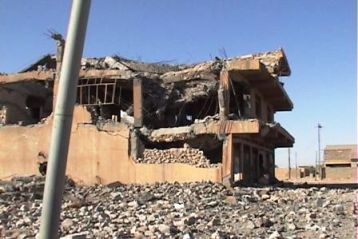
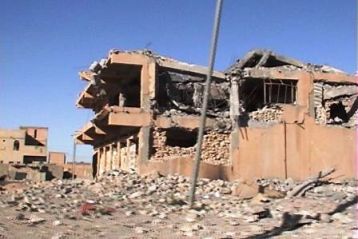
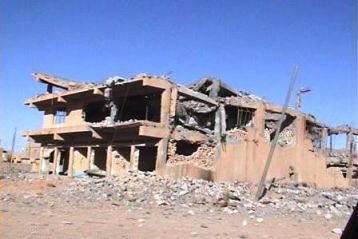


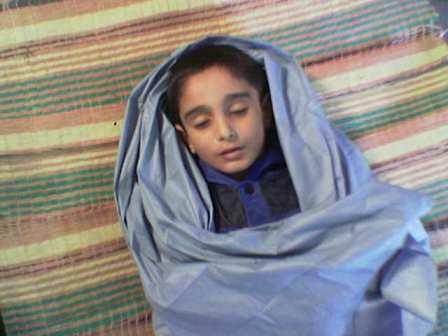
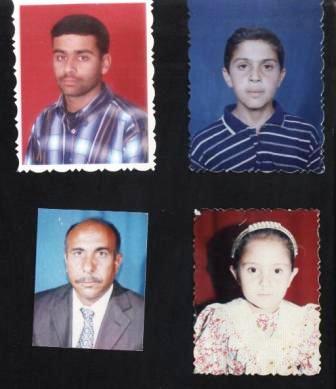
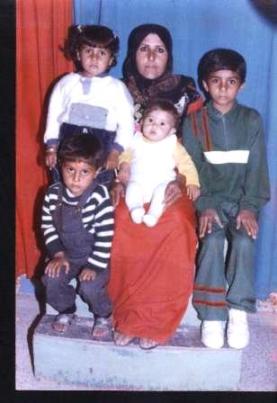
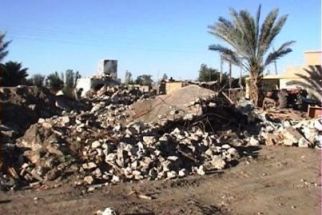

Both testimonies are from this link (Index Research)via(The BRusselstribunal.org) where there is much, much more. What was done in Iraq and to Iraq's people by the Americans and under American authority was a monstrous evil, a crime against humanity. The Haditha Massacre was part of a vast murder machine that began long before that incident and lasted long afterwards.
Thursday, October 6, 2011
Down at the Occupation


There were no riot cops, as rumor had it there would -- or might -- be. Instead, there were four horse police. I don't know how it is with horse police in your area, but in this area, getting out the horse police is a serious matter, but typically it is not a threatening one. The horse police, whether used by the city or the state, are usually there to protect the crowd, as they did today.
What did they do? They assisted an unpermitted march from the plaza to the Capitol and around the Capitol Park and back to the plaza. Later, I assume they assisted another march to the Bank of America and Wells Fargo buildings on the Capitol Mall (I say "assume" because I wasn't on that march having hurt my foot on the earlier march. The perils of old farts marching.) Essentially what they did was ride ahead of the marchers and block vehicular traffic so that the march could proceed without (much) slowdown.
There were patrol officers along the route, as well as some bicycle police, but there were no incidents, even when the march stopped and moved on to the Capitol grounds (again, unpermitted) for a brief rally.
The crowd seemed to have doubled upon returning to the plaza; around a thousand left the plaza at about 10am; there were, by my estimation, close to 2,000 when we returned.
After a brief assembly, the crowd decided to go march on the banks previously mentioned. As I was infirm due to injury, I stayed in the plaza. When the marchers returned, quite triumphantly to huge cheers, there were some speeches.
I recorded some of them, but it will be a little while before I can process them. This occupation does not yet use the People's Microphone, so it is often difficult to hear the speakers, even when they use a megaphone. The General Assembly process is still in the embryonic stage as most of the participants don't quite understand the mechanics of it, though many understand the purpose and function. At this point, proposals are few, and I was glad to see there were few votes as well. They're working out the process on the hoof as it were, just as it should be in my view.
This crowd was very diverse age-wise, gender-wise, and ethnically. Kind of like Sacramento itself. There were a number of homeless people -- who would be in the plaza anyway, for it is a favored day-time hangout. But today, they joined and they were welcomed into the occupation. If anybody had got the willies over it, I didn't see it.
The only action proposals that were adopted before I left were to occupy the plaza indefinitely, to stage the march to the Capitol and later to the banks on Capitol Mall, and to stage daily marches to the banks, to the Federal buildings and to the various state government buildings, focusing especially on the Department of Justice.
For it is Justice, more than anything, that the people involved in this occupation want. Social justice, economic justice, and legal justice. There is no statement of demands, and at the meetings today it was decided to coordinate with New York's General Assembly on the development of a Declaration and any demands that may eventually come to the fore. But for right now, the focus is on Justice.
If I had my way, the focus would be on Dignity, Justice, Community and Peace.
Something tells me, we're gonna get there.
And no one can stop us.
----------------------------------------------------------------------
A selection of pictures; more will go on line eventually...


This last one is actually taken from Anonymous's video -- "Tipping Point" -- and I believe the sign-holder is in Liberty Plaza in New York.
Subscribe to:
Posts (Atom)