DIGNITY has been the first call by just about every rebellion in the last many years.
It is the absence of Dignity that has been the proximate or precipitating cause of practically every recent rebellion, including the Arab Spring actions and OWS and its many precursor rebellions in Europe.
In the absence of Dignity, one is bereft of means -- and often motivation -- to care for oneself and for one another, which has far-reaching negative consequences, not solely for the individual but for the whole of Creation.
In our own country, Dignity has been the call of so many for so long, including those who fought so valiantly for civil rights for all Americans, not merely for those born privileged.
As I think about building a better future, I think first of the necessity for Dignity, for basic human dignity, for all, without exception or reservation. This is a completely radical thought in our current social and political environment, as only those with money, clout, and power are afforded Dignity by right. Everyone else has none.
As bad, if not worse, is the lack of attribution of Dignity for the natural world.
Showing posts sorted by relevance for query dignity. Sort by date Show all posts
Showing posts sorted by relevance for query dignity. Sort by date Show all posts
Thursday, August 29, 2013

Sunday, December 25, 2011
Dignity, Justice, Community, Peace.

I had planned to be back in California by today, Christmas, but The Snow came and made the trip difficult enough for me to postpone travel at least for a day. But I know it has been worse for some who started out earlier and got stuck on the snowed in highways. Some may still be digging out. Snow this heavy, this early in the season, is pretty rare around here. Though many people were prepared -- as best they could be -- many others were caught by surprise and are doing their best to cope.
Coping with the weather became the primary focus of my stay in New Mexico this time; the frozen pipes, the repeated storms, the snow... It's all been very evocative for me because it reminds me of winters spent in Alaska and Upstate New York, long ago now, when I first got introduced to snow and blizzards and the joys of frigid fingers and toes and nose-and-eartips and all the many delights of the season as a regular thing.
You adapt. Amazingly quickly. It's been kind of like riding a bicycle. Once you know how to deal with Winter, you don't forget. Nevertheless, as a rule, I don't do very well in cold. It's probably genetic.
But while I've been here -- in between making pans and pans of tamales and shoveling snow and dealing with unexpected appearances of ice -- I've been thinking a lot about what I've come to see as the core values, the principles of this Revolution that's continuing all over the world.
They seems like such simple concepts -- but they prove to be so difficult to achieve.
The fact is, the People have been betrayed, and as they wake up to the total wreck their Betters are making of this world, their righteous anger rises higher and higher. Anger may motivate the uprising, but it's not enough by itself.
Dignity has been stripped from many millions over the course of this endless regression (it's gone beyond a recession). And many millions more are slated to lose their Dignity before it's over -- if it is ever over.
Dignity is an essential value of being; it's ingrained in the nature of existence, and yet there are constant assaults on one's dignity from nearly the moment of birth. There are people who seem to feel their own dignity is somehow jeopardized by the dignity of others, and so they seek to strip The Other of dignity so as to (somehow) enhance their own. They conflate having money or power with whether or not one "deserves" being treated with dignity. When the concept of universal dignity fails, it tends to be replaced with predatory instincts, stealing in other words. One takes from others who are "unworthy" of dignity. Yet once predation becomes the core value of a society, it hollows itself out until it collapses from within.
That's been happening to the United States at an accelerating pace lately, but predation has been a core value of many Americans from the beginning of the European conquest and settlement in the Americas. It has its roots in frustrations in Europe that led so many to abandon their lives in the Old Country and attempt to find their futures, if not their fortunes, in America.
Those frustrations were multiple, but in most cases they revolved around the absence of dignity for some group designated to be despised by others.
No, it is not the universal condition. It is a specific condition of certain societies. And it was transferred wholesale to what would become the United States.
I was watching some of Niall Ferguson's "economic" essays on PBS while I was here, and couple of things struck me: 1)he explained the Pinochet coup and brutal rule in Chile as a struggle against Communism which therefore justified the military extinguishing the elected Allende governmnet and the Chilean democracy as well as the execution of thousands and the torture and imprisonment of tens of thousands more suspected Communists. In his view democracy and social justice and (especially) the Welfare State are worthless extravagances that can be -- nay, should be -- sacrificed in the interests of... predation. He was almost jolly about the suffering of others.
2) he pointed out that the "conservative" economic principles which rule the world today (actually, they are radical not conservative at all) are developments of "canny Scots" who in the 17th and 18th centuries came up with -- radical -- new principles of economics and economic success: mindless predation of the strong on the weak, imperialism, extraction.
So here we are.
It is a mindless system of exploitation and destruction for nearly everyone. It characterized the thinking of parts of the ambitious members of the bourgeoisie for two centuries, and now it is being made the sole ideological principle of corporation and state.
Sooner or later -- generally sooner -- it leads to catastrophic failure and Revolution.
The principle failure is the failure of Dignity. Without Dignity, the People rebel.
The mindlessness of a system that sees value only in terms of dollars and display, that asserts a right -- nay a duty -- to extract and exploit and steal at will from any and all comers (don't think the high and the mighty are exempt; stealing from one another is an art form among the practitioners of this system) leads inevitably to its deterioration and decline and finally to its isolation and destruction.
Where there is no balance, there is no Dignity. Where there is no Dignity, there is no Future. And where there is no Future, there is no Justice.
The concept of Justice itself is an alien imposition on the economic predators who have so blithely taken control of the United States and the world for the purpose of endless exploitation of people and resources for profit.
Justice is a factor of nobility, and these exploiters, though sometimes styling themselves "nobles" have no nobility. They despise "justice" in any form that may affect their extractive demands or mitigate the destruction they cause. The situation for years now has been one of unbridled economic terrorism against whole peoples and governments by a handful of out of control monetary vampires.
"Justice" in their view is using the coercive power of the state to enforce ever greater levels of extraction and exploitation and most certainly using it to crush the occasional unrest of the masses.
We saw that in India during the British Raj. But that's how imperial societies work: extraction and exploitation on a magnificent scale (to what ultimate object is always something of a mystery; typically, it's just because the exploiter can and wants to do it); rigid and typically brutal suppression of the masses, generally with the active connivance of their ostensible protectors...
Ultimately, of course, this system of "justice" cannot be maintained, for it is based on lack of dignity for any but the select and a fierce competition between them for what has been stolen from everyone else.
The basic injustice and indignity of the system itself leads to its eventual disintegration. It cannot be maintained except through ever greater applications of force. And that is not a sustainable course. There are always too many to be kept down by the handful that constitutes the Power Elite; there are never enough mercenaries to do the job.
Absence of Justice destroys Community, and the destruction of Community causes despair leading to the denial of Peace.
Peoples have long since figured out how to live -- and flourish -- in societies based on Dignity, Justice, Community and Peace; it's demonstrated every day in many social contexts including certain religious contexts. Yet here we have the ongoing spectacle of a handful of financial actors seeking to thwart the best instincts and interests of humanity in order to strip as many as possible of all their social and economic assets.
Why? Because apparently they believe there is nothing standing in their way -- and they want to.
There is no sense in continuing this course, but our governments appear to be incapable of listening to the chorus of voices from the People, incapable of doing the right thing, incapable of acting on behalf of the People they ostensibly represent. And this is nearly a universal situation; governments almost everywhere have become the exclusive playthings of the very highest of the mighty for whom the interest of the People is at best an abstraction when it's not a distraction from the important work of exploitation and destruction.
The People will nevertheless prevail. The Empire of Greed will collapse. It's inevitable. The People will continue to demonstrate alternatives to the continuing destruction engaged in by governments and their owners and sponsors. Those demonstrations -- essentially of another way to live -- have a cumulative effect, and it may be a slow march from this point forward. But the effect is very real.
Merry Christmas. Happy New Year. The Beginning is Nigh.

[Posted from a motel in Kingman, AZ on my way back to California for belated Christmas....]
Tuesday, July 26, 2011
The Cruelty Factor

???
There was a story out of Norway the other day that caught my eye. It was related by one of the survivors of the Utoya Massacre who witnessed a young boy confronting the killer with these paraphrased words:
You've just killed my father and now you want to kill me. I'm too young to die. Don't shoot.The killer left the boy alone with the body of his dead father, moving on to kill others instead. The story was on the NRK website for about a day, but now it's gone. It's been replaced by the story of Trond Berntsen, the father who was killed in front of his 10 year old son. Turns out Berntsen was the sole policeman on the island when the shooting started. He of course was unarmed, and he was not in an official capacity but was apparently working on the side, as a private security guard during the youth camp on the island. He was one of the first people killed by the cruel monster who committed the murders. He was, as it happens, the step-brother of the current Crown Princess of Norway, Mette-Marit.
How small a world it is.
Mette-Marit's husband, Crown Prince Haakon Magnus,
- Every human being has a right to lead a dignified life.
- A dignified life means an opportunity to fulfill one’s potential, which is based on having a human level of health care, education, income and security.
- Dignity means having the freedom to make decisions on one’s life and to be met with respect for this right.
- Dignity should be the basic guiding principle for all actions.
- Ultimately, our own dignity is interdependent with the dignity of others.
Hard to argue with something as benign and... amorphous... as that, right? "Dignity" is something I've been writing about for many years as the core value we need to emphasize as we struggle to come up with a viable alternative to our extinguished Republic.
But what we have been getting instead is ever greater levels of cruelty -- some of it driven by imperialist states like the United States of America and Israel, some of it the consequences of failed states like The Former Yugoslavia and Somalia, some of it due to the permission granted by our polarized societies to various individuals to be as cruel to others as they want to be.
Dignity and cruelty don't mix. And it is the failure to respect the dignity of others that leads directly to so much overt and subconscious cruelty, not solely by Our Rulers and their many courtiers by ourselves toward one another.
That's part of what happened in Norway. But I saw a story today out of the New York Times that said that the bombing in Oslo and the massacre on the island were "one of the worst mass killings in post-War Europe," I thought, "Jeeze, you've never heard of breakup of the Former Yugoslavia, eh? Srebrenica, anyone?" Mass killing was a way of life for a while there, and it happened long after the end of WWII. But who's counting?
It was the absolute cruelty of the killer and his denial of any dignity whatsoever to his victims -- as the price of their "Treason" according to him -- that is the striking, and when you get down to it, the consistent feature of nearly all the mass-murder events we've witnessed in our lifetimes (almost too many to count now.)
The denial of the dignity of its victims -- and the cruelty of its extermination campaign -- is the primary feature of the USA's Death From Above Drone Operations through many countries, and prior to that campaign, it was the primary feature of American/allied military efforts in Iraq and Afghanistan was the utter, remorseless cruelty -- and complete denial of the dignity of the natives.
Many of us have long recognized this is wrong policy; some see it as evil. Yet our response has been almost completely ineffective, or so it seems. Changing course is necessary, but doing it...
That's always the sticking point, and until we can find a way, we will continue to see the triumph of The Cruelty Factor.
Saturday, February 26, 2011
Have We Reached The Tipping Point?
Last night, my local PBS station ran an episode of BBC's Newsnight from Thursday's broadcast in Britain in which Francis Fukuyama, among others, argued that the uprisings in the Arab World are a "1989 Moment" for Arabs and the world in general.
Comes now the tipping point that the Busheviks were forever yapping about forcing on the Middle East through wars and deception, brutality and connivance. This is it. We're in it. Now. Not through Bushevik force, but through the natural aspirations of miserable Peoples.
"A nation can be reborn as a citizenry." As Simon Schama puts it.
And who would have thought it would happen in the Middle East? Who would have thought the uprisings in the Middle East would trigger/inspire others to rise up as far away as Madison, WI?
"You have people whose dignity, like that vegetable seller who set the whole thing off in Tunisia, whose dignity is simply trashed by a state that's simply arrogant and unresponsive." says Francis Fukuyama.
Well. Yes. That's kind of how it goes. Ultimately, this tipping point and these uprisings are about Dignity, as I've said over and over again. And the absence of Dignity for the Common Man is not limited by any means to the authoritarian regimes long propped up by the United States in the Middle East. Not at all.
The Uprisings have been going on all over Europe due to the mindless imposition of Austerity measures demanded of governments by the various financiers who obviously rule governments world-wide in contravention of the People's Will. These Austerity measures the financiers are demanding -- putting the entire economic burden of the global financial collapse on the backs of the poor and marginal and the working class, while absolving and holding harmless the High and the Mighty -- have inspired revolts everywhere, most recently, again, in Greece, where the streets have frequently turned violent. By putting the economic burden entirely on those least able to absorb and pay it, the Powers That Be -- governments in collusion with the Financier/Rentier Class -- are playing with fire. By denying Dignity to the poor, the marginal, and the working class, they are mindlessly triggering the next phase of Revolution against them.
Lacking functioning crystal balls, we can't know at this point how these uprisings and the fall out from them will turn out. We don't even understand where these uprisings, revolutions and revolts are grounded. The universally expressed conceptions of Dignity and Justice simply don't register among the Powers That Be. They are not just nonsensical to those in the Palace, they are non-existent nonsense.
A Koch (or a Koch handmaiden like Scott Walker) has no idea what Dignity and Justice mean to a prole any more than the Sultan of Araby can possibly imagine what it means to a common Street Arab.
The notion is incomprehensible to the powerful -- whoever and wherever they are.
Of course, even with some of the insights we see on "Newsnight" or wherever -- and there are other segments of this show worth watching at the link provided above -- our media is essentially useless as the course of revolt and revolution unfolds around the world today. Not only can the media not keep up with the flow of events, its principal interest is in shaping and controlling those events for the benefit of themselves and their sponsors, be they government or corporate. They are finding they can't do it in these many cases.
Al Jazeera shows the way on reporting what's going on. They are still playing catch up, not leading at all. As for much of the rest of the media, they don't seem to have a clue, any more than than the propagansist state media of the Arab Autocracies has had any idea what is really going on.
Another view: http://www.dailykos.com/story/2011/02/26/949976/-The-Tipping-Point:-Ten-Wake-up-calls-for-Americans-from-Coffee-Party-USA
Sunday, February 6, 2011
Dignity and Justice
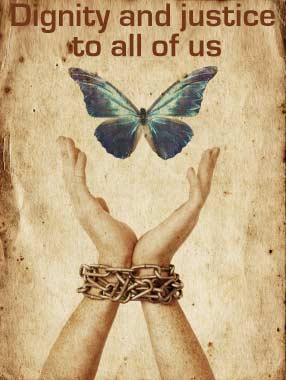
I've been struck by the repeated emphasis on "dignity" and the concept of real "justice" throughout the Egyptian Uprising. The people protesting the continuation of the Mubarak Regime in Tahrir Square and elsewhere in Egypt keep going back to the basics of Dignity and Justice to explain what is going on and what they see as the most important goals of their Revolution.
And I can't for a moment argue with them.
It's impossible not to connect their straightforward demands with those of Revolutionaries throughout the Middle East, at least from the time of the Iranian Uprising against the Shah but tracing much farther back than that. They want to be masters of their own future, and they want the dignity that comes as a result of trying -- and sometimes failing -- to be in control of their own fate.
"Dignity", what a concept.
"Justice". Who would have thought.
These are concepts we could probably do well to relearn here. After The Game, of course.
Go Cheeseheads.
Or something.
Monday, June 13, 2011
In "Dignity" -- and the Weiner Thing

As I was driving east on the Interstate, I was listening to the radio as I tend to do when on the road, mostly NPR, and there were a lot of stories about Anthony Weiner and his predicament with regard to his Democratic colleagues calling for his resignation from Congress over what he's done -- and all those icky pictures and text messages and whatnot. On the other hand, polls suggest his constituents do not universally condemn him nor his actions and that the majority want him to stay in office.
Most of the public condemnation of Weiner so far seems to be rooted in prudery and traditional American Puritanism. Denouncing (and being obsessed with) other people's sex lives is the predominant amusement of prudes and Puritans, as everyone else in the world seems to understand.
But as I listened to the stories about the calls for Weiner to resign, little of it was focused on his sex life or on his lies about it. Unlike the public hysteria -- which of course is whipped to a frenzy by the media -- the official calls seemed to have much more to do with something unstated: Weiner had violated the Dignity of his office and the institution in which he served, not by engaging in "inappropriate sexting" with women on the internet, but by doing it... publicly. It's not that they do these things, in other words, or that they lie about it, but that it becomes public through their own fault and inattention to detail or through the prying of people like Breitbart.
The public hysteria (to the extent there really is any) has to do with Weiner's "appalling" actions and his hypocritical lying about it. Yet the lies are relatively mild, certainly not uncommon in such situations (typical in fact). He certainly isn't lying the nation into war, for example. Or using constant lies to justify murder like the Israelis do.
And if news reports we've been getting for a couple of years now are correct, the "appalling" things that Weiner is accused of doing and has admitted are almost routine among young people (high-school through college age) and are not uncommon at all among Weiner's own age cohort of 40-somethings. Prudes and Puritans, of course, will always obsess on these things and condemn them in public figures. They seem to live for these incidents, don't feel fully alive unless they can denounce the sexual behavior of someone else.
But if the news is right, "sexting" is so common as to be almost universal among the young using social media.
I'm old, and the idea of doing something like that -- sending racy pictures of myself and ribald text messages to people I don't know (or even people I do know!) -- is something that doesn't occur to me. It's just not something I would do, but I think that has more to do with the era I grew up in than any particular shock at the lewdness of it all.
After all, I came up in the '50's and '60's, and the truth is, casual nudity and semi-public sex was not exactly uncommon. Even in the repressed '50's, same-sex nudity in all kinds of situations was expected, in some cases required, and sex, though never mentioned in polite company, was hardly uncommon (!). As part of "modernity", parental and child nudity at home (under the right circumstances, in the bathroom, for example) was widely practiced, and if anything, all kinds of sexuality were quite possibly more widely practiced and accepted (more or less in private, to be sure) than they are now.
"Sex," for the most part, wasn't a public issue in the 1950's because it wasn't discussed. But there was plenty o' sex.
In the liberationist 1960's we didn't have the technology to practice "sexting", and I'm not sure that many people would have done it anyway. Communitarianism along with liberationism wouldn't really allow something like virtual online "sex" such as sexting to substitute for the real thing. I don't think it is entirely a matter of technology, either. I could be wrong, but it seems to me that to even think of sexting, one must be relatively isolated from other people. And back in those days, that kind of isolation was rare. "Community" was a very important concept, and people -- perhaps -- were more connected with others then than they are now.
Then there's the whole "40-something" malaise. Weiner is one of those 40-somethings, but there are lots and lots of others in that age cohort coming into their own, and many of them seem to have, how to put this, "issues."
I think it comes from the fact that these are the offspring of my generation, and all things considered, there's going to be rebellion of some sort. If I'm right, and sexting is simply not something many people in my generation would do -- even if they could -- then doing that would be something generational rebels would be more likely to do.
On the other hand, casual public nudity and even public or semi-public sex was something people in my generation would engage in, probably more than 40-somethings would. It was an act of rebellion in my generation, whereas sexting is rebellious for 40-somethings.
Of course if the practice originated with an even younger generation, how will they rebel against their parents values when the time comes?
Ultimately, these questions are irrelevant to the Weiner Thing -- at least from the Congressional leadership standpoint. They want him gone, not so much for what he has done, but for the violation of the Dignity of his office and the institution his actions represent.
Many of us would agree that our public institutions -- especially Congress -- have no dignity left. They are embarrassments almost by definition, and the notion that any congresscritter's sexual indiscretions could violate the "dignity" of a body that has none is absurd.
But that's us. For them, nothing is more important than their belief in their own moral dignity and standing. When the image they have of themselves is sullied -- by sexual exploits becoming public especially -- they react the way they are doing. And as we've seen over and over (Bill Clinton, anyone?), their shocked, shocked reaction and their huffy denunciations just make them look silly.
Saturday, August 31, 2013
Justice -- Building A Better Future
There is no term more perverted in recent history than the thing called "Justice."
Throughout the many wars of aggression perpetrated after 9/11, one term has constantly stood out:
Justice? There's no hint of justice in these actions, in fact just the opposite. But then, these actions mirror so much of what is purported to be 'justice' in the civilian world, where millions are held in custody, tens of thousands in solitary confinement, where torture and brutality are routine, where the concept of a fair trial was long ago subverted, where everyone is subject to constant and often invasive surveillance and whole communities are routinely subject to terror campaigns by police. Where the High and the Mighty get away with just about anything, whereas the lowly Rabble is constantly -- and literally -- under the gun.
Justice?
What a sad, sick joke.
Along with Dignity, Justice is the most frequently heard call of rebels and revolutionaries at home and abroad.
Justice.
What would it mean if we were to build a better future?
Throughout the many wars of aggression perpetrated after 9/11, one term has constantly stood out:
"Bring 'em to justice."What that's meant is death and destruction on the ground and from above, kidnapping, torture, gulags, and worse.
Justice? There's no hint of justice in these actions, in fact just the opposite. But then, these actions mirror so much of what is purported to be 'justice' in the civilian world, where millions are held in custody, tens of thousands in solitary confinement, where torture and brutality are routine, where the concept of a fair trial was long ago subverted, where everyone is subject to constant and often invasive surveillance and whole communities are routinely subject to terror campaigns by police. Where the High and the Mighty get away with just about anything, whereas the lowly Rabble is constantly -- and literally -- under the gun.
Justice?
What a sad, sick joke.
Along with Dignity, Justice is the most frequently heard call of rebels and revolutionaries at home and abroad.
Justice.
What would it mean if we were to build a better future?
Friday, August 13, 2010
Let's Add "Peace" to "Dignity" and "Justice"
To me, Dignity and Justice are encompassing principles that can be construed to cover most of what we desire in forming and implementing modern nation states. But in the current context of the United States as HyperPower pursuing global hegemony through war and Imperial rule, specifying "Peace" as an objective and a foundational principle is more and more desirable.
We may come to question the advisability of any nation-state in the modern world, but the default position -- absent nation-states -- would have to be either World Empire (which is the direction we're going), or tribal units, which is the direction I would prefer, though with many caveats.
=================
Some random notes:
I am in favor of abolishing the states and substituting semi-autonomous regional governments, for the simple reason that states have become as rotten and corrupt as the Federal government, in fact, they probably started out that way. There are far too many statelets on the East Coast that could be more practically governed as a unit. There is a serious mismatch between the interests of various regions of the country and some of the states have internal mismatches between the interests, populations, and geography of one sector versus another. Break them up, reform them into affinity regions.
Autonomy is important. Direction from the Capital is only feasible with a unified polity, and the United States has never been that. Expansion merely disperses and institutionalizes inherent division. Instead, try for internal unification within the regional polities.
With regional autonomy, ironically, the national assembly can become an Imperial state, but one with strictly limited powers. In other words, the urge to empire, which appears to be deeply ingrained in the American psyche, can be expressed in a national government which ostensibly rules its autonomous regions (think parts of post Maoist China) with all the pomp and circumstance required, but which is purposely benign.
In fact, the national government does not "rule" so much as fulfill the mutual interests of the peoples of the regions.
With Peace as a foundational principle, the nation, much like China, does not engage in armed conflict abroad, and strictly limits armed domestic action. Yes, we have to think about domestic police action, potentials for armed rebellion and so on.
Dignity and Justice are principles that serve as brakes on the predatory interests and intentions of some, generally small, proportion of any population, and sometimes the predators among us become dangers to themselves and others. Their control becomes an interest of the People and the State, but that interest may have to be backed up with force. Predators do not generally yield willingly.
Dignity and Justice encompass more than Law; they are foundational principles of the social contract. They are fundamental principles of a desirable economic and social condition as well as legal principles. One should not separate Law from economic and social justice.
How they are expressed may be different from region to region, and the national expression may be different still.
To be continued...
We may come to question the advisability of any nation-state in the modern world, but the default position -- absent nation-states -- would have to be either World Empire (which is the direction we're going), or tribal units, which is the direction I would prefer, though with many caveats.
=================
Some random notes:
I am in favor of abolishing the states and substituting semi-autonomous regional governments, for the simple reason that states have become as rotten and corrupt as the Federal government, in fact, they probably started out that way. There are far too many statelets on the East Coast that could be more practically governed as a unit. There is a serious mismatch between the interests of various regions of the country and some of the states have internal mismatches between the interests, populations, and geography of one sector versus another. Break them up, reform them into affinity regions.
Autonomy is important. Direction from the Capital is only feasible with a unified polity, and the United States has never been that. Expansion merely disperses and institutionalizes inherent division. Instead, try for internal unification within the regional polities.
With regional autonomy, ironically, the national assembly can become an Imperial state, but one with strictly limited powers. In other words, the urge to empire, which appears to be deeply ingrained in the American psyche, can be expressed in a national government which ostensibly rules its autonomous regions (think parts of post Maoist China) with all the pomp and circumstance required, but which is purposely benign.
In fact, the national government does not "rule" so much as fulfill the mutual interests of the peoples of the regions.
With Peace as a foundational principle, the nation, much like China, does not engage in armed conflict abroad, and strictly limits armed domestic action. Yes, we have to think about domestic police action, potentials for armed rebellion and so on.
Dignity and Justice are principles that serve as brakes on the predatory interests and intentions of some, generally small, proportion of any population, and sometimes the predators among us become dangers to themselves and others. Their control becomes an interest of the People and the State, but that interest may have to be backed up with force. Predators do not generally yield willingly.
Dignity and Justice encompass more than Law; they are foundational principles of the social contract. They are fundamental principles of a desirable economic and social condition as well as legal principles. One should not separate Law from economic and social justice.
How they are expressed may be different from region to region, and the national expression may be different still.
To be continued...
Tuesday, August 10, 2010
Redoing the Constitution on Principles of Dignity and Justice
Dignity and Justice
Recently, our friends on the right have taken direct aim at provision of the Constitution that they don’t like, mostly amendments like the 14th, but opening the notion that the Constitution itself is outdated and should probably be “revisited.”
This has meant that many of those on the so-called Left, by default, must defend the Constitutional status quo, even though, many, like me, believe that the Constitution is an anachronism, faulty, and has long been an impediment to progress.
So what will happen -- regardless of whether there are any substantive revisions to the Constitution -- is that discussion of revision will take place from the right, primarily on the premise of 1) strengthening the executive, 2) curtailing or eliminating individual rights, 3) institutionalizing economic rule by the wealthy.
We might see a revision of the concept of “Law” to provide a Constitutional foundation for the long time practice of one Law for the rich, another -- and much harsher -- Law for everyone else. We might see a reversion to “States’ Rights” by which the several states may override Federal Law.
Whatever the case, our friends on the Right are not shy at all about re-doing the Constitution (or substituting the Confederate Constitution) to suit themselves.
Those on the Left bleat pathetically that “Things Are Fine As They Are. Leave the Constitution alone!!!”
But they’re not fine.
They haven’t been for a long time, if they ever were. And rather than a defensive posture, why not take an aggressive stance and demand changes to the Constitution that actually serve the interests of the People rather than letting the Rabid Right prattle about changes that would only serve the Oligarchy?
Peoples Dignity and Justice should be the principles on which a New Constitution is formulated, and we should not be the least bit shy about it and what’s needed.
We can start with the premise that the way things are isn’t working, and they aren’t working because of institutional rot on the one hand and Constitutional imperfection on the other. The way things are -- basically a very corrupted Imperial-Security State run by and for the profit of a very few individuals and interests -- is a direct product of the nature of the Constitution adopted in 1789.
So how would I change it?
That’s a start.
Just a start.
If these Constitutional revisions (actually, re-writing the whole thing) were considered on the basis of common human rights, dignity and justice, we'd see a transformed American experiment in self-determination and self-government.
The time has come...
(Note, I'm traveling at least until next week. Posting here may therefore be limited.)
Recently, our friends on the right have taken direct aim at provision of the Constitution that they don’t like, mostly amendments like the 14th, but opening the notion that the Constitution itself is outdated and should probably be “revisited.”
This has meant that many of those on the so-called Left, by default, must defend the Constitutional status quo, even though, many, like me, believe that the Constitution is an anachronism, faulty, and has long been an impediment to progress.
So what will happen -- regardless of whether there are any substantive revisions to the Constitution -- is that discussion of revision will take place from the right, primarily on the premise of 1) strengthening the executive, 2) curtailing or eliminating individual rights, 3) institutionalizing economic rule by the wealthy.
We might see a revision of the concept of “Law” to provide a Constitutional foundation for the long time practice of one Law for the rich, another -- and much harsher -- Law for everyone else. We might see a reversion to “States’ Rights” by which the several states may override Federal Law.
Whatever the case, our friends on the Right are not shy at all about re-doing the Constitution (or substituting the Confederate Constitution) to suit themselves.
Those on the Left bleat pathetically that “Things Are Fine As They Are. Leave the Constitution alone!!!”
But they’re not fine.
They haven’t been for a long time, if they ever were. And rather than a defensive posture, why not take an aggressive stance and demand changes to the Constitution that actually serve the interests of the People rather than letting the Rabid Right prattle about changes that would only serve the Oligarchy?
Peoples Dignity and Justice should be the principles on which a New Constitution is formulated, and we should not be the least bit shy about it and what’s needed.
We can start with the premise that the way things are isn’t working, and they aren’t working because of institutional rot on the one hand and Constitutional imperfection on the other. The way things are -- basically a very corrupted Imperial-Security State run by and for the profit of a very few individuals and interests -- is a direct product of the nature of the Constitution adopted in 1789.
So how would I change it?
First, abolish the Senate. Second, abolish lifetime judicial appointments. Third, expand the House of Representatives, by at least double, triple would be better. Fourth, abolish the states. Fifth, develop and implement autonomous regions in place of states. Sixth, develop and implement economic as well as political rights. Seventh, restrict and limit war-making powers ; institutionalize a defensive military subject to civilian control. Eighth, restrict and limit the national executive authority . Ninth, abolish all courts, departments, agencies and bureaus of the current Federal government and replace them only as necessary and as authorized by the representatives of the People.
That’s a start.
Just a start.
If these Constitutional revisions (actually, re-writing the whole thing) were considered on the basis of common human rights, dignity and justice, we'd see a transformed American experiment in self-determination and self-government.
The time has come...
(Note, I'm traveling at least until next week. Posting here may therefore be limited.)
Sunday, January 22, 2012
Toward Critical Spirit
Via Yves Smith and Naked Capitalism:
I've been saying "Watch Europe and North Africa" -- and Spain in particular -- for some time because it is from Spain, Greece, Portugal, Ireland, and from North Africa that the bases of the American and Global Occupy Movement come.
This was understood in the Occupy Wall Street development process because so many of the M15 Movement participants were activists within or advising the OWS participants. And of course the precursor American Rebellion and Occupation in Wisconsin was openly and directly derived from the Egyptian and Tunisian models.
Little information was widely distributed about these aspects of the Movement in the United States, so it was easy enough for some Zeitgeisters and RonPauliacs to assert predominance early on in many of the Occupations around the country and not face a lot of opposition.
Because their political, social and moral ideas have long been excluded from the "mainstream," many people who participated early on in the Occupy Movement were simply unfamiliar with them; the more they learned, the more most rejected them.
Zeitgeist and RonPaulism, for example, function little differently than religious cults, and even though many people are drawn to religion and can be susceptible to cults, there is ultimately no "there there" for most people in either the Zeitgeist or the RonPauliac cults. These cults are focused on esoterica of monetary policy, for example, obsessed with the Fed and all its many perverse ways, but they fail to develop any kind of practical social/political or functional economic alternative. So, they get nowhere. But then, to my jaundiced eye, they aren't meant to get anywhere as political/social or economic alternatives. They are meant solely to perpetuate themselves and to keep their founders and leaders in the public eye and in comfort.
But ultimately, their interests are irrelevant to the Revolution, though, who knows, there may be some elements of Zeitgeistism or even RonPaulism that winds up in the programs and policies of the Better Future we're all so busy envisioning and some are so busy building.
The energy of the Movement and the Revolution is not in Zeitgeistism or RonPaulism. It looks to me like both sap energy at the local level, and they simply have no relevance at the national and international levels. Their relevance to the Movement as a whole remains to be seen.
In the video above, Miguel Yarza of Democracia Real Ya explains it all for you, what is really going on and what is really important in for the future of the Movement and the Revolution: Dignity, Justice, Community and Peace is the way I synthesize these values. Yarza describes what is actually going on in Spain and Europe and elsewhere as a result of the diffusion of M15 and Democracia Real Ya ideas and ideals throughout the Occupy Movement.
Democracial Real Ya is a Dignity and (social/economic) Justice movement, as were the uprisings and revolutions in North Africa, though in North Africa, legal justice became a focus of the movements after the state crackdowns on the demonstrations and protests.
In this country, we're still figuring out some of the Dignity and Justice aspects of the uprisings, but there has been a very gratifying focus at many Occupations on the plight of the homeless and homeless mentally ill in particular, and on the necessity to keep people in their homes if they have them. The fight against foreclosures in this county mirrors what's going on in Spain. Also, more and more American Occupations are taking cues from Europe and liberating vacant buildings, even if only briefly at this point. On Friday, for example, the former Jack Tarr/Cathedral Hill Hotel in San Francisco that was closed and abandoned a few years ago was liberated for a few hours with the intention of making it into living quarters for some of the thousands of homeless in San Francisco and the Bay Area. This action was modeled on the Traveler's Aid building liberation in Oakland last November and that action in turn was modeled on the many abandoned building liberations in Spain and elsewhere in Europe that have been going on for many years. Squatting has a long history in Europe and is legally protected, whereas in the United States, it is strictly against the law and sometimes brutally suppressed if it occurs; thus, those who are doing it in this country -- and it is happening more widely than most of us realize -- are very courageous. While it is not unprecedented in this country, the current energy behind it, drawing mostly on the anarchist community, is new.
Real Democracy continues to be a goal through all the various aspects of the Movements, Uprisings, and Revolutions, most especially in Europe and North Africa where the betrayal of the People by their Rulers is so stark and profound. What they have been "given" is not at all what they thought they were getting. Bait and switch is too kind a word, and it goes back to the triumph of Neo-Liberal economic theory (another form of cultic belief) that essentially strip mines wealth from the public and hands it to oligarchs and plutocrats who, for whatever reason, have no sense of social responsibility whatsoever.
"Democracy" was supposed to prevent that outcome, but in its current form of representative/parliamentary/managed democracy, it is actually enabling it. Peoples in Europe and North Africa see that stark reality and they revolt. The notion is gaining traction in the United States as even the Rs understand that the Plutocrats who own our government have no sense of social responsibility at all, any more than their European counterparts do, and this is wrong.
One may disagree with the Gingrich response to the issue of social responsibility -- please do! -- but at least he has some idea what it is. Romney, for whatever reason, and Paul, for selfish reasons, do not.
As for the current White House and Congress, it's hard to say. If it were not for the social benefit programs currently in place, almost all of them dating back decades, it is doubtful that the current political class would be doing anything on behalf of the masses, for in general they seem to lack conscience or any ability to act on conscience if they have it.
Most institutions that proclaim a social conscience or responsibility have failed, in my view because they are more concerned with their organizational survival than they are with serving their clients. Why that's so is a whole other discussion.
It's therefore up to the People to voice their interests and to demonstrate how to act on those interests.
It's difficult -- especially under conditions of brutal repression -- but it is taking place just the same. And every time there is another fierce crack down by Authority (the UC Riverside confrontation the other day was certainly typical) the opposition to oppression grows. It takes time to figure out what to do about it. Notably, the Authorities are more flexible in their repressive tactics than I would have thought -- which gives us some idea of the extent of the training they have received in suppressing popular unrest. Obviously this factor of "law enforcement" has been emphasized heavily since 1999, even though they still make unforced errors routinely in dealing with the public.
Yarza is talking about building a "critical spirit," which we can think about as a critical mass, that will tip the balance away from the Neo-Liberal catastrophist cult that has captured governments everywhere. And you never know when the tipping point will come. Nor can you necessarily predict just how the cookie will crumble.
But the pressure must be maintained, and the image of the future must be prepared.
When we do our part, the critical spirit takes care of itself.
And there is no sign that the People are tiring.http://www.blogger.com/img/blank.gif

[Occupy Oakland's Unstoppable Bus cruising San Francisco's Financial District.]
---------------------------------------
John Spritzler and David Stratman, "Thinking about Revolution."
I've been saying "Watch Europe and North Africa" -- and Spain in particular -- for some time because it is from Spain, Greece, Portugal, Ireland, and from North Africa that the bases of the American and Global Occupy Movement come.
This was understood in the Occupy Wall Street development process because so many of the M15 Movement participants were activists within or advising the OWS participants. And of course the precursor American Rebellion and Occupation in Wisconsin was openly and directly derived from the Egyptian and Tunisian models.
Little information was widely distributed about these aspects of the Movement in the United States, so it was easy enough for some Zeitgeisters and RonPauliacs to assert predominance early on in many of the Occupations around the country and not face a lot of opposition.
Because their political, social and moral ideas have long been excluded from the "mainstream," many people who participated early on in the Occupy Movement were simply unfamiliar with them; the more they learned, the more most rejected them.
Zeitgeist and RonPaulism, for example, function little differently than religious cults, and even though many people are drawn to religion and can be susceptible to cults, there is ultimately no "there there" for most people in either the Zeitgeist or the RonPauliac cults. These cults are focused on esoterica of monetary policy, for example, obsessed with the Fed and all its many perverse ways, but they fail to develop any kind of practical social/political or functional economic alternative. So, they get nowhere. But then, to my jaundiced eye, they aren't meant to get anywhere as political/social or economic alternatives. They are meant solely to perpetuate themselves and to keep their founders and leaders in the public eye and in comfort.
But ultimately, their interests are irrelevant to the Revolution, though, who knows, there may be some elements of Zeitgeistism or even RonPaulism that winds up in the programs and policies of the Better Future we're all so busy envisioning and some are so busy building.
The energy of the Movement and the Revolution is not in Zeitgeistism or RonPaulism. It looks to me like both sap energy at the local level, and they simply have no relevance at the national and international levels. Their relevance to the Movement as a whole remains to be seen.
In the video above, Miguel Yarza of Democracia Real Ya explains it all for you, what is really going on and what is really important in for the future of the Movement and the Revolution: Dignity, Justice, Community and Peace is the way I synthesize these values. Yarza describes what is actually going on in Spain and Europe and elsewhere as a result of the diffusion of M15 and Democracia Real Ya ideas and ideals throughout the Occupy Movement.
Democracial Real Ya is a Dignity and (social/economic) Justice movement, as were the uprisings and revolutions in North Africa, though in North Africa, legal justice became a focus of the movements after the state crackdowns on the demonstrations and protests.
In this country, we're still figuring out some of the Dignity and Justice aspects of the uprisings, but there has been a very gratifying focus at many Occupations on the plight of the homeless and homeless mentally ill in particular, and on the necessity to keep people in their homes if they have them. The fight against foreclosures in this county mirrors what's going on in Spain. Also, more and more American Occupations are taking cues from Europe and liberating vacant buildings, even if only briefly at this point. On Friday, for example, the former Jack Tarr/Cathedral Hill Hotel in San Francisco that was closed and abandoned a few years ago was liberated for a few hours with the intention of making it into living quarters for some of the thousands of homeless in San Francisco and the Bay Area. This action was modeled on the Traveler's Aid building liberation in Oakland last November and that action in turn was modeled on the many abandoned building liberations in Spain and elsewhere in Europe that have been going on for many years. Squatting has a long history in Europe and is legally protected, whereas in the United States, it is strictly against the law and sometimes brutally suppressed if it occurs; thus, those who are doing it in this country -- and it is happening more widely than most of us realize -- are very courageous. While it is not unprecedented in this country, the current energy behind it, drawing mostly on the anarchist community, is new.
Real Democracy continues to be a goal through all the various aspects of the Movements, Uprisings, and Revolutions, most especially in Europe and North Africa where the betrayal of the People by their Rulers is so stark and profound. What they have been "given" is not at all what they thought they were getting. Bait and switch is too kind a word, and it goes back to the triumph of Neo-Liberal economic theory (another form of cultic belief) that essentially strip mines wealth from the public and hands it to oligarchs and plutocrats who, for whatever reason, have no sense of social responsibility whatsoever.
"Democracy" was supposed to prevent that outcome, but in its current form of representative/parliamentary/managed democracy, it is actually enabling it. Peoples in Europe and North Africa see that stark reality and they revolt. The notion is gaining traction in the United States as even the Rs understand that the Plutocrats who own our government have no sense of social responsibility at all, any more than their European counterparts do, and this is wrong.
One may disagree with the Gingrich response to the issue of social responsibility -- please do! -- but at least he has some idea what it is. Romney, for whatever reason, and Paul, for selfish reasons, do not.
As for the current White House and Congress, it's hard to say. If it were not for the social benefit programs currently in place, almost all of them dating back decades, it is doubtful that the current political class would be doing anything on behalf of the masses, for in general they seem to lack conscience or any ability to act on conscience if they have it.
Most institutions that proclaim a social conscience or responsibility have failed, in my view because they are more concerned with their organizational survival than they are with serving their clients. Why that's so is a whole other discussion.
It's therefore up to the People to voice their interests and to demonstrate how to act on those interests.
It's difficult -- especially under conditions of brutal repression -- but it is taking place just the same. And every time there is another fierce crack down by Authority (the UC Riverside confrontation the other day was certainly typical) the opposition to oppression grows. It takes time to figure out what to do about it. Notably, the Authorities are more flexible in their repressive tactics than I would have thought -- which gives us some idea of the extent of the training they have received in suppressing popular unrest. Obviously this factor of "law enforcement" has been emphasized heavily since 1999, even though they still make unforced errors routinely in dealing with the public.
Yarza is talking about building a "critical spirit," which we can think about as a critical mass, that will tip the balance away from the Neo-Liberal catastrophist cult that has captured governments everywhere. And you never know when the tipping point will come. Nor can you necessarily predict just how the cookie will crumble.
But the pressure must be maintained, and the image of the future must be prepared.
When we do our part, the critical spirit takes care of itself.
And there is no sign that the People are tiring.http://www.blogger.com/img/blank.gif

[Occupy Oakland's Unstoppable Bus cruising San Francisco's Financial District.]
---------------------------------------
John Spritzler and David Stratman, "Thinking about Revolution."
Sunday, March 16, 2014
When Radicals Reform
Something happens to radicals in this country as they age out of their wild youths, and some of us, like me, seem to get more radicalized as we get older. I've been thinking about this topic for quite a few years, and have written quite a bit about some of the transformations that have taken place among some of the (more or less) political and social radicals who have been important at various times in my life.
Names pop into mind:
-------------------------------------------------
Mario Savio, I think I've made clear, was a huge influence on my youthful perception of what worthwhile rebellion was all about. He stood on principle, head and shoulders above nearly everyone shouting and carrying on in those days, the early '60s, just before the '60s became the '60s of lore and legend. I've been reading about him in Seth Rosenfeld's "Subversives," and while I knew some of his backstory and what became of him after the Free Speech Movement at UC Berkeley -- in sketchy outline -- the details are somewhat surprising.
He was such an influence on me -- though I was in high school 80 miles away from the Berkeley campus -- because I felt such a strong kinship with him, wanted to say what he was saying, wanted the freedom he was advocating, wanted the human dignity that he said over and over was the due of the students at Berkeley and by extension, was due everyone, not because they earned it or fought for it but because they are. Mario's iconic speech on the steps of Sproul Hall (the University's administration building) has echoed down the years, and it resonates as strongly now as ever if not more so.
There was a good deal more to the speech than the penultimate paragraph, but that's what has lived on and has inspired generations of righteous rebels around the world. There is a time... Yes, there is.
Even then, I was aware that he was coming from a moral, much more than a political, grounding, but I wasn't aware of his Catholic faith, nor was I conscious of his Freedom Summer efforts that year (1964) and how that experience had shaped his sense of injustice -- and what to do about it. I just knew that he was standing up for human rights and human dignity, standing in the schoolhouse door, and it was a fierce counterpoint to the efforts of so many authorities, in and out of the South, to limit and curtail rights and access to education, freedom, and justice.
What Mario did was deeply radical at the time, something that may be overlooked now because we're so used to similar types of efforts on behalf of dignity, freedom, and justice. But at the time, these things were very rare, and rarely did they succeed. Submission to authority and social conformity were the cultural norms, and woe betide you if you rebelled or deviated from the norm. Mario was arrested and otherwise subjected to "university discipline." But he never seemed to lose his sense of mission and purpose.
I didn't know until many years later how difficult this whole thing had been for him, and how in its aftermath, he faced a long period of doubt and sometimes despair, how he struggled with mental illness, and how eventually he became a professor at California State University, Sonoma, where he was teaching philosophy, mathematics and logic when he died of heart failure in 1996.
He gave voice to a generation of rebels, and yet later in his life, he conformed to an academic discipline and was rarely heard from on the topics that had been so important to him during the Free Speech Movement. Which is not to say they didn't remain important to him and to many others. It means only that his voice was muted as he grew older, and his life became more, not less, conformist in the academy.
I'm still learning about his later life, and I may come to another conclusion about him. For now, however, I'll posit that when radicals are subsumed in the academic environment, they become defenders of what they once rebelled against. Mario is a type model of what happens.
-----------------------------------------
Jerry Rubin was a huge influence on me a little later on -- largely because he was so spectacularly theatrical in his rebellion. I didn't realize until much later how old he was compared to me and compared to "my generation." He was born in 1938, ten years before I was, and yet at the time he was raising hell, I thought of him as barely older than me at all.
I had one encounter with him during a campus ruckus at which I was more a spectator than a participant, and I was surprised at how physically small he was and how remarkably modest, considerate and thoughtful he seemed to be in person compared to his often over the top and out of control media presence.
"Flamboyant," "flashy" were terms used to describe his antics, but they were usually wonderful antics, garnering enormous amounts of attention -- as well as frequent ridicule. He didn't seem to mind, and he didn't seem to care.
Rubin is often credited with the catch phrase "Don't trust anyone over 30," although he was himself over 30 for much of his rebel career. The phrase, however, was not original with Jerry. Rather, it came from the Free Speech Movement, particularly from Jack Weinberg, whose arrest on Sproul Plaza lit the match for the Movement. (Weinberg is an interesting case in his own right, and I may get back to him anon.)
Jerry's theatrics were essentially a form of marketing, and later in his life, after his rebel period, and after he went through a series of changes, including marriage, he became a securities broker, and eventually he became a multi-level marketing executive, and they used to say he was "selling Amway" -- but it wasn't Amway. He was declared "the first Yuppie." Mark Ames, now of Pando, took him (and by extension, all hippies and Yippies and Yuppies) to the woodshed in a swell article at the eXileD online from 2011. How embarrassing it all was for Ames to look back on.
The embarrassment factor would actually be something that entered into the reforms many radicals experienced as they aged out of their wild(ish) youths.
Jerry went on trial for his part in the Yippie actions at the Democratic National Convention in Chicago in 1968, and throughout the trial he made a spectacle of himself and a mockery of the court, which in its majesty under the redoubtable Judge Julius Hoffman, mocked itself as often as Jerry's tantrums and costume changes did. From that moment, I think, few Americans would be able to see the vaunted justice system the same way again, and many would see it for what it is: a two tiered system of injustice.
----------------------------------------------------------------------

Abbie Hoffman will be forever linked with Jerry Rubin, of course, and their fates, superficially might seem similar. Both died too young, Jerry by accident (or rather misadventure) and Abbie (supposedly) by suicide, though why he might have chosen that path is still a mystery and some observers suspect he was "suicided" -- perhaps one of the early examples of the treatment. I don't claim to know. But this is what I wrote about him on the 109th anniversary of my father's birth:
Abbie did not reform, not really. He remained true to himself and to the principles of resistance he'd been espousing most of his life. He continued to fight the good fight on behalf of others. Abbie was a couple of years older than Jerry, and he was far more grounded in social and political movements than Jerry was. He knew whereof he struggled. Jerry, for all his dynamism and charisma, always seemed somewhat lost or flailing.
Because he didn't reform, I think it more likely than not that he was "suicided" for his continued outspokenness and disobedience, though there is no way to prove it. But too often, this is what happens to radicals who don't reform and conform and quiet down.
---------------------------------------------------------
Angela Davis, to my eye, learned that lesson well. She, of course, is still considered the (Honorable) Uber Rebel Radical Black Lady, but oh my has she changed. Since retiring from the University of California at Santa Cruz where she was the director of the University's Feminist Studies program. She has since been writing books, collecting awards and honors, and giving what amount to motivational speeches for audiences all over the world, doing numerous TeeVee appearances to discuss her issues (principally prison abolition and women's rights) and otherwise bulwark-ing the left flank of "legitimate dissent" in this country. Well, what a substantive career choice.
Far be it for me to impugn it. I don't. In fact, when we were considering the curious case of Angela Davis around the kitchen table at Casa Ché one day, the point was made that if this is what she wanted to do, why did she have to put the rest of us through what she did back in the day? Yes, indeed. Why?
If this is what she really wanted to do and wanted to become, what was all the hoo-hah about? But the more I thought about it, the more I was sure that she wouldn't be where she is, saying what she's saying, and as honored as she has become if she hadn't done what she did back in the day. It was among the only ways for an outspoken, charismatic, rebel black woman to get a leg up at the time.
You had to do something to knock the Establishment upside the head, or you wouldn't be noticed at all.
You had to. There was no other way. And Miss Angela always, always had a flare for the dramatic.
I thought she was great when she was firebranding all over creation, calling out the "justice" system and the prison complexes it was feeding with political prisoners and innocents. At the time, of course, the prison system was barely a blip on the screen compared to what it is now, but she knew, she knew full well what it was becoming, and she knew and said how the monster soon to arise was being fed and nurtured.
She's always been an academic, something that has typically been left out of her authorized hagiography. Her rise to prominence came when in 1969 she was targeted by the Reagan administration in California for removal from the faculty of the UCLA because she was a damn-dirty-Commie. This action led to a huge brou-ha-ha (one of many over Communist infiltration of the Academy) which resulted in endless gallons of ink spilled and endless TeeVee debate on behalf of the "sides." Ultimately, she was dismissed by the University regents and reinstated by court order, and then fired again for "inflammatory language." She did, after all, relish calling the police "pigs." Given her druthers, I don't doubt she still would.
Some things don't change.
Due to her involvement in the Marin County Courthouse Shootout in 1970 (she bought the guns used by Jonathan Jackson in his take over and hostage taking that led to the shoot out in which a judge and Jackson and two others were killed) she became a fugitive, only the third woman to wind up on the FBI's Ten Most Wanted list. She was apprehended in New York and sent for trial in California, where, fascinatingly, she quickly became an idol and icon as the symbol of America's growing population of political prisoners. She declared her innocence. She was supported by hundreds of grass roots activists and -- interestingly -- by some of California's wealthy. Ultimately she was acquitted by an all white jury and promptly became a legend, renowned around the world.
She's channeled but never stopped her activism. While she takes strong stands on issues that are important to her, she has not been involved in anything that could be considered "radical" or "revolutionary" since her trial and acquittal. Some might think she "learned her lesson." She's had a number of academic posts since her acquittal, and has she has rather cheerfully used her positions to further her activism and campaigns.
But she never really challenges Power in any way that Power must pay attention and respond. Instead, she challenges her audiences to think about what is going on in more critical ways. That's a fine position for her to take, but so far, it hasn't led to change.
-----------------------------------------------------------------------
Bobby Seale and Huey Newton were the co-founders of the Black Panther Party in Oakland, CA, back in 1966. They took their inspiration from Malcolm X who had been gunned down in New York (they say by rivals) just a year before the BPP arose in California.
For whatever reason, I wasn't much aware of Malcolm X prior to his death, but boy was I aware of Bobby and Huey. You couldn't help being aware of them, especially not as close as I was to Oakland and the San Francisco Bay Area. They and the Black Panthers scared the bejesus out of white folks in California and eventually around the country.
I thought it was terrific.
Eventually, Huey would become a fugitive after admitting to his involvement in killing of a Georgia police officer and would live in exile in Cuba for a number of years before he would be gunned down in Oakland, allegedly by a rival in 1989.
Bobby, on the other hand, is still active and an Honored Movement Elder and Bar-b-cue Chef.
While the antics of Jerry Rubin gained so much attention at the Chicago 8 (or 10 or 7) trial, Bobby Seale was the one who was chained, shackled and gagged in the courtroom for disrespecting His Honor Julius Hoffman and he was the one who would be sentenced to four years in prison for "contempt of court." The charges against him for "riot" (or whatever it was) were not successfully tried as the judge declared a mistrial.
Upon his release, Seale seemed to be a changed man. Reformed, you might say. He went back to Oakland, reformed the Panthers, ran for office, took up writing, remained -- and remains -- an activist and speaker, but he's not at all threatening to the PTB in his activism. That's what becoming a reformed radical means, after all.
------------------------------------------------------------
Mark Rudd wasn't just a radical, he was a full on revolutionary -- at least if his legend is true. I've always wondered, and when I had the chance at an (Un)Occupy Albuquerque event, I didn't ask him about it. He's written a book, so I ought to look it up. I guess.
As a leader of the uprising and occupation of Columbia University in 1968, as head of the SDS (Students for a Democratic Society) and as a noted fugitive domestic terrorist with the Weathermen that became the Weather Underground, Rudd blazed a remarkable path in the heady rebellious '60s. There was hardly anyone as notorious for a while.
Yet even then and still today there were and are suspicions that he was an FBI informant and/or provocateur. He denies it, of course, but I'd say the question is an open one, in part because of his behavior once he was released from prison (he served a few months).
I certainly was aware of him and I followed his career during the various transformations he underwent. The foments, the bombings, the uprisings, the occupations, the confrontations, the underground. And then... he disappeared.
Had he been secretly executed? Who knew? I didn't. I got on with my life as most of us did, and then... in 1977, he surrendered. In New York. Where he'd been living and working, openly, though under an assumed name, a few blocks from Columbia University for... years. Gobsmacking. Whuttehfug?
He surrendered, he was charged with a number of misdemeanors, he was convicted of some, but most of the charges that were lodged against him over the years that he was a fugitive-in-plain-sight had to be dropped because of the abuses of the COINTELPRO program which meant conviction was essentially impossible.
Rudd served a brief term in jail, and when he was released, he was reformed. He dedicated his life to absolute nonviolence and social justice. He married, had a family, took up teaching at an Albuquerque community college, and like everyone else, got on with his life as if... what happened never happened.
It was the most amazing thing.
When I encountered him at an (Un)Occupy Albuquerque event, he was so adamant about nonviolence, he was very nearly ridiculous. To his mind, anything that could conceivably be interpreted as discomforting to anyone else was -- by definition -- "violent." Absurd. But it was his argument -- an argument I suspected he was making for effect rather than because he sincerely believed it.
And there is still the question: how was he able to hide in plain sight for so long? Why did he change so completely after his surrender? Was he an FBI informant? Was he a provocateur? He denies it, but ... I don't know. I doubt we'll ever know for sure.
--------------------------------------------------------------------------------
Finally, I'd be remiss if I didn't say anything about the Royal Chicano Air Force, the art-wing of the United Farm Workers in California. There is no movement without art, just as a revolution without dancing is a revolution not worth having (h/t Emma Goldman).
The Royal Chicano Air Force was an art collective based in Sacramento that was instrumental in reinforcing and amplifying the message of the United Farm Workers under Cesar Chavez far beyond the confines of the oppressed and exploited workers themselves. That wasn't their sole activity but it was an important part of what the RCAF did and was about.
Compared to Cesar, the RCAF was radical. They were artists. What do you expect?
I knew and worked with some of them over the years. Jose Montoya, Armando Cid, Juan Carrillo, Juanishi Orosco, Joe Serna, Gina Montoya, and so many more. We would sometimes discuss... Que pasó...
It's important to ask what happened because over their long years of their activism and arts, the changes they wrought and went through were significant.
Jose was a co-founder of the group, born in New Mexico, in 1932, so he was almost an abuelo when the RCAF (originally known as the Rebel Chicano Art Front) got under way in 1969. He was muy suave, muy chido. There was no one else like him and everyone in the group looked up to him. He had... presencia.
Perhaps because he was somewhat older, he could guide the group toward the kinds of arts and actions that would most enhance and encourage Chicano life during a time of intense turmoil in California's Central Valley -- where farmworkers, campesinos, were marching and singing and praying every day, and farm owners and their goons were beating, shooting at and sometimes shooting down their own field hands who dared to ask for something more, something better than a short-handled hoe and a rude cabin to sleep in before the next day's hard labor.
The RCAF was rude, rebellious, deeply committed to bettering the lives of the campesinos, and they were often hilariously funny and creative in their rebellion and commitment. California has never been the same since, and for that, we can all be grateful.
Their art works are all over the state, though much of it is concentrated in Sacramento, for many members received commissions from the California Arts Council and the Sacramento Metropolitan Arts Commission. They ran a bookstore and art gallery (La Raza bookstore and Galeria Posada) that provided a central exhibit space for their works and literary works by Chicano and Native American writers.
Many were closely associated with California State University, Sacramento ("Sac State") where they were either on the faculty or were students. Some stayed in the academy while others branched out to politics and the public arts field. Perhaps the most prominent of the politicians that arose from the RCAF was Joe Serna who served as Mayor of Sacramento from 1992 until his death in 1999. Prior to serving as Mayor, he had been on the Sacramento City Council for 11 years and had taught Government at Sac State.
Armando, Juanishi, and Juan Carrillo all became public arts advocates through their appointments to the California Arts Council and the Sacramento Metropolitan Arts Commission.
The more prominent they became, of course, the less radical they needed to be. They never lost interest in the conditions faced by farmworkers -- after all, many had either been farmworkers themselves, or they were the children of farmworkers. But as they were better accepted into the official world, they were less active in support of farmworkers.
They were aware, too, that they had gained immense privilege compared to the lot so many farmworkers and their descendants. I think Joe Serna was most conscious of his own privilege compared to that of his parents, for example. As time went by, the lot of California's farmworkers seemed to backslide, and when I asked Juanishi and Armando how they felt about that, given their own high status, the answer intrigued me.
To paraphrase: "We laid the groundwork. Now they have to fight their own battles. We'll help any way we can, but we can't fight their battles for them."
There's a superficial truth and there's a deeper truth in that statement. The superficial truth is that these former radicals had reformed, and because they had, they now had privilege -- which they were very aware of -- and status to protect. They were making a good living, and they were never going back to the fields out of necessity, but only to show their support for those still working out in the midday sun.
Conditions for farmworkers and their opportunities beyond the fields had improved greatly since they had been fomenters of rebel arts back in the day, and then those conditions started deteriorating and opportunities seemed to become less and less. But those, they said, were problems for the current generation to struggle against.
It was almost -- not quite -- as if they believed that if the current generation didn't fight for better conditions in the fields and more opportunities beyond them, then they deserved their fate.
------------------------------------------------------
This is what happens when radicals reform.
As I've said, I've felt like I became more radical, not less, as I got older, but it's just the opposite in most of the cases offered here. When a certain level of acceptance and privilege is obtained, the radicalism of youth is left behind, as the necessity for protecting status and privilege so hard won comes to the fore. When I think about it, most of my life has been about rejecting status and privilege rather than seeking them out or trying to protect them. I couldn't reform because I wasn't radical enough to begin with.
The few mentioned here who didn't reform too often wound up... dead.
It's tough to be a radical in America at any time, and perhaps it's tougher now than ever before as so much "radicalism" has been almost seamlessly incorporated into the mainstream.
Most of those I've mentioned here were or are well aware of their own status and privilege, make no mistake. Most never gave up the causes for which they had for which they had fought. They changed their methods, however, from pushing or pulling from outside the standard political and cultural framework to working within it. Often that meant they couldn't be as effective, but the trade off was that they were respected.
-------------------------------------------------------------------
NOTE: This post is undergoing considerable revision. As it does, I'll add some stuff that may not seem to fit but which is informing some of the revisions under way:
Because of where I was, there wasn't a lot of Indian radicalism/activism when I was a youth, but what there was was spectacular, such as AIM's occupation of Alcatraz.
The video above features Russell Means' grandson, Nataani. Up to now, I haven't dealt much with the Indian side of activism and radicalism in posts like this one, but as I work on revising this one, the "reform" of some Indian activists will be included among the reformed ones...
Names pop into mind:
- Mario Savio -- who is in a class by himself
- Jerry Rubin
- Abbie Hoffman
- Angela Davis
- Bobby Seale and Huey Newton
- Mark Rudd
- A number of members of the Royal Chicano Airforce
-------------------------------------------------
 |
| Mario Savio on the Sproul Hall steps (now named for him) December 2, 1964 |
Mario Savio, I think I've made clear, was a huge influence on my youthful perception of what worthwhile rebellion was all about. He stood on principle, head and shoulders above nearly everyone shouting and carrying on in those days, the early '60s, just before the '60s became the '60s of lore and legend. I've been reading about him in Seth Rosenfeld's "Subversives," and while I knew some of his backstory and what became of him after the Free Speech Movement at UC Berkeley -- in sketchy outline -- the details are somewhat surprising.
He was such an influence on me -- though I was in high school 80 miles away from the Berkeley campus -- because I felt such a strong kinship with him, wanted to say what he was saying, wanted the freedom he was advocating, wanted the human dignity that he said over and over was the due of the students at Berkeley and by extension, was due everyone, not because they earned it or fought for it but because they are. Mario's iconic speech on the steps of Sproul Hall (the University's administration building) has echoed down the years, and it resonates as strongly now as ever if not more so.
There is a time when the operation of the machine becomes so odious, makes you so sick at heart, that you can't take part; you can't even passively take part, and you've got to put your bodies upon the gears and upon the wheels, upon the levers, upon all the apparatus, and you've got to make it stop. And you've got to indicate to the people who run it, to the people who own it, that unless you're free, the machine will be prevented from working at all!
There was a good deal more to the speech than the penultimate paragraph, but that's what has lived on and has inspired generations of righteous rebels around the world. There is a time... Yes, there is.
Even then, I was aware that he was coming from a moral, much more than a political, grounding, but I wasn't aware of his Catholic faith, nor was I conscious of his Freedom Summer efforts that year (1964) and how that experience had shaped his sense of injustice -- and what to do about it. I just knew that he was standing up for human rights and human dignity, standing in the schoolhouse door, and it was a fierce counterpoint to the efforts of so many authorities, in and out of the South, to limit and curtail rights and access to education, freedom, and justice.
What Mario did was deeply radical at the time, something that may be overlooked now because we're so used to similar types of efforts on behalf of dignity, freedom, and justice. But at the time, these things were very rare, and rarely did they succeed. Submission to authority and social conformity were the cultural norms, and woe betide you if you rebelled or deviated from the norm. Mario was arrested and otherwise subjected to "university discipline." But he never seemed to lose his sense of mission and purpose.
I didn't know until many years later how difficult this whole thing had been for him, and how in its aftermath, he faced a long period of doubt and sometimes despair, how he struggled with mental illness, and how eventually he became a professor at California State University, Sonoma, where he was teaching philosophy, mathematics and logic when he died of heart failure in 1996.
He gave voice to a generation of rebels, and yet later in his life, he conformed to an academic discipline and was rarely heard from on the topics that had been so important to him during the Free Speech Movement. Which is not to say they didn't remain important to him and to many others. It means only that his voice was muted as he grew older, and his life became more, not less, conformist in the academy.
I'm still learning about his later life, and I may come to another conclusion about him. For now, however, I'll posit that when radicals are subsumed in the academic environment, they become defenders of what they once rebelled against. Mario is a type model of what happens.
-----------------------------------------
 |
| Jerry Rubin, at the HUAC hearings, San Francisco, 1967 |
I had one encounter with him during a campus ruckus at which I was more a spectator than a participant, and I was surprised at how physically small he was and how remarkably modest, considerate and thoughtful he seemed to be in person compared to his often over the top and out of control media presence.
"Flamboyant," "flashy" were terms used to describe his antics, but they were usually wonderful antics, garnering enormous amounts of attention -- as well as frequent ridicule. He didn't seem to mind, and he didn't seem to care.
Rubin is often credited with the catch phrase "Don't trust anyone over 30," although he was himself over 30 for much of his rebel career. The phrase, however, was not original with Jerry. Rather, it came from the Free Speech Movement, particularly from Jack Weinberg, whose arrest on Sproul Plaza lit the match for the Movement. (Weinberg is an interesting case in his own right, and I may get back to him anon.)
Jerry's theatrics were essentially a form of marketing, and later in his life, after his rebel period, and after he went through a series of changes, including marriage, he became a securities broker, and eventually he became a multi-level marketing executive, and they used to say he was "selling Amway" -- but it wasn't Amway. He was declared "the first Yuppie." Mark Ames, now of Pando, took him (and by extension, all hippies and Yippies and Yuppies) to the woodshed in a swell article at the eXileD online from 2011. How embarrassing it all was for Ames to look back on.
The embarrassment factor would actually be something that entered into the reforms many radicals experienced as they aged out of their wild(ish) youths.
Jerry went on trial for his part in the Yippie actions at the Democratic National Convention in Chicago in 1968, and throughout the trial he made a spectacle of himself and a mockery of the court, which in its majesty under the redoubtable Judge Julius Hoffman, mocked itself as often as Jerry's tantrums and costume changes did. From that moment, I think, few Americans would be able to see the vaunted justice system the same way again, and many would see it for what it is: a two tiered system of injustice.
----------------------------------------------------------------------
Abbie Hoffman will be forever linked with Jerry Rubin, of course, and their fates, superficially might seem similar. Both died too young, Jerry by accident (or rather misadventure) and Abbie (supposedly) by suicide, though why he might have chosen that path is still a mystery and some observers suspect he was "suicided" -- perhaps one of the early examples of the treatment. I don't claim to know. But this is what I wrote about him on the 109th anniversary of my father's birth:
And the star of the show was Abbie Hoffman. There was no doubt that it was a show and he was an absolute star. Simply amazing.
And my doG he and those with him got a lot done. To say that protest and resistance and monkeywrenching, and yes, clowning when the situation calls for it, is "ineffective" -- after what Hoffman and others were able to do -- is so full of shit and ignorance the mind boggles with the breathtaking arrogance of it.
Hoffman was a character, no doubt about that, and he relished the spotlight. He was a liberationist, not a communitarian, and yet every cause he supported and everything he did seemed geared to "be of service" to far more than himself and his image and reputation.
Somehow too many Americans have lost that spirit, or maybe never knew it.
He was an organizer with the Student Non-Violent Coordinating Committee; he was a committed anti-war activist; one of his stunts was organizing the "Levitation of the Pentagon;" he always encouraged others to get involved and he was very successful in motivating otherwise passive or apathetic individuals to get off their butts; he went to the New York Stock Exchange and threw fists full of dollars down on the trading floor making some of the traders scramble to get the money.
Of course his arrest and trial in Chicago for his participation in the Democratic Convention protests in 1968 is the stuff of legend, and while his trial with that of the other "Chicago 7" was going on, his antics in court were magnificent, appropriate for the political trial context, and utterly contemptuous. Where are those today who will so creatively and gleefully expose the corruption of justice that passes for our court system today?
His books -- like Steal this Book and Letters from the Underground -- are still inspirational.Jerry stopped being a radical in the political sense and became the First Yuppie instead. He was hit by a car while crossing Wilshire Blvd, and even though some people think it was a "hit," the signs point to no. No, he'd reformed, and he'd become very successful financially. That's what always counts in America. The money.
He went underground when he was set up by police as a big cocaine dealer and ultimately skipped bail. But while underground, he remained active as an organizer and writer. When he eventually surrendered to authorities, he was given a light sentence and was released after four months, something that is almost impossible to conceive of given draconian sentencing these days.
Abbie Hoffman was one of those involved with the revelations about the CIA's illegal involvement in the "Contra" war against the Sandanistas in Nicaragua when, at trial after his arrest (along with many others) for protesting the CIA's recruitment at the University of Massachusetts, Daniel Ellsberg, Ramsey Clark, and Edgar Chamorro, among others testified to decades of illegal and violent activities by the CIA.
Hoffman is alleged to have committed suicide by ingesting over 150 Phenobarbital tablets on April 12, 1989, but many of those who knew him don't believe it was suicide. Instead, they suspect he was "suicided," though just how is a mystery. The "why" is obvious. He remained a very effective organizer of trouble and afflictions for the powerful and comfortable to his dying day, and if there was anyone in America at that time who "needed suiciding" by the Powers That Be more than Abbie, let's hear who.
Abbie did not reform, not really. He remained true to himself and to the principles of resistance he'd been espousing most of his life. He continued to fight the good fight on behalf of others. Abbie was a couple of years older than Jerry, and he was far more grounded in social and political movements than Jerry was. He knew whereof he struggled. Jerry, for all his dynamism and charisma, always seemed somewhat lost or flailing.
Because he didn't reform, I think it more likely than not that he was "suicided" for his continued outspokenness and disobedience, though there is no way to prove it. But too often, this is what happens to radicals who don't reform and conform and quiet down.
---------------------------------------------------------
 |
| Angela Davis Wanted Poster, 1970 |
Angela Davis, to my eye, learned that lesson well. She, of course, is still considered the (Honorable) Uber Rebel Radical Black Lady, but oh my has she changed. Since retiring from the University of California at Santa Cruz where she was the director of the University's Feminist Studies program. She has since been writing books, collecting awards and honors, and giving what amount to motivational speeches for audiences all over the world, doing numerous TeeVee appearances to discuss her issues (principally prison abolition and women's rights) and otherwise bulwark-ing the left flank of "legitimate dissent" in this country. Well, what a substantive career choice.
Far be it for me to impugn it. I don't. In fact, when we were considering the curious case of Angela Davis around the kitchen table at Casa Ché one day, the point was made that if this is what she wanted to do, why did she have to put the rest of us through what she did back in the day? Yes, indeed. Why?
If this is what she really wanted to do and wanted to become, what was all the hoo-hah about? But the more I thought about it, the more I was sure that she wouldn't be where she is, saying what she's saying, and as honored as she has become if she hadn't done what she did back in the day. It was among the only ways for an outspoken, charismatic, rebel black woman to get a leg up at the time.
You had to do something to knock the Establishment upside the head, or you wouldn't be noticed at all.
You had to. There was no other way. And Miss Angela always, always had a flare for the dramatic.
I thought she was great when she was firebranding all over creation, calling out the "justice" system and the prison complexes it was feeding with political prisoners and innocents. At the time, of course, the prison system was barely a blip on the screen compared to what it is now, but she knew, she knew full well what it was becoming, and she knew and said how the monster soon to arise was being fed and nurtured.
She's always been an academic, something that has typically been left out of her authorized hagiography. Her rise to prominence came when in 1969 she was targeted by the Reagan administration in California for removal from the faculty of the UCLA because she was a damn-dirty-Commie. This action led to a huge brou-ha-ha (one of many over Communist infiltration of the Academy) which resulted in endless gallons of ink spilled and endless TeeVee debate on behalf of the "sides." Ultimately, she was dismissed by the University regents and reinstated by court order, and then fired again for "inflammatory language." She did, after all, relish calling the police "pigs." Given her druthers, I don't doubt she still would.
Some things don't change.
Due to her involvement in the Marin County Courthouse Shootout in 1970 (she bought the guns used by Jonathan Jackson in his take over and hostage taking that led to the shoot out in which a judge and Jackson and two others were killed) she became a fugitive, only the third woman to wind up on the FBI's Ten Most Wanted list. She was apprehended in New York and sent for trial in California, where, fascinatingly, she quickly became an idol and icon as the symbol of America's growing population of political prisoners. She declared her innocence. She was supported by hundreds of grass roots activists and -- interestingly -- by some of California's wealthy. Ultimately she was acquitted by an all white jury and promptly became a legend, renowned around the world.
She's channeled but never stopped her activism. While she takes strong stands on issues that are important to her, she has not been involved in anything that could be considered "radical" or "revolutionary" since her trial and acquittal. Some might think she "learned her lesson." She's had a number of academic posts since her acquittal, and has she has rather cheerfully used her positions to further her activism and campaigns.
But she never really challenges Power in any way that Power must pay attention and respond. Instead, she challenges her audiences to think about what is going on in more critical ways. That's a fine position for her to take, but so far, it hasn't led to change.
-----------------------------------------------------------------------
 |
| Bobby Seale and Huey Newton, armed and dangerous, back in the day. |
Bobby Seale and Huey Newton were the co-founders of the Black Panther Party in Oakland, CA, back in 1966. They took their inspiration from Malcolm X who had been gunned down in New York (they say by rivals) just a year before the BPP arose in California.
For whatever reason, I wasn't much aware of Malcolm X prior to his death, but boy was I aware of Bobby and Huey. You couldn't help being aware of them, especially not as close as I was to Oakland and the San Francisco Bay Area. They and the Black Panthers scared the bejesus out of white folks in California and eventually around the country.
I thought it was terrific.
Eventually, Huey would become a fugitive after admitting to his involvement in killing of a Georgia police officer and would live in exile in Cuba for a number of years before he would be gunned down in Oakland, allegedly by a rival in 1989.
Bobby, on the other hand, is still active and an Honored Movement Elder and Bar-b-cue Chef.
While the antics of Jerry Rubin gained so much attention at the Chicago 8 (or 10 or 7) trial, Bobby Seale was the one who was chained, shackled and gagged in the courtroom for disrespecting His Honor Julius Hoffman and he was the one who would be sentenced to four years in prison for "contempt of court." The charges against him for "riot" (or whatever it was) were not successfully tried as the judge declared a mistrial.
Upon his release, Seale seemed to be a changed man. Reformed, you might say. He went back to Oakland, reformed the Panthers, ran for office, took up writing, remained -- and remains -- an activist and speaker, but he's not at all threatening to the PTB in his activism. That's what becoming a reformed radical means, after all.
------------------------------------------------------------
 |
| Mark Rudd in custody, Chicago 1969 |
Mark Rudd wasn't just a radical, he was a full on revolutionary -- at least if his legend is true. I've always wondered, and when I had the chance at an (Un)Occupy Albuquerque event, I didn't ask him about it. He's written a book, so I ought to look it up. I guess.
As a leader of the uprising and occupation of Columbia University in 1968, as head of the SDS (Students for a Democratic Society) and as a noted fugitive domestic terrorist with the Weathermen that became the Weather Underground, Rudd blazed a remarkable path in the heady rebellious '60s. There was hardly anyone as notorious for a while.
Yet even then and still today there were and are suspicions that he was an FBI informant and/or provocateur. He denies it, of course, but I'd say the question is an open one, in part because of his behavior once he was released from prison (he served a few months).
I certainly was aware of him and I followed his career during the various transformations he underwent. The foments, the bombings, the uprisings, the occupations, the confrontations, the underground. And then... he disappeared.
Had he been secretly executed? Who knew? I didn't. I got on with my life as most of us did, and then... in 1977, he surrendered. In New York. Where he'd been living and working, openly, though under an assumed name, a few blocks from Columbia University for... years. Gobsmacking. Whuttehfug?
He surrendered, he was charged with a number of misdemeanors, he was convicted of some, but most of the charges that were lodged against him over the years that he was a fugitive-in-plain-sight had to be dropped because of the abuses of the COINTELPRO program which meant conviction was essentially impossible.
Rudd served a brief term in jail, and when he was released, he was reformed. He dedicated his life to absolute nonviolence and social justice. He married, had a family, took up teaching at an Albuquerque community college, and like everyone else, got on with his life as if... what happened never happened.
It was the most amazing thing.
When I encountered him at an (Un)Occupy Albuquerque event, he was so adamant about nonviolence, he was very nearly ridiculous. To his mind, anything that could conceivably be interpreted as discomforting to anyone else was -- by definition -- "violent." Absurd. But it was his argument -- an argument I suspected he was making for effect rather than because he sincerely believed it.
And there is still the question: how was he able to hide in plain sight for so long? Why did he change so completely after his surrender? Was he an FBI informant? Was he a provocateur? He denies it, but ... I don't know. I doubt we'll ever know for sure.
--------------------------------------------------------------------------------
Finally, I'd be remiss if I didn't say anything about the Royal Chicano Air Force, the art-wing of the United Farm Workers in California. There is no movement without art, just as a revolution without dancing is a revolution not worth having (h/t Emma Goldman).
The Royal Chicano Air Force was an art collective based in Sacramento that was instrumental in reinforcing and amplifying the message of the United Farm Workers under Cesar Chavez far beyond the confines of the oppressed and exploited workers themselves. That wasn't their sole activity but it was an important part of what the RCAF did and was about.
Compared to Cesar, the RCAF was radical. They were artists. What do you expect?
I knew and worked with some of them over the years. Jose Montoya, Armando Cid, Juan Carrillo, Juanishi Orosco, Joe Serna, Gina Montoya, and so many more. We would sometimes discuss... Que pasó...
It's important to ask what happened because over their long years of their activism and arts, the changes they wrought and went through were significant.
Jose was a co-founder of the group, born in New Mexico, in 1932, so he was almost an abuelo when the RCAF (originally known as the Rebel Chicano Art Front) got under way in 1969. He was muy suave, muy chido. There was no one else like him and everyone in the group looked up to him. He had... presencia.
Perhaps because he was somewhat older, he could guide the group toward the kinds of arts and actions that would most enhance and encourage Chicano life during a time of intense turmoil in California's Central Valley -- where farmworkers, campesinos, were marching and singing and praying every day, and farm owners and their goons were beating, shooting at and sometimes shooting down their own field hands who dared to ask for something more, something better than a short-handled hoe and a rude cabin to sleep in before the next day's hard labor.
The RCAF was rude, rebellious, deeply committed to bettering the lives of the campesinos, and they were often hilariously funny and creative in their rebellion and commitment. California has never been the same since, and for that, we can all be grateful.
Their art works are all over the state, though much of it is concentrated in Sacramento, for many members received commissions from the California Arts Council and the Sacramento Metropolitan Arts Commission. They ran a bookstore and art gallery (La Raza bookstore and Galeria Posada) that provided a central exhibit space for their works and literary works by Chicano and Native American writers.
Many were closely associated with California State University, Sacramento ("Sac State") where they were either on the faculty or were students. Some stayed in the academy while others branched out to politics and the public arts field. Perhaps the most prominent of the politicians that arose from the RCAF was Joe Serna who served as Mayor of Sacramento from 1992 until his death in 1999. Prior to serving as Mayor, he had been on the Sacramento City Council for 11 years and had taught Government at Sac State.
Armando, Juanishi, and Juan Carrillo all became public arts advocates through their appointments to the California Arts Council and the Sacramento Metropolitan Arts Commission.
The more prominent they became, of course, the less radical they needed to be. They never lost interest in the conditions faced by farmworkers -- after all, many had either been farmworkers themselves, or they were the children of farmworkers. But as they were better accepted into the official world, they were less active in support of farmworkers.
They were aware, too, that they had gained immense privilege compared to the lot so many farmworkers and their descendants. I think Joe Serna was most conscious of his own privilege compared to that of his parents, for example. As time went by, the lot of California's farmworkers seemed to backslide, and when I asked Juanishi and Armando how they felt about that, given their own high status, the answer intrigued me.
To paraphrase: "We laid the groundwork. Now they have to fight their own battles. We'll help any way we can, but we can't fight their battles for them."
There's a superficial truth and there's a deeper truth in that statement. The superficial truth is that these former radicals had reformed, and because they had, they now had privilege -- which they were very aware of -- and status to protect. They were making a good living, and they were never going back to the fields out of necessity, but only to show their support for those still working out in the midday sun.
Conditions for farmworkers and their opportunities beyond the fields had improved greatly since they had been fomenters of rebel arts back in the day, and then those conditions started deteriorating and opportunities seemed to become less and less. But those, they said, were problems for the current generation to struggle against.
It was almost -- not quite -- as if they believed that if the current generation didn't fight for better conditions in the fields and more opportunities beyond them, then they deserved their fate.
------------------------------------------------------
This is what happens when radicals reform.
As I've said, I've felt like I became more radical, not less, as I got older, but it's just the opposite in most of the cases offered here. When a certain level of acceptance and privilege is obtained, the radicalism of youth is left behind, as the necessity for protecting status and privilege so hard won comes to the fore. When I think about it, most of my life has been about rejecting status and privilege rather than seeking them out or trying to protect them. I couldn't reform because I wasn't radical enough to begin with.
The few mentioned here who didn't reform too often wound up... dead.
It's tough to be a radical in America at any time, and perhaps it's tougher now than ever before as so much "radicalism" has been almost seamlessly incorporated into the mainstream.
Most of those I've mentioned here were or are well aware of their own status and privilege, make no mistake. Most never gave up the causes for which they had for which they had fought. They changed their methods, however, from pushing or pulling from outside the standard political and cultural framework to working within it. Often that meant they couldn't be as effective, but the trade off was that they were respected.
-------------------------------------------------------------------
NOTE: This post is undergoing considerable revision. As it does, I'll add some stuff that may not seem to fit but which is informing some of the revisions under way:
Because of where I was, there wasn't a lot of Indian radicalism/activism when I was a youth, but what there was was spectacular, such as AIM's occupation of Alcatraz.
The video above features Russell Means' grandson, Nataani. Up to now, I haven't dealt much with the Indian side of activism and radicalism in posts like this one, but as I work on revising this one, the "reform" of some Indian activists will be included among the reformed ones...
Tuesday, January 6, 2015
In Addition to A World Without Police Killing
Some of the more radical and driven activists are talking about, writing about, and envisioning a world without police.
This is, I have little doubt, a co-concept of Angela Davis's Prison Abolition movement, her sister's Reparative Justice movement and similar threads of de-institutionalization that I would characterize as aspects of the slogan I have been promoting for several years now:
This is, I have little doubt, a co-concept of Angela Davis's Prison Abolition movement, her sister's Reparative Justice movement and similar threads of de-institutionalization that I would characterize as aspects of the slogan I have been promoting for several years now:
DIGNITY, JUSTICE, COMMUNITY, PEACE
During the BlackOUT Collective's action at the Oakland (CA) Police Fortress-Headquarters in December, a banner was unfurled stating:
STRONG COMMUNITIES
MAKE POLICE OBSOLETE
 |
| Banner at Oakland Police Headquarters-Fortress, December, 2014 |
The action itself, an intentional blockading of the Police Headquarters in Oakland, was striking, indeed stunning. It's an action I've suggested a few times as an option in Albuquerque if nothing happened to change the bloodthirsty and murderous police culture that once predominated in the city, but it was actually considered "too radical" a step by some of those involved in activism against police violence in the Duke City.
Not only did the BlackOUT Collective and their allies blockade the Police Headquarters and unfurl banners and otherwise make a case for different/less/no policing, they held at least some of the ground at the facility for four and a half hours, while police held back a growing crowd of onlookers and supporters across the street.
The police cleared doorways so that access and egress were possible, but apart from threatening the protesters and arresting a few of them, they did nothing untoward, quite the contrast to the way they have behaved elsewhere, even in neighboring Berkeley as noted in the previous post below. Quite a contrast to the way the police have behaved in Oakland, truth to tell.
They did not attack the demonstrators. Those arrested were released almost immediately rather than being held and brutalized at Santa Rita the way so many have been. Obviously, something had happened to change the minds of the police regarding protest actions in Oakland.
But what, and why?
I suspect that direct orders went out, either from the City Administrator or the police chief to stand down. To let the protest play out. And to treat the protesters with human decency and respect. I don't know why. Police have never to my knowledge paid the least attention to the optics of their behavior toward protesters, in Oakland and Berkeley especially. They have committed gross acts of violence against nonviolent protesters regularly and with complete impunity. It's part of their tradition and culture going back to student and labor revolts of the mid-20th Century.
But this time they didn't act the way they usually do, they didn't use their crowd suppression toys, and they didn't cause the kind of mayhem they so often do. They stood back -- for the most part -- and let the action unfold, until, at the end of the four and a half hours, they let the last of the protesters climb down from the flagpole and march off the grounds of the Police Headquarters-Fortress, and it was over.
No one got hurt, no one got killed, no one was gassed or beaten to a bloody pulp. Statements were made, and that was that.
In other words, the police were demonstrating too. They were demonstrating that even when their Forts are the targets of protesters, they can behave rationally and in a more or less civil manner, that they don't have to respond with violence to every perceived threat.
What a concept.
BlackOut Collective was conceptually going farther, however, to the elimination of police altogether.
Those who study the topic more than I have point out that modern policing in the US derives from Colonial era and later slave patrols, militias for the removal/extermination of Indians, and private anti-labor armed forces organized and deployed for the purpose of suppressing the 19th Century Labor movement.
In other words, police have always been in service to power, wealth, and a racist status quo. They do not serve and protect the People. They can't. They exist to serve and protect the wealthy and their property from the People, and they always have.
Officer Friendly is a deliberate lie. No such person ever existed except in fantasy and mythology.
Police brutality is baked in to the way police forces have historically operated in this country, as is police killing of civilians, as is the corruption that seems to be a universal aspect of policing in America.
There appears to be no way to reform police more than marginally.
They can and do change their behavior based on pressure from above or below, but the problems of over-policing -- and its brother mass incarceration -- remain, no matter how the police act.
So what can be done?
More and more are coming to the conclusion that the answer is to abolish police and abolish prisons.
Doing that means reinvigorating communities, empowering them, and integrating various forms of social problem and conflict resolution with the every day operations of the community.
Police brutality is baked in to the way police forces have historically operated in this country, as is police killing of civilians, as is the corruption that seems to be a universal aspect of policing in America.
There appears to be no way to reform police more than marginally.
They can and do change their behavior based on pressure from above or below, but the problems of over-policing -- and its brother mass incarceration -- remain, no matter how the police act.
So what can be done?
More and more are coming to the conclusion that the answer is to abolish police and abolish prisons.
Doing that means reinvigorating communities, empowering them, and integrating various forms of social problem and conflict resolution with the every day operations of the community.
DIGNITY, JUSTICE, COMMUNITY, PEACE
Something like that was supposed to happen with the movement to de-institutionalize the mentally ill, beginning in California in the late '60s and continuing throughout the country in from the 1980s onwards. Community mental health care services have never come close to meeting the needs of communities and the mentally ill. Consequently, de-institutionalization has meant that mental illness has been criminalized and the mentally ill, left to fend for themselves, have been made homeless or the primary denizens of local jails in a kind of revolving parade in and out of the local lockups -- where there are no services.
From time to time, a mentally ill individual is beaten or shot to death by rampaging or fear-ridden police.
For them, there is no dignity, there is no justice, there is no community, and there most definitely is no peace.
The problem with providing services for de-institutionalized prisoner and de-policed citizens would be similar to the problem of providing mental health care services.
The providers would be looking to do as little as possible for as few as possible for as much money as possible. There would never be enough money to pay for enough service to those who need it.
There are many problems with the over-policing and mass incarceration models of today, and they are hugely expensive, in many areas, policing and prisons are the biggest budget items by far. Community based services would be far less expensive, at least in theory.
But would those services be provided? Could they be, given the way the public sector is organized and the way service providers operate? I would say it's highly unlikely, and different form of organizing communities and services is necessary.
We can't leave it up to paid consultants, elected representatives, and appointed administrators to do what is necessary. The communities themselves have to come together to make the required provisions -- whether the issue is mental health care or anything else.
The task is much bigger than simply getting rid of police or emptying the jails and prisons.
Community building from the bottom up has to come first.
In future posts, I hope to get more deeply into some of the ideas and models that have been put forth as potential methods of doing away with police and prisons. Something has to be done about the multiple crises of homelessness, mental health care, over-policing and mass incarceration. Ending the patterns of abuse and killing that go with these crises is a good first step, but it's not enough.
I question whether Americans are prepared to come to grips with what is necessary, however.
Time will tell...
Subscribe to:
Posts (Atom)